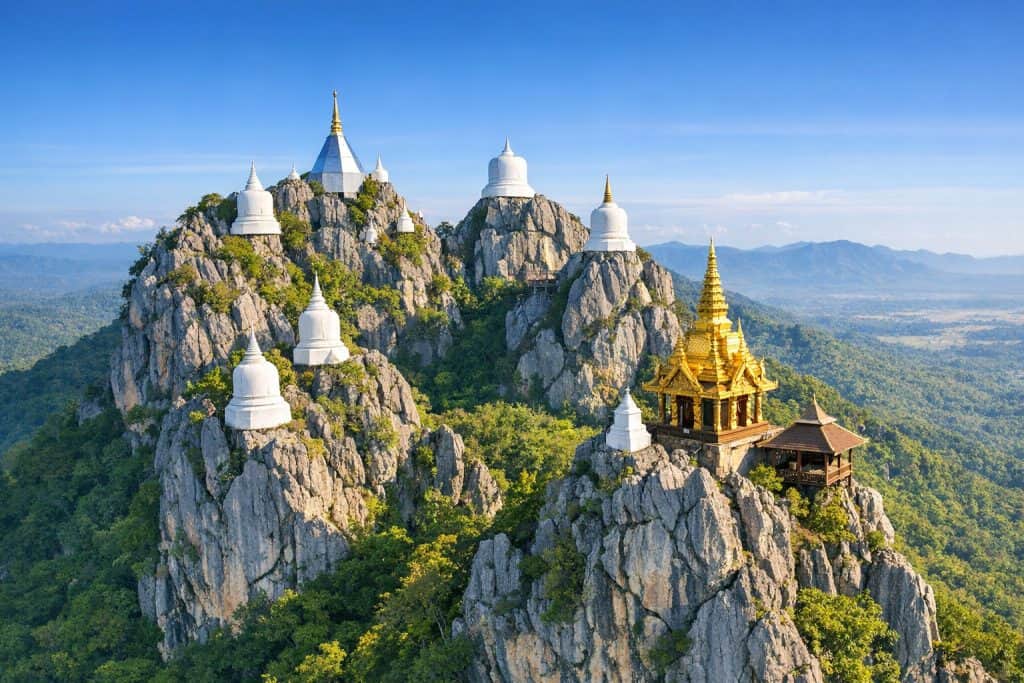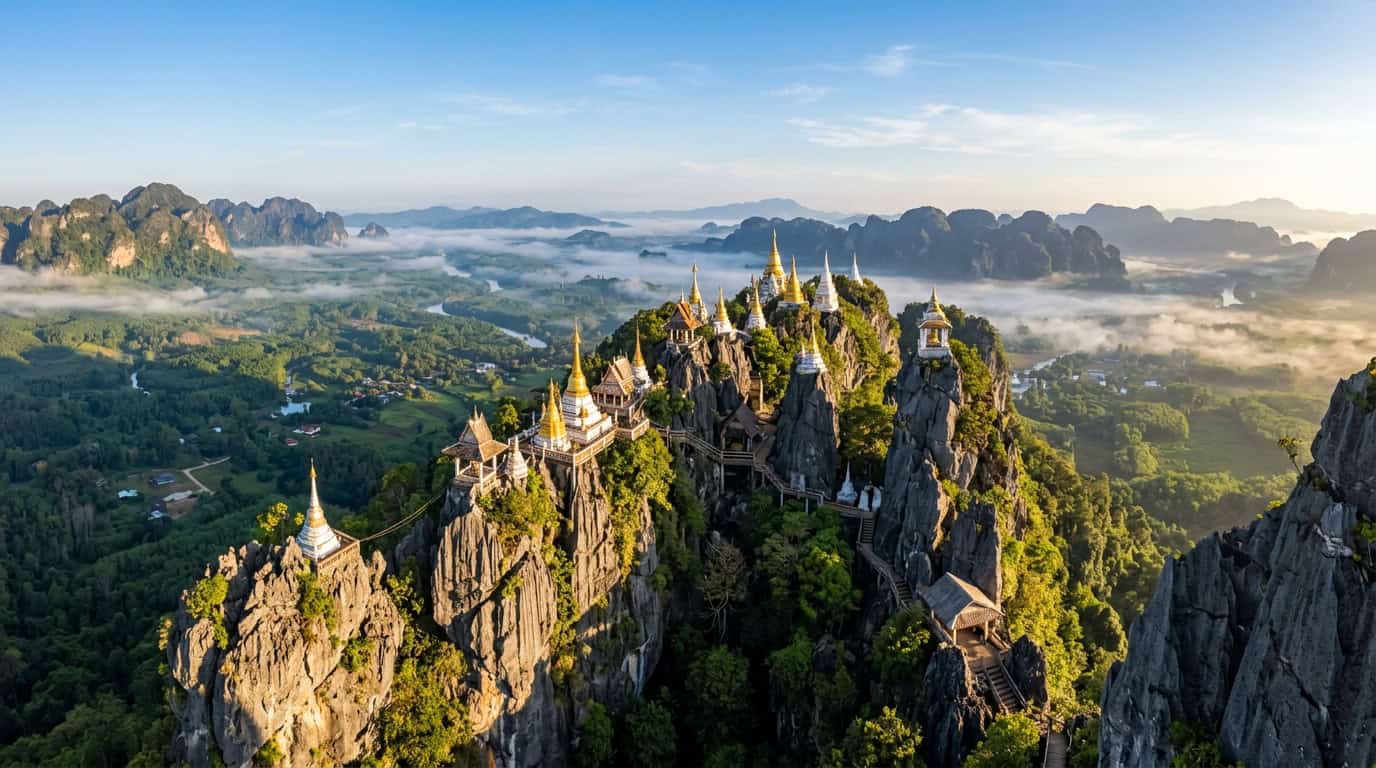
Getting to Wat Chaloem Phra Kiat requires a bone-rattling ride in the back of a 4×4 pickup, an 800-meter vertical climb up steep metal staircases, and a willingness to venture hours outside standard northern Thailand tourist circuits. Located in the Chae Hom district of Lampang province, roughly two and a half hours from the popular streets of northern Thailand hidden destinations, this architectural marvel sits precariously atop jagged limestone peaks. Locals refer to the site as the floating pagodas, and when the morning fog rolls through the surrounding valleys, the white and gold spires genuinely look suspended in mid-air.
When I first mapped out a day trip to this remote province, I expected a relatively standard cultural excursion. What I encountered instead was a demanding physical ascent, an education in navigating harsh gradients on an underpowered scooter, and arguably the most spectacular panoramic view I have witnessed in Southeast Asia. Far removed from the crowded old city moats, this offbeat Thailand mountain destination complex demands effort, money, and careful planning. If you want to escape the massive tour groups and see a landmark that defies gravity, here is exactly how to do it.
Quick Summary
The Direct Answer: How to Master the Visit
If you are wondering whether Wat Chaloem Phra Kiat is a realistic day trip from Chiang Mai, the direct answer is yes—but you must be prepared for a grueling 12-hour day, and you must be a highly competent driver to tackle the route yourself.
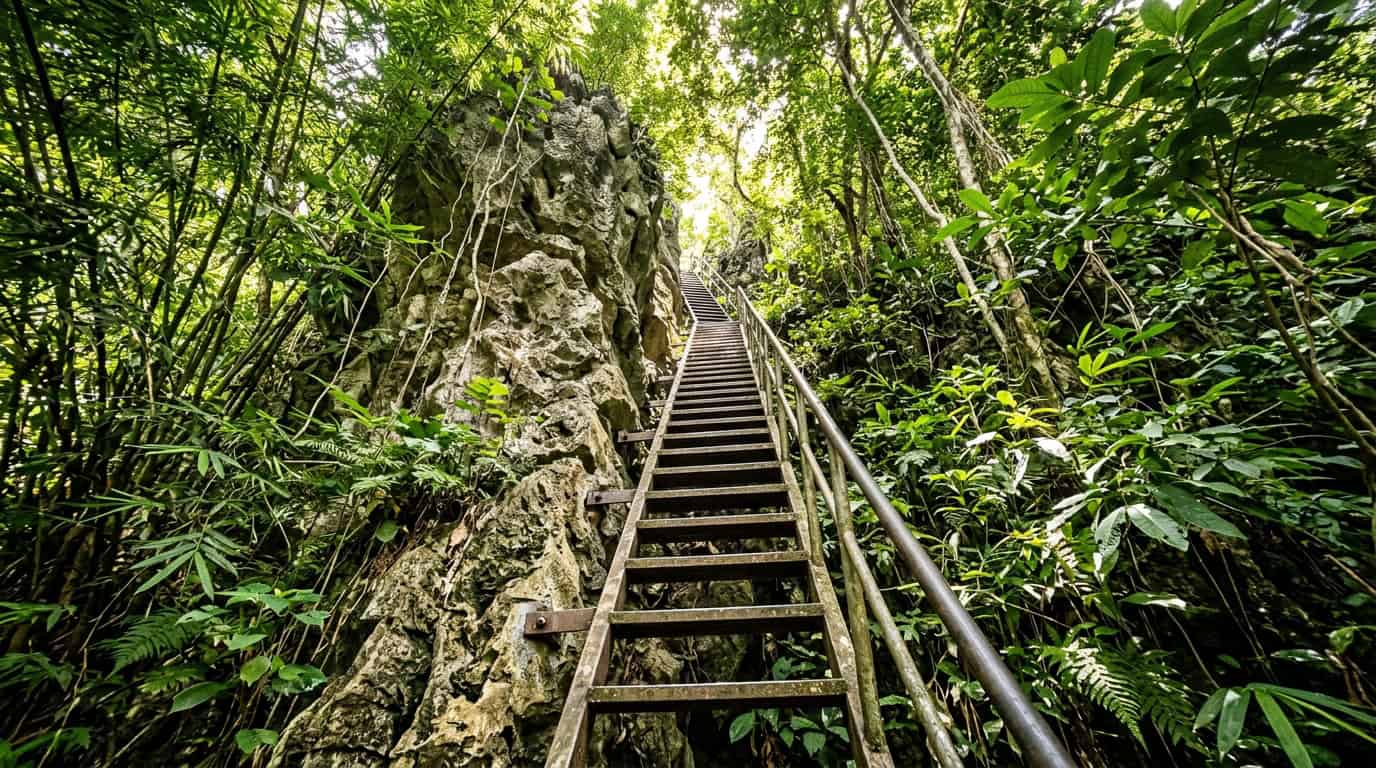
You cannot drive your own vehicle or rental scooter to the actual summit. Upon arrival, you must park at the lower base camp, pay the admission fees in cash (card machines are non-existent here), and board a local 4×4 pickup truck. This truck hauls you up a highly degraded, 3.5-kilometer dirt path with terrifying inclines. From the designated drop-off point, you will hike the final 800 meters via a steep metal staircase to an altitude of 815 meters.
To beat the punishing midday heat and secure the best photography lighting, you absolutely must arrive at the ticket booth right when it opens at 7:30 AM (7:00 AM on weekends). If you start your climb at noon, you will be hiking entirely exposed to the blistering sun, and the metal railings become uncomfortably hot to the touch.
The Origins: Modern Devotion, Not Ancient History
When you look at photos of the pagodas resting on sheer limestone drops, your brain immediately assumes this place is centuries old. Many travel forums incorrectly date the site back to the 1800s, grouping it with the ancient ruins of Ayutthaya or Sukhothai.
In reality, Wat Chaloem Phra Kiat is a distinctly modern construction. Work began in 2004 to commemorate the 200th anniversary of the birth of King Mongkut (Rama IV). The logistics of building this complex are mind-bending. Before the sturdy steel stairs were installed for tourists, a highly respected local monk and a dedicated team of about 50 local worshippers carried every single brick, steel pipe, bronze gong, and 50-kilo bag of cement up the mountain by hand.
Looking at the sheer verticality of Doi Pu Yak (the mountain’s local name), the painstaking assembly process is difficult to comprehend. It took a full decade of backbreaking labor to complete the entire site. The temple stands not as a relic of ancient history, but as a massive physical testament to modern Thai devotion and community resilience.
The Step-by-Step Mountain Experience
The complex is split into distinct zones. Understanding how the ascent flows will help you pace your energy and avoid missing hidden areas.
1. Base Camp and the Truck Ride
Located right next to the main parking area, the lower zone features small coffee stalls, vendors selling cold water, and Western-style toilets. Use these facilities immediately. There are zero restrooms or water taps once you begin the upward hike.
Once you purchase your 490 THB ticket, you queue for the local 4×4 pickup trucks. These vehicles seat six to eight people in the open-air bed. The ride covers a few kilometers but takes 10 to 15 minutes because the trucks have to grind their lowest gears up an impossibly steep, narrow concrete track. The ride is violently bumpy. Hold onto your daypack tightly—I nearly lost a loose camera battery over the tailgate when our truck hit a massive rut.
2. The Stair Ascent
The truck drops you at a mid-station where the actual hike begins. The trail starts with a deceptively gentle 200-meter walk along a wooden boardwalk under the dense shade of a bamboo forest.
Then, you hit the base of the metal staircase. The remaining 600 meters are almost entirely vertical stairs bolted directly into the rock face. The first half is manageable, but the second half is punishing. Thankfully, local builders placed small bamboo rest shelters at regular intervals. I consider myself reasonably fit, but I had to stop twice just to let my heart rate drop and wipe the sweat from my eyes.
3. The Summit Platforms
Once you catch your breath and ring the traditional victory gong at the top of the stairs, you must remove your shoes before stepping onto the sacred viewing decks. The path splits in two directions.
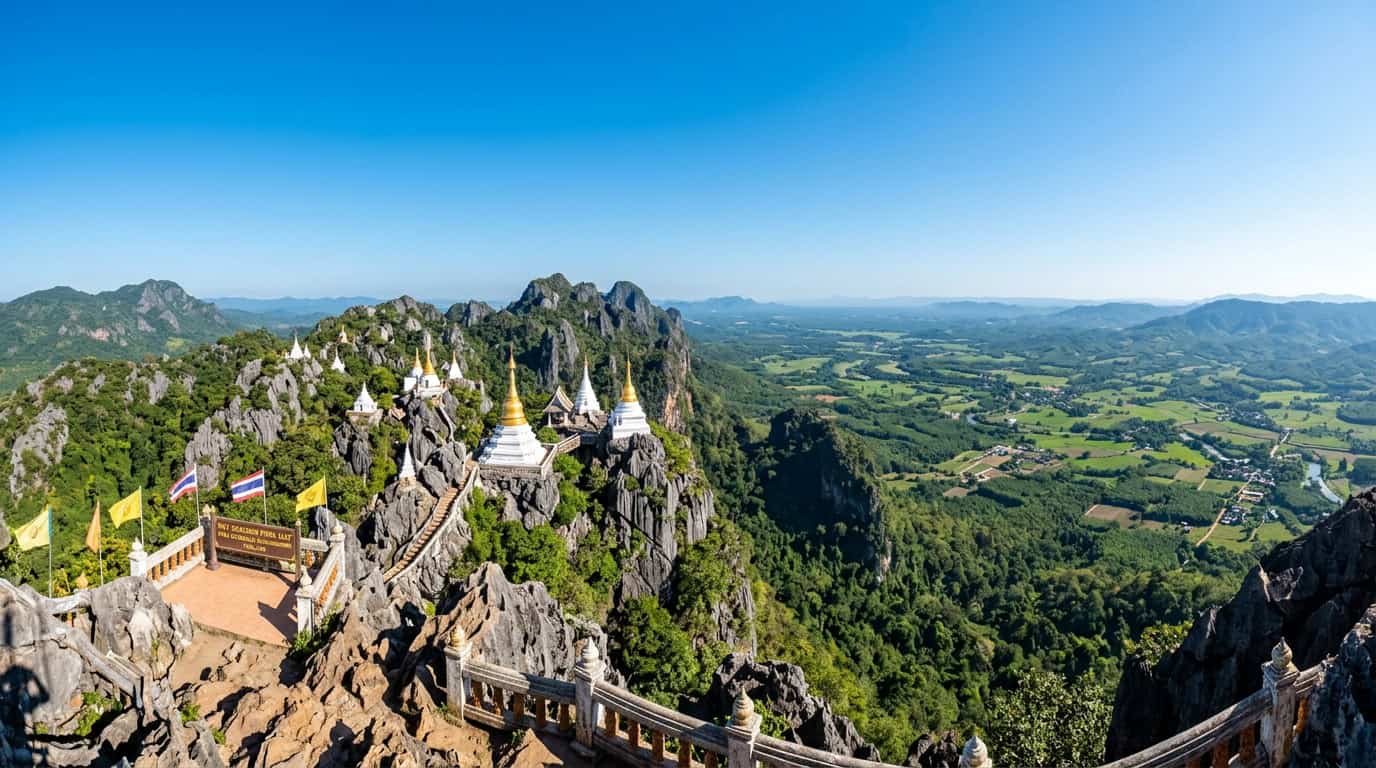
The Right Platform (The Main Chedi): This side offers the most expansive geographical view. From the wooden deck, you can look straight down at the lower temple and the sprawling rice fields of the Chae Hom district. On an exceptionally clear day, you can see the mountain ranges of Chiang Mai roughly 50 kilometers away.
The Left Platform (Chedi Loy Fah): This is the iconic view you came for. Accessed via a small path that requires a bit of scrambling in your socks, this platform features a wooden prayer deck, a Buddha statue, and the famous small pagodas scattered across the sharp natural rocks. The optical illusion here is fantastic—the varying sizes of the spires make them look like they are floating against the backdrop of the deep green valley.
4. The Hidden Buddha’s Footprint
When you finish your descent and return to the truck drop-off point, do not immediately get back in the vehicle. Look for a small, easily missed path behind the main Visitor Center signboard. A five-minute walk down this trail leads to the Buddha’s Footprint pavilion. It features a stunning white temple structure, a giant Buddha statue, and elaborate floral offerings. Almost all tourists skip this entirely, giving you a completely silent, private moment.
Getting There: Three Distinct Routes from Chiang Mai
If you are traveling from Chiang Mai, getting to Wat Chaloem Phra Kiat requires significant logistical planning. I strongly advise against booking an expensive private taxi (which can run up to 6,000 THB) when self-driving offers so much more freedom. If you are comparing urban vs regional transport difficulty, this trip is nothing like Bangkok city transport—it is far more punishing and remote.
Option 1: Highway 11 (The Fast, Commercial Route)
This is the southern route connecting Chiang Mai to Lampang city, before hooking north to the temple. It is a wide, multi-lane highway loaded with commercial truck traffic, streetlights, and massive PTT gas stations.
Pros: It is the safest, flattest, and fastest route, taking about 2.5 hours total.
Cons: It is incredibly boring and offers zero scenery.
The Strategy: Use this route exclusively for your drive back to Chiang Mai in the dark. Driving isolated mountain passes at night in Thailand is a recipe for disaster.
Option 2: Route 3005 via Mae Kampong (The Scenic Masterpiece)
This is the route you should take on your way there in the morning. It weaves through deep mountain passes, rainforest canopies, and traditional teak villages. It turns a simple temple visit into a world-class road trip.
The Catch: You cannot easily find this continuous route on Google Maps. You need to download the Maps.Me app and manually route yourself through Ban Mae Kampong, continuing over the mountains to Chae Son National Park.
The Warning: This route features the infamous Kiew Fin Pass, which sustains a brutal 15 percent gradient.
When I drove this route, I made the colossal error of renting a standard 110cc Honda Scoopy to save a few dollars. Halfway up the steepest section of the Kiew Fin Pass, the engine shrieked, sputtered, and completely gave up. My passenger had to dismount and hike up the asphalt in the midday heat while I feathered the throttle to inch the bike upward. If you are riding two-up, you absolutely must rent a scooter with a 125cc or 150cc engine (like a Honda Click 125i, Yamaha Aerox, or PCX).
Option 3: Public Transport (For Non-Drivers)
If you cannot ride a motorbike, you can take Train No. 102 from Chiang Mai Railway Station at 6:30 AM, arriving in Nakhon Lampang at 8:27 AM (costing about 250 THB). Alternatively, buses leave Chiang Mai Arcade starting at 7:30 AM. However, trains and buses drop you in Lampang City. You must then negotiate with a local songthaew taxi for the one-hour drive north to the actual temple base camp, wait for you to climb, and drive you back. This often costs upwards of 1,500 THB for the taxi alone.
Side Quests: The Ultimate Scenic Itinerary
If you take the scenic Route 3005 over the mountains, you will pass several major attractions. If you leave Chiang Mai by 7:00 AM, you can easily hit all of these in a single day.
1. ForRest Cafe: Located just outside Mae Kampong, this riverside coffee shop features English-speaking staff, excellent dark roast coffee, and massive chocolate lava cakes. It is the perfect breakfast stop before hitting the steep mountain passes.
2. Mae Kampong Village: Once a quiet, storybook mountain village, Mae Kampong features stunning wooden teak houses and narrow streets. The climate up here is noticeably cooler. Walk up the left-side stairs of the Mae Kampong Waterfall to escape the heavy crowds.
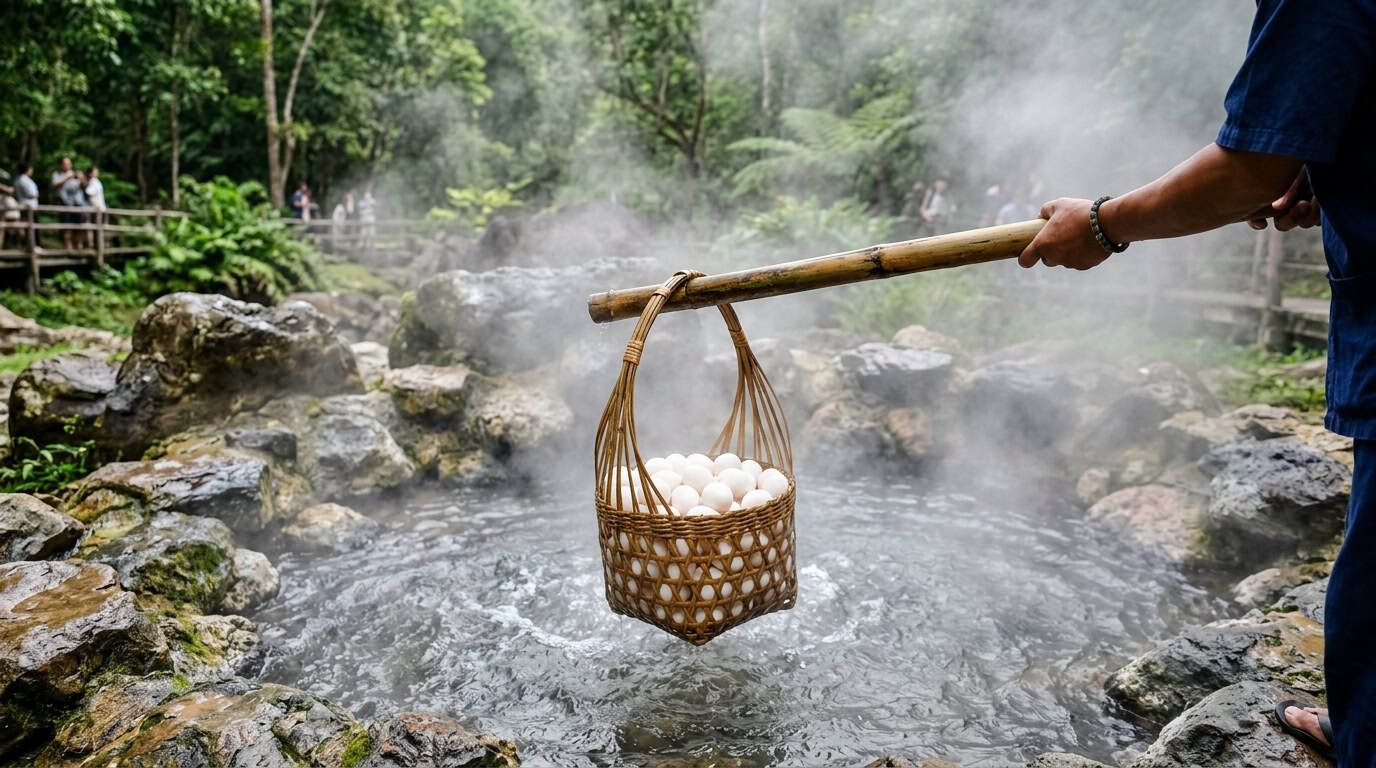
3. Chae Son National Park: Located just 30 minutes from the base of the temple, this geothermal park is an essential stop. The park features a river where you can swim, but the main draw is the natural hot springs. The water here bubbles up from the earth at a blistering 80°C (176°F). Local vendors sell small bamboo baskets filled with raw quail and chicken eggs for 30 THB. You tie your basket to a wooden peg and submerge it in the boiling pools. The local secret? Leave chicken eggs in for exactly 17 minutes. The result is a perfect onsen egg—firm whites with a rich, custard-like yolk.
If you enjoy more unusual route-building and destination stacking, this kind of day echoes the appeal of extraordinary travel experiences rather than standard temple sightseeing.
Cost Breakdown: The Reality of Dual Pricing
Thailand frequently operates on a dual-pricing system for national parks, but the fees for Wat Chaloem Phra Kiat have skyrocketed in recent years, catching many budget backpackers completely off guard.
In 2016, visiting the temple was relatively cheap. Today, because the local municipality linked the mountain to the nearby Chae Son National Park jurisdiction, the costs for foreign visitors are steep. Card machines are not available, so you must bring enough physical Thai Baht.
Here is exactly what you will pay at the ticket booth (per foreign adult):
- National Park Entrance: 400 THB
- Foreigner Tax: 55 THB
- Maintenance Fee: 25 THB
- Local Community Tax: 10 THB
- Total Package: 490 THB (Approx. $14.50 USD)
For Thai nationals, the total cost sits at precisely 100 THB. Children’s tickets generally cost half the adult rate.
If you are on a strict budget, dropping nearly 500 THB just to climb a staircase might sting. However, looking at the sheer engineering required to maintain the metal staircases bolted into the cliffside, and the harsh toll the truck rides take on local vehicles, the money is clearly going toward keeping visitors alive. The infrastructure is incredibly secure.
Who Should Visit (And Who Should Skip It)
This destination requires physical effort, money, and time. Use this framework to decide if it belongs on your Northern Thailand itinerary.
This is ideal for:
- Confident Motorbike Riders: If you hold a valid motorcycle license and can comfortably handle a 125cc scooter on steep gradients, the drive through the Kiew Fin Pass is a bucket-list driving experience.
- Photography Enthusiasts: The contrast of the white chedis against the dark limestone offers arguably the best landscape photography in the country.
- Repeat Thailand Visitors: If you are burnt out on the crowded temples of Chiang Mai’s old city (like Wat Phra Singh or Doi Suthep) and want something genuinely rugged and isolated.
You might want to skip this if:
- You Have Bad Knees or Mobility Issues: The 300 steel steps are relentless. The descent is actually harder on your knee joints than the climb up. There is no elevator or alternative route.
- You Suffer from Severe Vertigo: While the platforms have secure steel railings, you are standing on a metal grate bolted to a sheer vertical cliff face. Looking straight down can induce intense dizziness.
- You Are Traveling in March or April: Do not bother renting a bike for this. During Thailand’s annual agricultural burning season, the PM2.5 smoke is so thick that the valley entirely disappears. You will climb 800 meters just to look at a wall of gray smog, heavily damaging your lungs in the process.
Expert Photography & Drone Guidance
If you are bringing serious camera gear, you need to prepare for the tight spatial constraints at the summit.
According to metadata from professional travel photographers who frequent the site, you should pack a wide-angle lens (12mm to 16mm). The viewing platforms are incredibly small, meaning you cannot back up to fit the pagodas into your frame. Conversely, if you want a shot of the mountain peak from the ground, use a heavy zoom lens (70mm+) from the base car park to isolate the mountain top without capturing the ticket booths in your foreground.
Regarding drones: You must have proper Thai drone registration and licenses to fly legally. More importantly, flying from the upper pagodas is explicitly prohibited by signage, and the rangers will stop you. The cliff walls also cause severe GPS signal loss. If you plan to fly, launch your drone from the expansive main car park at the base of the mountain.
Common Mistakes to Avoid
Aside from attempting the mountain passes on a weak scooter, there are two major traps travelers consistently fall into when planning this trip.
Mistake 1: Not Filling the Gas Tank in Chiang Mai
If you take the scenic Route 3005 through the mountains, you leave modern civilization behind very quickly. There are virtually zero proper gas stations between Mae Kampong and Chae Son National Park. You might find a local village selling gasoline out of old glass whiskey bottles from a hand-cranked barrel, but you should never rely on this as your primary fuel strategy. Fill your tank to the absolute brim before leaving the Chiang Mai city limits.
Mistake 2: Ignoring Travel Insurance Loopholes
Motorbike accidents are wildly common on these mountain roads, especially after a brief monsoon rain turns the steep asphalt slick. Many travelers assume their standard travel medical insurance covers them. It almost certainly does not.
To make a valid medical claim for a motorbike accident in Thailand, your insurance company will demand proof of two things: a valid motorcycle license from your home country, and an International Driving Permit (IDP) stamped specifically for motorcycles. If you only hold a standard car license, you are riding illegally in the eyes of your insurer, and they will deny your hospital claim instantly. For broader travel risk planning, it also helps to read a practical Thailand travel planning guide before building remote side trips.
Frequently Asked Questions
Is there a dress code for Wat Chaloem Phra Kiat?
Yes. Even though it is isolated on a mountain peak, it remains an active, highly revered Buddhist temple. Both men and women must have their shoulders and knees covered. Bringing a lightweight sarong in your daypack to wrap around your waist or shoulders before you step onto the wooden prayer platforms is the easiest solution. You will also need to remove your shoes on the final viewing decks.
Can I hire a guide instead of driving myself?
Yes, several tour operators in Chiang Mai (available via Seek Sophie or GetYourGuide) offer full-day trips. Expect to pay anywhere from 3,200 THB to 4,500 THB per person. This generally includes round-trip minivan transfers, lunch, and all the high national park entry fees. It is significantly more expensive than the DIY scooter route (which totals about 700 THB in gas, rental, and tickets), but it entirely removes the stress of driving.
How long does the actual hike take?
The walk from the truck drop-off to the summit is 800 meters. For a moderately fit adult, the climb takes about 20 to 25 minutes. If you are traveling with young children or prefer a slow pace, budget 45 minutes to reach the top. You should plan to spend about 45 minutes at the summit admiring the views and resting before heading down.
Where can I stay if I want to arrive at sunrise?
If you want to avoid the 2.5-hour morning drive from Chiang Mai, book a guesthouse near Chae Son National Park the night before. The Happiness Resort Chae Hom offers basic air-conditioned rooms for about 500 THB and puts you a short 10-minute drive from the temple ticket booth, ensuring you are the very first person up the mountain.
The Final Verdict
Wat Chaloem Phra Kiat is a brilliant architectural anomaly. In a country where thousands of ground-level temples sit on seemingly every street corner, this modern feat proves that human devotion and sheer engineering willpower can still create jaw-dropping landmarks in the 21st century.
Yes, the 490 THB foreigner fee is a stark reminder of dual pricing, and yes, your thigh muscles will be shaking by the time you reach the victory gong at the summit. But standing on the left platform in your socks, watching the white pagodas float against the backdrop of the Lampang valleys, you will quickly forget the cost, the grueling stairs, and the bumpy truck ride.
If you decide to make the journey, rent a 125cc scooter or hire a capable car, download your offline maps, pack a large bottle of water, and leave Chiang Mai by 7:00 AM. Taking the scenic mountain pass through Chae Son and boiling a few eggs in the hot springs will turn a simple viewing trip into the best, most authentic road adventure you undertake in Northern Thailand. If you want to pair it with broader route inspiration, check bucket list travel destinations and trending travel destinations 2026.