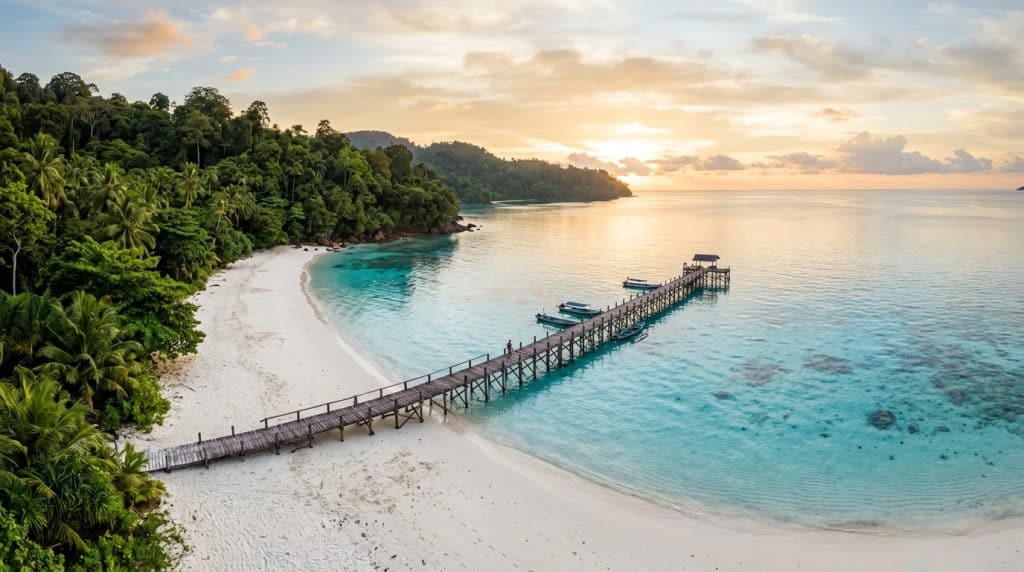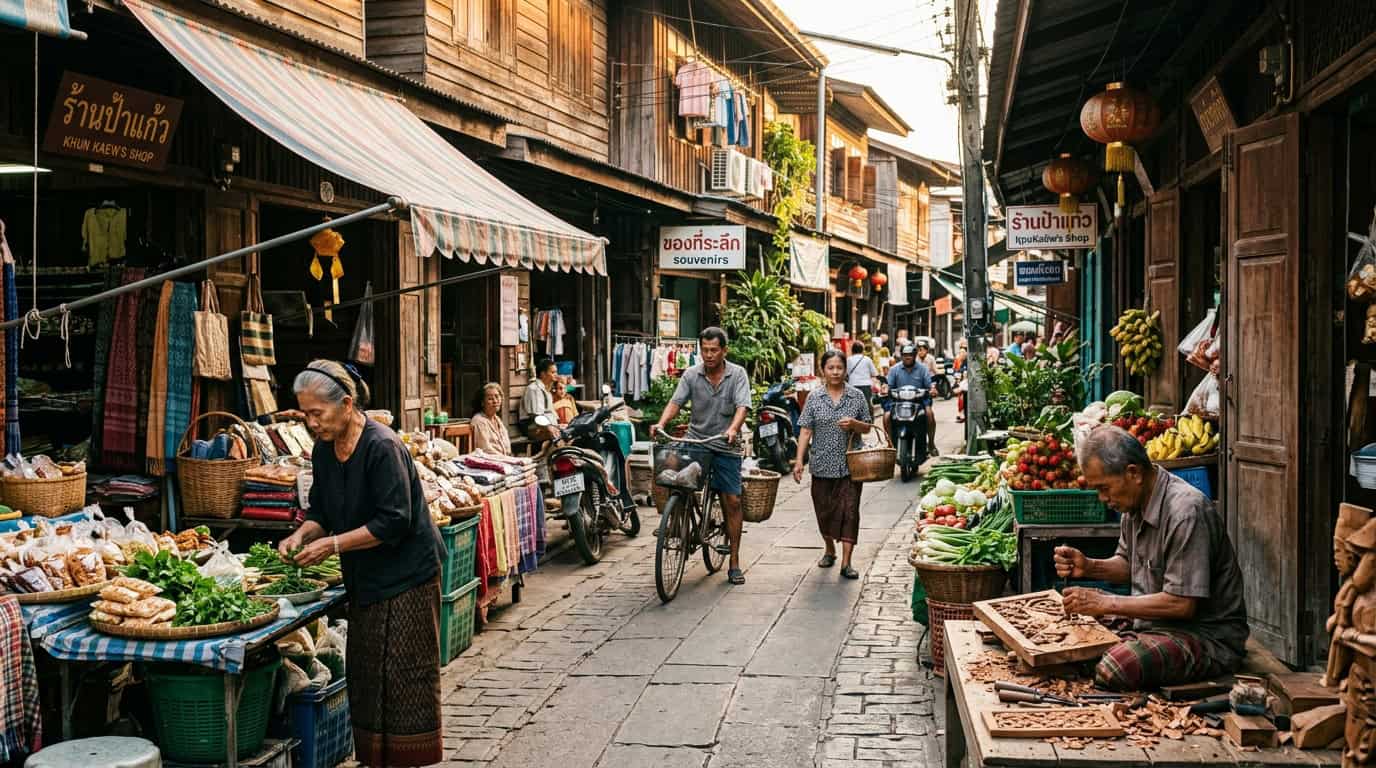
When hunting for truly offbeat Thailand destinations, the compass usually points far north to remote mountain villages, but the most fascinating intersection of global trade and authentic local island culture in Thailand actually sits 245 kilometers southeast of Bangkok. The twin provinces of Chanthaburi and Trat represent a side of Southeast Asia that operates entirely independent of the modern tourist machine. You will not find aggressive touts, overpriced fire shows, or generic souvenir stalls here. Instead, you walk into a complex economic ecosystem where millions of dollars in colored gemstones change hands on folding tables, three-year-old monster oysters are harvested from bamboo rafts, and centuries of Vietnamese, Chinese, and French colonial history physically shape the waterfront.
Quick Summary
The Direct Answer: Why Go Southeast?
If you are exhausted by heavily commercialized islands and want a travel experience rooted in real-world commerce and deep history, you need to route your itinerary southeast to Chanthaburi and Trat.
By taking the four-hour drive from Suvarnabhumi Airport, you bypass the inflated economies of standard resort towns. You trade packed beach clubs for the Chanthaboon Waterfront, a 300-year-old preserved trade district where generations-old families still operate heritage bakeries and noodle shops. Furthermore, you gain access to the Srichan Road gem market. Even if you are not a jeweler, witnessing brokers negotiate raw African sapphires over plastic folding tables offers a thrilling, unfiltered look at a multi-billion-dollar cottage industry. It is a highly affordable region—comfortable budgets hover around 1,500 to 2,000 THB per day—that rewards independent travelers willing to navigate minor language barriers in exchange for world-class seafood, pristine national parks, and genuine hospitality.
The Realities of the Gem Trade on Srichan Road
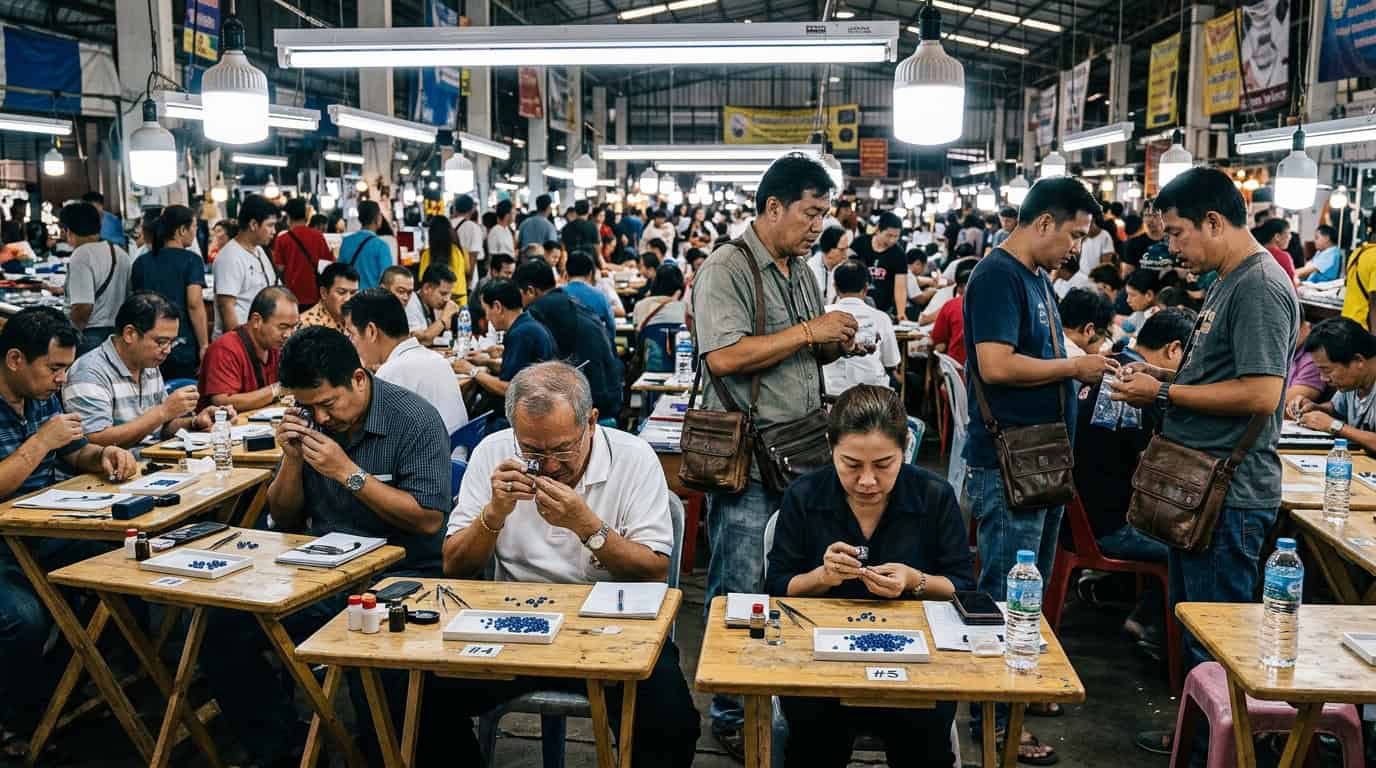
Chanthaburi’s identity is built on dirt, heat, and serious money. During my first visit to the Srichan Road market (which operates primarily on Fridays and Saturdays from 10:00 AM to 4:00 PM), I expected polished retail showrooms. I was entirely wrong. The weekend gem market is a gritty, high-stakes trading floor that happens right on the street.
Decades ago, local miners pulled phenomenal “Siamese Rubies” directly from the local volcanic soil. After the 1962 military coup in Burma effectively shut down the global ruby supply, the international jewelry market panicked and shifted entirely to Thailand. The local reserves were severely depleted within a few decades. However, instead of letting the economy collapse, Chanthaburi’s locals became masters of heat-treating and cutting. Today, rough stones from Madagascar and Mozambique are flown here specifically to be processed by local artisans.
The Silent Negotiations
If you want to buy, the mechanics are completely inverted from Western retail. You do not browse. Instead, you rent a desk for a small fee, turn on a bright white inspection lamp, and put up a handwritten sign in Thai stating what you are looking for (e.g., “Round cut yellow sapphires, under 2 carats”).
Brokers walk the street carrying heavy shoulder bags filled with inventory. They approach your desk and slide parcels of stones across the glass. Because buyers and sellers fly in from all over the world, the actual negotiations are almost entirely silent. I purchased a small pastel purple sapphire from a Sri Lankan broker, and we never spoke a word of a shared language. He typed an astronomical price into a large plastic calculator. I shook my head, typed a number equating to roughly 35% of his ask, and passed it back. We passed the calculator back and forth for ten minutes until we hit a number that worked for both of us.
Getting Muddy: The Hands-On Mining Experience
While the primary market trades in imported stones, you can still touch the geological history of the region. I highly recommend driving out to the Bo Ploy Lek Petch Community Learning Center, operated by the Lekpetch family.
This is not a sanitized museum exhibit. When I arrived, I was handed a set of oversized, stained clothes and directed toward a four-meter-deep mud pit. You climb down a shaky bamboo ladder into the wet earth to manually scrape out buckets of raw dirt. You then haul the bucket to a waist-high muddy pool to sift the aggregate through a wooden screen, exactly as the locals did centuries ago. I spent an hour washing gravel to find exactly zero rubies, but my guide graciously seeded my pan with a small, rough garnet so I wouldn’t leave empty-handed. It is a physically exhausting experience that makes you deeply appreciate the labor behind the polished stones sold in Bangkok high-rises.
Chanthaboon Waterfront and Architectural Collisions
The architectural landscape of Chanthaburi is a direct physical record of religious persecution, trade, and occupation. The Chanthaboon Waterfront Community, a one-kilometer stretch of centuries-old shophouses along the river, was essentially the city’s original Chinatown. Today, it features a striking mix of Chinese wooden lattice, Vietnamese tilework, and French colonial arches.
The Cathedral of the Immaculate Conception
Just across a small footbridge from the waterfront stands Thailand’s largest Catholic church. The original congregation was formed in the early 1700s by Vietnamese Christians fleeing religious persecution. The current Gothic Revival structure, completed in 1909, feels completely out of place in tropical Southeast Asia until you walk inside.
At the front of the nave sits a statue of the Virgin Mary. In a massive flex of local identity, the statue is cast in 60 kilograms of solid silver and completely encrusted in hundreds of thousands of raw sapphires and rubies donated by the local gem trading families. It is the perfect visual synthesis of Catholic history and the local economy.
Where to Base Yourself
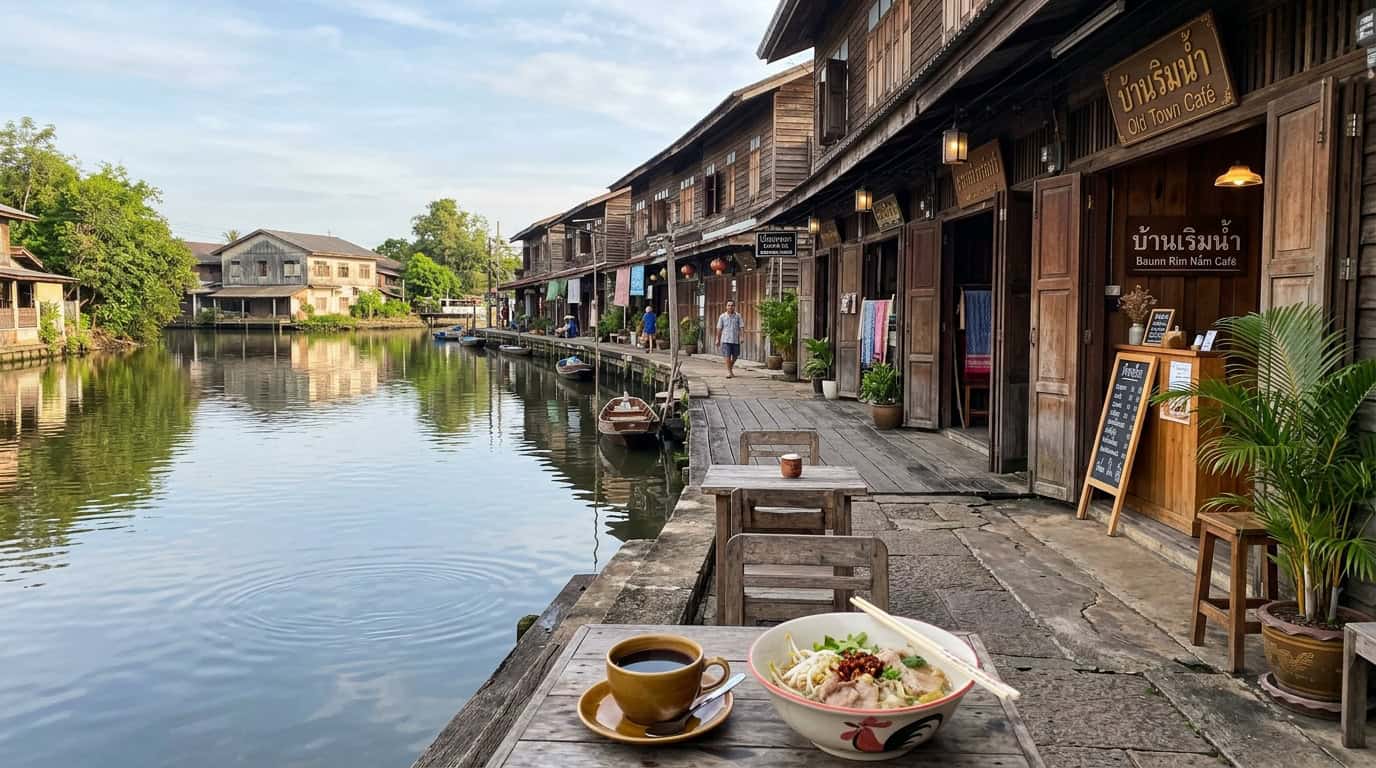
If you are staying overnight—which you absolutely must do—skip the modern concrete hotels on the highway. Instead, book a room at the Baan Luang Rajamaitri Historic Inn. Located right on the waterfront, this 150-year-old restored Sino-European house operates as part boutique hotel, part living museum. Waking up to the sound of the river and eating a traditional breakfast of local pork stew on a wooden balcony grounds your entire trip in the right context.
Gastronomy: Durian Curries and Monster Oysters
The southeast corridor is an agricultural juggernaut. Chanthaburi produces more durian than any other province, and the volcanic soil yields exceptional black pepper and tropical fruits. The food here is heavily localized, distinct even from what you find just a few hours away in Bangkok.
The Sen Chan Legacy
You cannot visit the province without eating Sen Chan. These delicate, slightly chewy rice noodles originated here and serve as the foundational ingredient for authentic Pad Thai worldwide. For the best local iteration, find a riverside shop serving Sen Chan Pad Pu—the noodles are stir-fried in a tangy, non-spicy tamarind red sauce alongside whole local swimmer crabs.
Culinary Rule-Breaking at Chanthorn Restaurant
Operating for over 56 years, Chanthorn Restaurant is a mandatory stop for food enthusiasts willing to challenge their palates. The kitchen actively experiments with local staple crops. I ordered the Massaman Curry with Durian, fully expecting the famously pungent fruit to overpower the dish. Surprisingly, when unripe durian is boiled in a heavy coconut curry, it completely loses its aggressive aroma and takes on the exact texture and mild sweetness of a dense sweet potato.
Harvesting Three-Year Oysters
For seafood purists, drive out to the Kung Krabaen Bay area and hire a boat to Paa Louise Lung Thom Homestay. The owner, locally known as Uncle Thom, operates floating bamboo rafts where he cultivates “monster” oysters. While commercial oysters usually reach market size in nine months, Thom lets his grow for a full three years.
We sat on the floating wooden planks as he cracked open mollusks the size of my hand. Unlike the Western tradition of a light mignonette, these are eaten aggressively Thai-style: topped with raw garlic cloves, sweet chili paste, fiery bird’s eye chilies, fried shallots, and young tamarind leaves. It is an intense, overwhelming bite that perfectly matches the region’s raw energy.
Trat: The Gateway to Eco-Tourism
If you drive just 60 kilometers further southeast from Chanthaburi, you hit Trat. After exhausting its own local “Siamese Ruby” deposits in just 25 years during a massive 1970s mining boom, Trat successfully pivoted its economy toward agriculture and marine conservation. Today, it serves as the primary mainland launching pad for 52 islands in the Gulf of Thailand.
Low-Carbon Escapes on Koh Mak
While Koh Chang gets the bulk of the tourist traffic, the real draw for the conscious traveler is Koh Mak. Accessible via a 45-minute speedboat ride from Laem Ngop Pier, Koh Mak has aggressively positioned itself as a low-carbon, sustainable destination.
You will not find jet skis or massive chain resorts here. Instead, you navigate the island via solar-powered golf carts or bicycles. During my stay, I took a cycling tour through dense rubber plantations to the Koh Mak Museum, a small, solar-powered facility housed in an 80-year-old former royal residence. Run by the descendants of the island’s original founding family, it details the early agricultural history of the region.
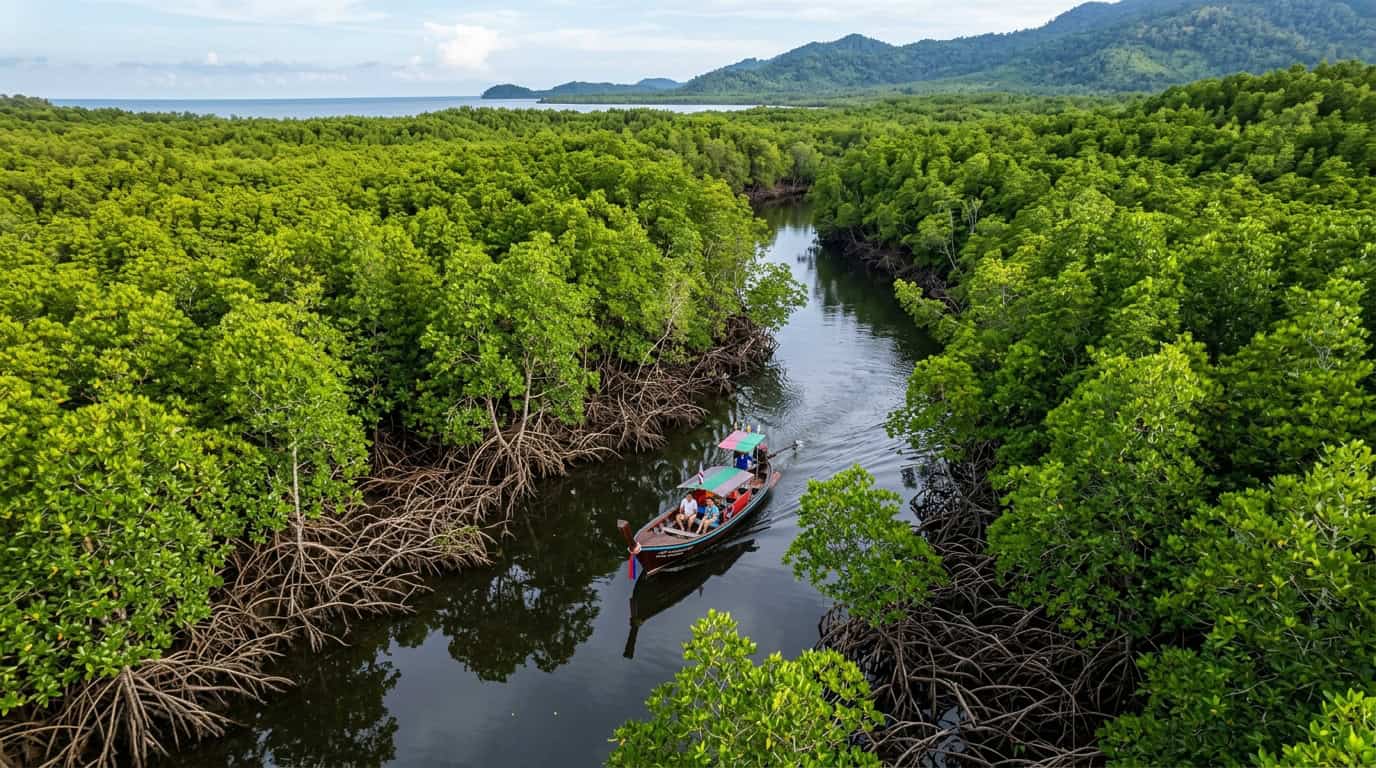
Trat’s commitment to conservation extends to its mainland mangrove forests as well. The Bang Tabun boat tours take you deep into ancient, dense mangrove root systems, culminating in a local village where they serve a highly unusual snack: deep-fried mangrove leaves and sliced mangrove apples. If quiet island travel appeals to you, also compare this route with Koh Kood travel planning.
Cost & Value Breakdown
One of the most compelling reasons to explore this region is the sheer value for your money. Because the local economy relies heavily on agriculture and the wholesale gem trade rather than foreign tourism, prices remain grounded in reality.
Who Should Visit (And Who Should Not)
Deciding to commit 4 to 5 days of your Thailand itinerary to this southeast corridor requires understanding your own travel style.
- Independent Planners: If you are comfortable renting a car or negotiating daily rates with local drivers to hop between waterfalls, temples, and coastal viewpoints.
- Culinary Explorers: If your ideal travel day involves seeking out highly specific regional dishes, weird local snacks, and eating at 50-year-old family institutions.
- History & Architecture Buffs: The physical blend of Thai, Chinese, Vietnamese, and French colonial structures provides endless photography and learning opportunities.
- You rely entirely on public transit: Getting between the city center, the national parks, and the coastal fishing villages via public transport is incredibly frustrating. If you cannot drive a scooter or afford a private car, you will feel stranded.
- You demand polished luxury: While there are comfortable boutique hotels, this is a working agricultural and industrial region. You will encounter muddy roads, strong smells, and a distinct lack of high-end shopping malls.
Common Mistakes to Avoid
Navigating specialized regional economies requires preparation. Here are two massive errors first-time visitors consistently make:
1. Assuming the Rough Stones Are Mined Locally
Many tourists arrive at the Srichan Road market expecting to buy buckets of rough rubies freshly dug from Thai soil. I made the mistake of assuming the rough stones I saw on my first trip were local. They are not. The original Siamese Ruby is virtually extinct from a primary mining perspective. If a street vendor tells you a raw stone was pulled from a local river yesterday, they are lying. The true value of Chanthaburi lies in its cutting and heating expertise, not its current raw earth deposits.
2. Showing Up to the Gem Market on a Tuesday
Because travel blogs often list “The Gem Market” as a generic attraction, tourists regularly show up on a random Tuesday afternoon and find nothing but empty streets and closed roller doors. The Srichan Road market is strictly a weekend operation. The major brokers arrive on Friday morning, peak trading occurs all day Saturday, and the streets empty out by Sunday afternoon. If you want to see the action, you must engineer your itinerary around the weekend.
Frequently Asked Questions
Is it safe to buy gemstones if I am not a professional?
It is generally safe, provided you take basic precautions. Do not buy high-value stones directly off a folding table on the street if you lack experience. Instead, take any stone you are serious about to the Chanthaburi Gem and Jewelry Center (or a reputable local lab). They can run the stone through advanced spectrometers and issue a reliable identification report in about an hour for roughly $30, completely mitigating your risk of buying glass or synthetics.
How difficult is the hike to the Phlio Waterfall?
Unlike many of Thailand’s more remote jungle treks, the Phlio Waterfall in the Namtok Phlio National Park is highly accessible. It requires only a 15-minute walk along a well-maintained, paved path from the main parking lot. You can easily do it in standard walking shoes. Be sure to bring a swimsuit, as the main pool is filled with large Soro Brook Carp that will safely nibble at your toes in the water.
Is the region accommodating for vegans and vegetarians?
Surprisingly, yes. While the coastal areas are famous for crab and oysters, the region’s massive agricultural output means fresh produce is always available. Local institutions like Chan Pochana offer excellent vegan versions of Thai salads and Phad Thai. Just be sure to learn the Thai phrase “Mang-sa-wi-rat” (vegetarian) or “Je” (strict vegan) to ensure they omit the ubiquitous fish sauce.
How do I get to the Blue Temple (Wat Pak Nam Khaem Nu)?
The Blue Temple is located quite far from the city center, right on the coast. It was covered in blue and white ceramic tiles specifically to prevent the salty sea air from corroding the structure. Because there is no reliable bus route there, you must hire a private driver or a motorized tricycle (tuk-tuk) from your hotel for a half-day trip. It pairs perfectly with an afternoon seafood lunch at nearby Laem Sing beach.
Conclusion
When exploring offbeat Thailand destinations, the southeast corridor proves that you do not need to travel to the deepest corners of the jungle to find authenticity. Chanthaburi and Trat have survived the total depletion of their natural ruby mines by upskilling their workforce, embracing agricultural dominance, and preserving their complex colonial and religious history.
Whether you are haggling over a sapphire via calculator, eating durian curry in a half-century-old restaurant, or cycling through a solar-powered island, this region offers an unfiltered, deeply rewarding look at how real Thailand operates. Rent a car, skip the crowded southern beaches, and prepare to get your hands a little muddy. If you want another contrast destination after this route, compare it with Nusa Penida travel guide or broader trending travel destinations for 2026.