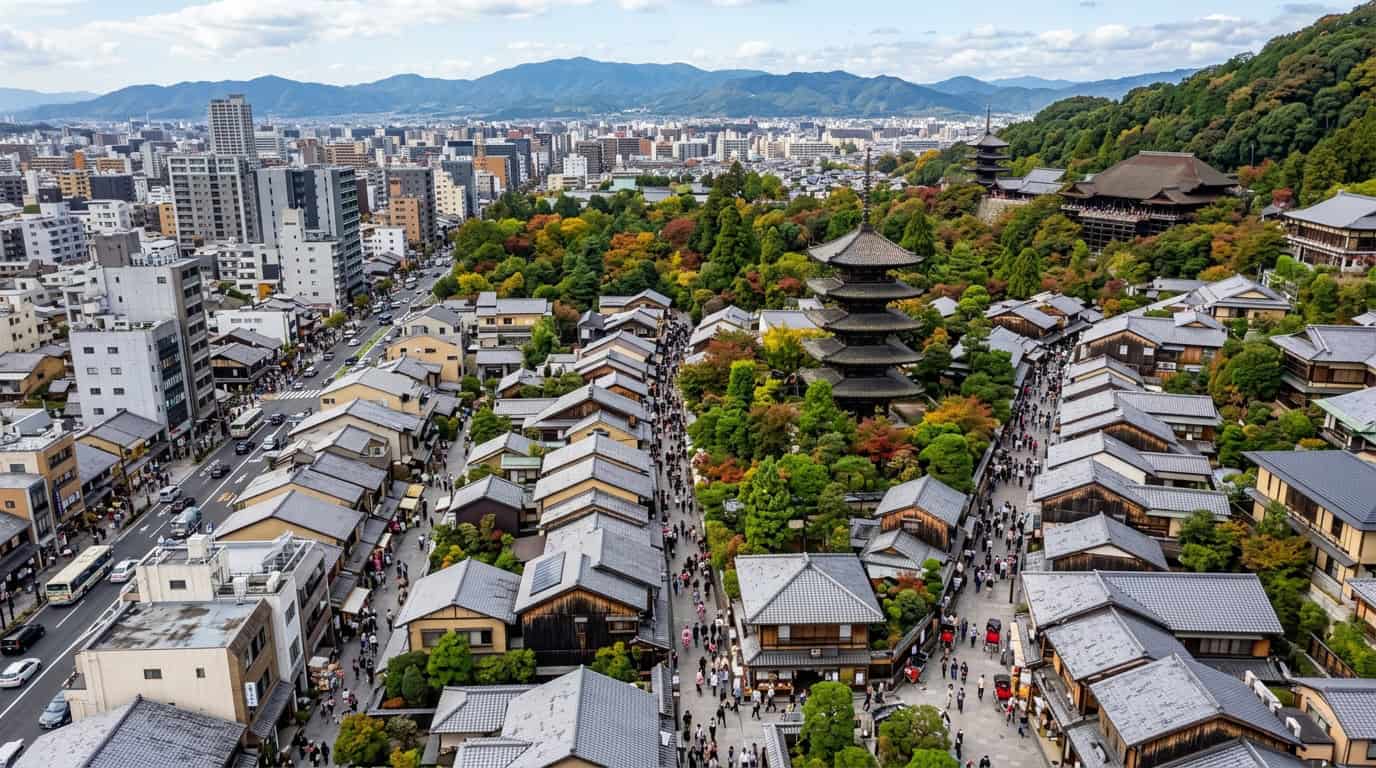
Planning a kyoto itinerary for first-time visitors often feels like trying to assemble a massive puzzle where the pieces are constantly shifting. Unlike Tokyo, which easily absorbed post-1945 population growth and features an expansive, intuitive subway network, Kyoto is an ancient capital. Its infrastructure simply was not built to handle millions of modern tourists. This means your success in this city completely depends on highly strategic planning, a willingness to wake up before dawn, and a lot of walking. I learned the hard way that arriving at a major temple at 9:30 AM means standing shoulder-to-shoulder with hundreds of other people. If you want to experience the quiet, moody atmosphere that made this city famous, you have to be tactical.
Quick Summary
Start before 7:00 AM: Major attractions like Fushimi Inari and the Arashiyama Bamboo Forest become uncomfortably crowded by 8:30 AM.
Prioritize trains over buses: The bus system is slow and frequently gridlocked; use the subway, local trains, or walk whenever possible.
Cash is non-negotiable: While major stores take Apple Pay, you need physical yen for temple entry fees (usually 300-500 yen), street food, and small shrines.
Expect heavy walking: A realistic sightseeing route here involves walking 10 to 12 miles per day. Comfortable shoes are strictly mandatory.
Group by neighborhood: Do not cross the city multiple times in one day. Focus on Eastern Kyoto one day, the Western outskirts the next, and the Northern temples later.
The Direct Answer: How Many Days Do You Really Need?
If you are drafting your trip right now, you need a minimum of three full days to see the core highlights, but four days is the optimal duration for a first-time trip.
Anything less than three days will force you into an exhausting, rushed marathon across a city plagued by slow transit. With four days, you can dedicate Day 1 to the eastern Higashiyama district, Day 2 to the western Arashiyama area, Day 3 to the southern Fushimi Inari shrine and central markets, and Day 4 to the northern temples or a day trip to Nara. If you try to squeeze the Golden Pavilion (north) and Fushimi Inari (south) into the same afternoon, you will spend three hours staring at the back of a crowded bus seat instead of looking at historic architecture.
Strategic Planning: When to Go and Where to Stay
Timing your visit and choosing your base camp are the two decisions that will dictate the entire rhythm of your trip.
The Best (and Worst) Seasons
Spring (late March to early April) and Autumn (mid-to-late November) offer the best weather. The cherry blossoms and fall foliage are spectacular, but this is also when the city experiences peak overtourism. Expect premium hotel rates and massive crowds.
Summer (June through August) is oppressively hot, humid, and rainy. Unless you are specifically attending the Gion Matsuri festival in July, the heat makes 10-mile walking days miserable. Winter (mid-December through February) is the quietest season. It is cold, but you will have the temples largely to yourself. Just avoid traveling between December 29th and January 3rd, as many local restaurants and businesses shut down for the New Year holiday.
Where to Base Yourself
For your first trip, stay in Gion, Higashiyama, or the Kawaramachi/Downtown area.
I highly recommend the Granbell Hotel in Gion or the Hotel Resol Kawaramachi Sanjo. Staying in Gion puts you within walking distance of the historic wooden streets, allowing you to easily roll out of bed at 6:30 AM and walk directly to the Yasaka Pagoda before the tour buses arrive. Granbell Kyoto is particularly notable because it features a basement onsen (hot spring) that allows tattoos, which is rare in Japan.
While staying right next to Kyoto Station seems logical for transit, the immediate area lacks the traditional atmosphere you likely came to this specific city to find.
Logistics: Surviving Kyoto Transit and Cash Culture
Do not underestimate the friction of moving around this city.
The Suica Card is Your Best Friend
The physical transit ticketing machines are confusing and often have long lines of bewildered tourists. Skip them entirely. Download a digital Suica or PASMO card to your Apple Wallet or Android equivalent before you even board your flight. You can load it with yen using your regular credit card and simply tap your phone on subway turnstiles, bus readers, and even vending machines.
Note: The Suica card works for all local transit, but it does not cover the Shinkansen (bullet train) for longer intercity trips to Tokyo or Hiroshima.
The Bus System Reality Check
Kyoto relies heavily on buses because digging subways under a city loaded with buried archaeological sites is difficult. However, the buses get stuck in standard vehicle traffic.
When you must take a bus, remember this strict rule: Enter through the rear door, and exit through the front door. You only tap your Suica phone or pay your coins at the machine next to the driver as you exit.
Bring Physical Yen
Japan is modernizing, but Kyoto remains stubbornly cash-reliant. You will absolutely need physical coins and small bills for:
Temple entrance fees (typically ¥300 to ¥500).
Purchasing goshuin (calligraphy temple stamps).
Buying street food in Nishiki Market.
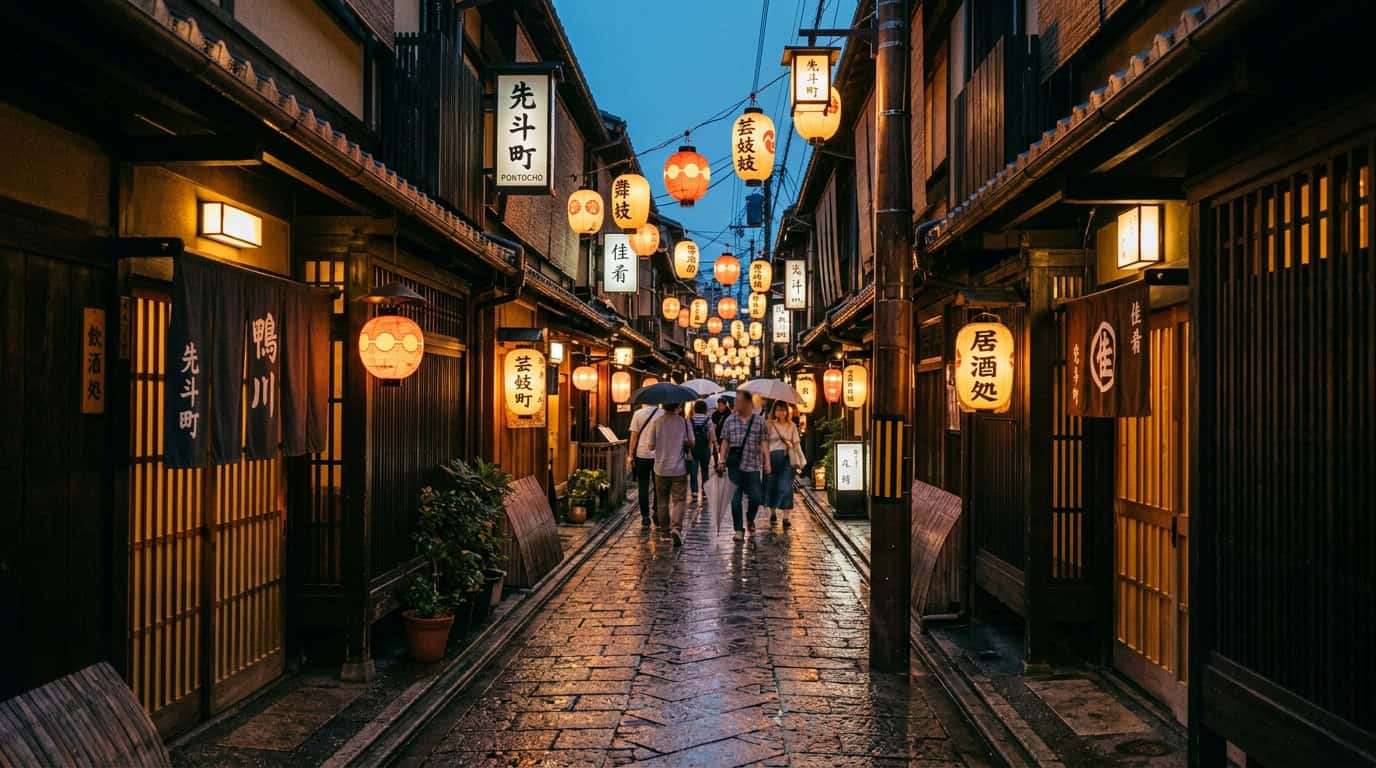
Small, family-run bars in Pontocho Alley.
The Ultimate 1 to 5-Day Kyoto Itinerary
This modular itinerary allows you to stop wherever your schedule dictates. If you have two days, simply do Days 1 and 2.
Day 1: Higashiyama, Kiyomizu-dera, and Gion Nightlife
This day requires immense stamina. One of my biggest mistakes was underestimating the sheer scale of the eastern temple district; my pedometer clocked nearly 12.4 miles (20 kilometers) by the time I sat down for dinner.
6:30 AM – The Historic Streets: Start at the Yasaka Pagoda. At this hour, the sloping, stone-paved streets of Sannenzaka and Ninenzaka are empty. The soft morning light hitting the wooden facades provides the best photography conditions of your entire trip.
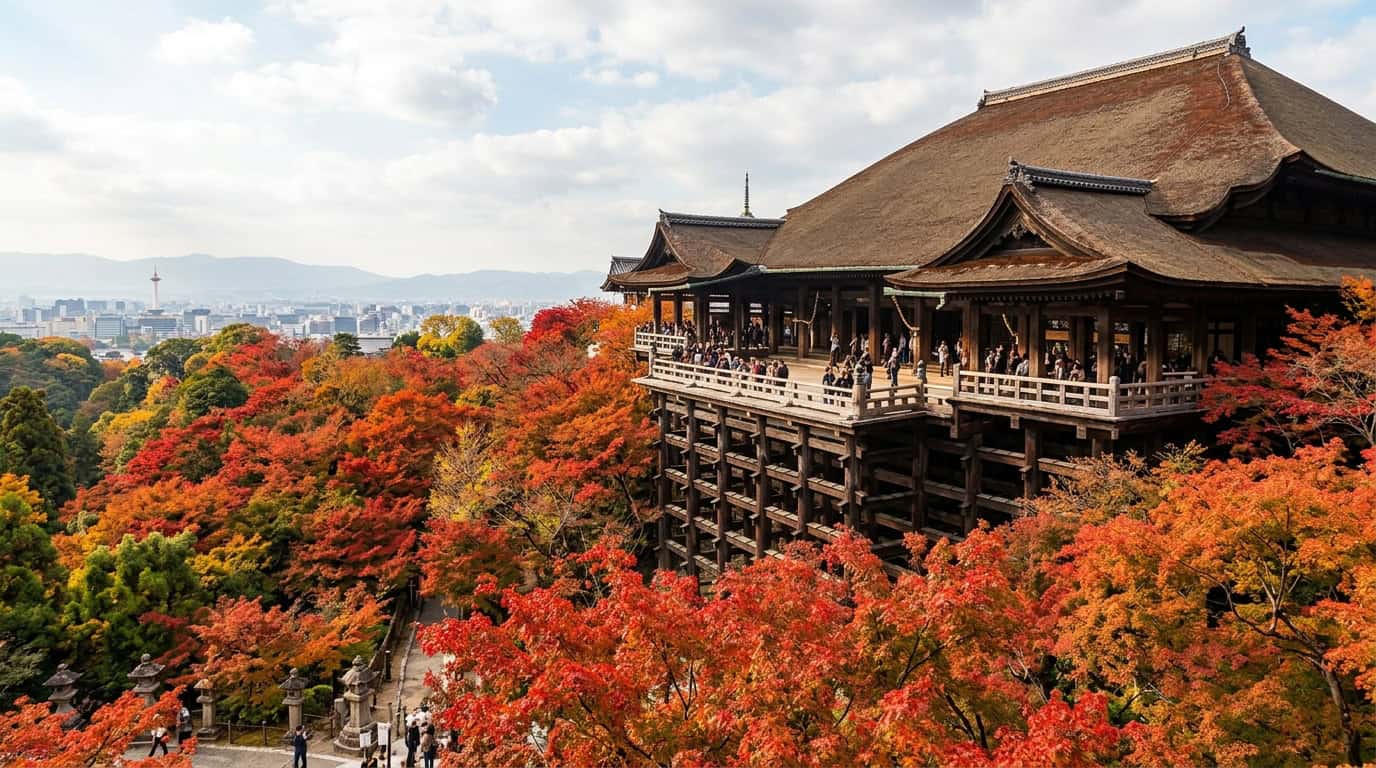
7:30 AM – Kiyomizu-dera: Walk uphill to this massive 1,200-year-old wooden temple. Its famous stage juts 13 meters out over the hillside. Because you arrived early, you can actually walk to the edge without fighting for space. By 8:30 AM, massive tour groups led by guides with flags will flood the gates. Pay the 500 yen entry fee in cash.
Mid-Morning – Coffee and Shrines: Walk down the hill and stop at the Starbucks in Ninenzaka. It is housed in a 100-year-old traditional townhouse and features tatami mat seating (shoes off). Continue to Yasaka Shrine and Maruyama Park.
Afternoon – Chion-in and Nanzen-ji: Walk north to Chion-in Temple to see its massive wooden Sanmon Gate and experience the “nightingale floors”—wooden floorboards designed to squeak loudly to alert ancient monks of intruders. If you have the energy, walk another 20 minutes to Nanzen-ji Temple to see the giant brick Suirokaku aqueduct.
Evening – Pontocho Alley: Cross the Kamo River as the sun sets. The riverbanks are a popular hangout spot for locals. Head into Pontocho Alley, a highly narrow pedestrian street packed with hundreds of tiny bars and eateries. Look for second-floor establishments, as the street-level spots are heavily aimed at tourists and often overpriced. I found a tiny, cash-only yakitori spot on a second floor that served incredible food to a purely local crowd.
Day 2: Arashiyama Bamboo Forest & The Golden Pavilion
Today, you move to the western outskirts.
6:00 AM – The Randen Tram: Take the historic Randen Tram toward Arashiyama. It costs exactly 250 yen per trip and feels like a step back into 1970s Japan.
6:30 AM – The Bamboo Grove: Arrive at the Sagano Bamboo Forest immediately. The walkway is visually striking but physically quite short. By 9:00 AM, the path becomes so gridlocked with people taking selfies that you can barely walk.
Morning – Tenryu-ji and Otagi Nenbutsuji: Visit Tenryu-ji, a 14th-century Zen temple featuring an elevated garden that uses the surrounding mountains as “borrowed scenery.” Afterward, walk 30 minutes uphill away from the main tourist zone to Otagi Nenbutsuji. This quirky temple features 1,200 moss-covered stone statues carved by visitors in the 1980s—if you look closely, you will spot statues holding tennis rackets or wearing glasses.
Afternoon – The Monkey Park: Cross the Togetsukyo Bridge and pay the fee to hike up to the Iwatayama Monkey Park. Honest downside: The hike up this mountain is steep, humid, and genuinely exhausting. It takes about 20-30 minutes of hard uphill walking. At the top, you can feed wild Japanese macaques from inside a wire-fenced rest house. Do not stare directly into the monkeys’ eyes or try to pet them; they are wild animals.
Late Afternoon – Kinkaku-ji (The Golden Pavilion): Transit 40 minutes across the city to the Golden Pavilion. Expect heavy crowds. The path here is strictly one-way, and you cannot enter the actual pavilion. Walk to the end of the garden path up the hill near the vending machines for the clearest, least-obstructed photo angle.
Day 3: Fushimi Inari Shrine & Central Markets
7:00 AM – Fushimi Inari Taisha: Take the train south to Fushimi Inari, famous for its thousands of bright red torii gates winding up the mountain.
Actionable tip: The entrance and the first few hundred gates are chaotic. Keep walking. About 45 minutes up the mountain trail, the crowds thin out drastically. Most people take a photo at the bottom and leave. The full loop takes about two to three hours and requires solid fitness. Bring a few hundred yen coins; there are vending machines near the summit selling cold drinks, and you can buy small wooden fox (kitsune) sake cups as souvenirs at the mid-mountain shrines.
10:00 AM – Nishiki Market: Head back to central Kyoto. Nishiki Market spans five blocks and features over 100 food stalls. Arrive right at 10:00 AM when the vendors open. Try the fresh tuna nigiri, tamago (sweet egg) on a stick, and grilled mochi. Remember the strict cultural rule: Do not walk while eating. Stand near the stall where you bought the food, finish it, and dispose of your trash there.
Afternoon – Uji Day Trip (Optional): If you love matcha, take the Nara Line 30 minutes south to Uji, Japan’s premium tea capital. Visit Byodoin Temple (the building featured on the 10-yen coin) and endure the wait at Nakamura Tokichi for authentic, high-grade matcha desserts.
Day 4: Northern Kyoto & The Philosopher’s Path
After three days of heavy walking and massive monuments, Day 4 is for a slower, quieter pace.
Morning – Ginkaku-ji (The Silver Pavilion): Head northeast to Ginkaku-ji. Despite the name, it was never actually coated in silver. Instead, it is renowned for its meticulously raked dry sand garden, known as the “Sea of Silver Sand,” and its lush moss grounds.
Midday – The Philosopher’s Path: Walk south from Ginkaku-ji along the Philosopher’s Path. This stone path follows a small canal lined with hundreds of cherry trees. Stop at small cafes along the way, or visit Otoyo Shrine, a highly unique location guarded by stone mice instead of the traditional lion-dogs. You can request a special mouse-themed goshuin stamp here.
Afternoon – Nijo Castle: Take the subway back toward the city center to visit Nijo Castle, the former Kyoto residence of the Tokugawa shogun. Pay the extra fee to enter the Ninomaru Palace. Photography is strictly prohibited inside, which makes the experience surprisingly refreshing—you are forced to look at the elaborate screen paintings with your own eyes instead of through a phone lens.
Day 5: Essential Day Trips
If you have a fifth day, leave the city limits.
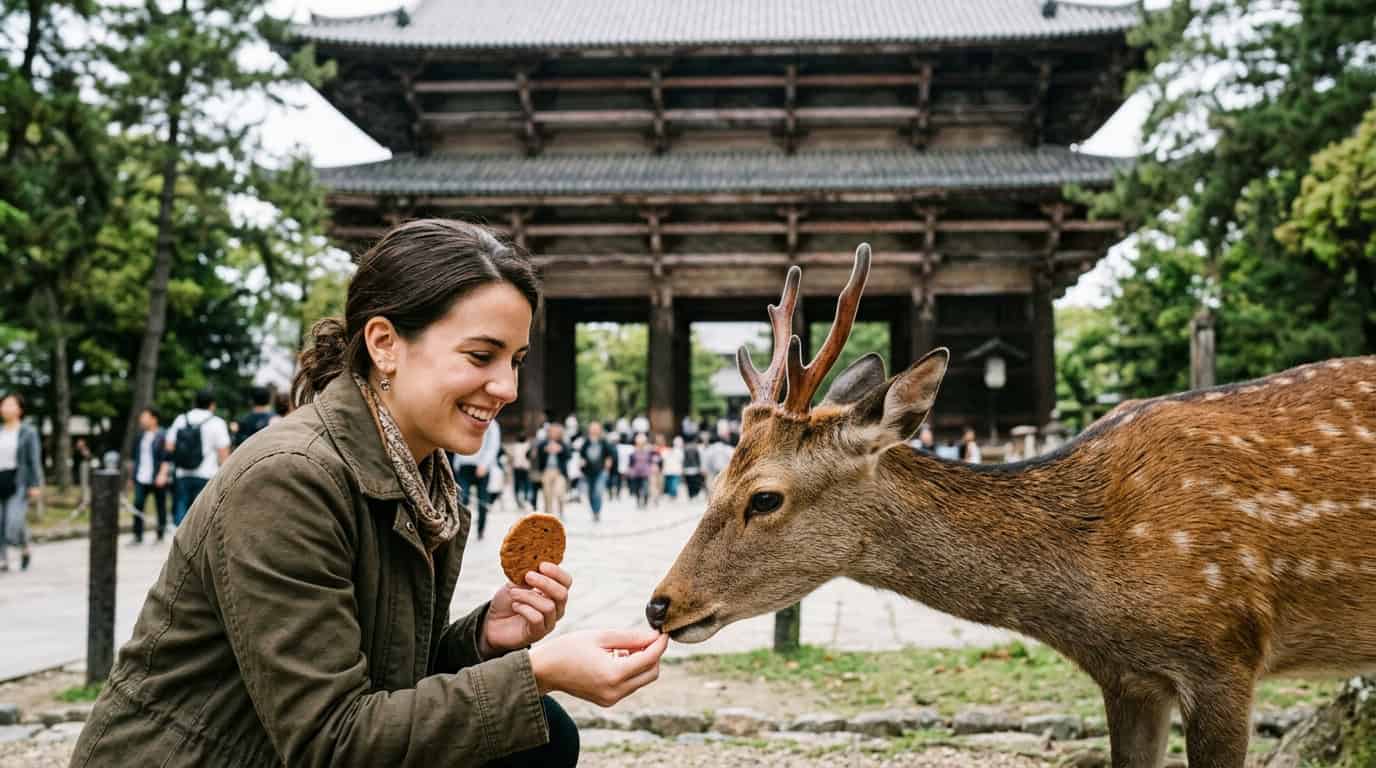
Option A: Nara. Famous for its free-roaming deer and the massive 15-meter bronze Buddha inside Todai-ji Temple.
Transit Data: Do not take the JR line if you can avoid it. Take the Kintetsu Limited Express. It requires a base fare plus a reserved seat ticket, but it drops you significantly closer to Nara Park than the JR station.
Warning: The deer near the entrance can be aggressive and will bite your clothes if they see you holding the 200-yen deer crackers. Walk deeper into the park toward Kinryu Shrine, where the deer are notably gentler.
Option B: Osaka. Osaka is the loud, food-obsessed counterweight to Kyoto’s quiet traditionalism.
Transit Data: The Tokaido Shinkansen (Nozomi train) takes exactly 12 minutes from Kyoto Station to Shin-Osaka and costs roughly ¥1,500. Spend the evening eating takoyaki in Dotonbori and exploring the retro alleys of Den Den Town.
Cost & Value Breakdown: Budgeting for Kyoto
Your daily budget will dictate how much ground you can cover comfortably.
Budget Tier
Estimated Daily Cost
What It Gets You
Shoestring
¥6,000 – ¥10,000 ($40 – $65)
7-Eleven breakfasts, ramen lunches, heavy reliance on walking, limited temple entry fees.
Mid-Range
¥15,000 – ¥30,000 ($100 – $200)
Sit-down lunches, matcha cafe stops, standard Izakaya dinners, subway use, taxi use when exhausted.
High-End
¥35,000+ ($230+)
Traditional multi-course Kaiseki dining, private tea ceremony bookings, high-end wagyu beef, extensive taxi use.
Note: These estimates exclude accommodation and flights. You can easily eat a massive bowl of highly rated ramen for ¥1,200 ($8), making food relatively inexpensive compared to Western cities. The real costs stack up in transportation and constant ¥500 temple entry tickets.
Who Should Use This Itinerary (And Who Should Not)
This approach is ideal for:
Early risers. If you naturally wake up at 6:00 AM, especially due to jetlag, you will easily beat 90% of the tourist crowds.
Strong walkers. This itinerary routinely hits 20,000+ steps per day over uneven stone paths and steep inclines.
History and architecture enthusiasts. You will see dozens of shrines, temples, and gardens.
You might want to skip this if:
You have mobility issues. Kyoto features many stairs, steep hills (like the walk to Kiyomizu-dera or the Monkey Park), and unpaved gravel paths in gardens. If walking is difficult, you will need to drastically cut this itinerary down and rely heavily on taxis.
You prioritize late-night clubbing. Aside from Izakaya bars and quiet cocktail lounges in Pontocho, Kyoto mostly goes to sleep by 9:00 PM. If you want heavy nightlife, base yourself in Osaka instead.
Common Mistakes to Avoid in Kyoto
1. Relying on the Bus System During Peak Hours
Many tourists look at Google Maps, see the bus takes 35 minutes and the subway takes 40, and choose the bus. This is a trap. Between 9:00 AM and 5:00 PM, Kyoto traffic crawls. You will often stand shoulder-to-shoulder on a hot bus that takes 60 minutes to move two miles. Always take the train or walk if it is a viable option.
2. Sleeping In
I cannot stress this enough: Kyoto is ruined by sleeping in. Arriving at the Arashiyama Bamboo Forest at 10:30 AM will result in a miserable experience of dodging elbows and selfie sticks. The city’s magic exists strictly between 6:00 AM and 8:30 AM.
3. Temple Burnout
Kyoto has over 1,000 temples. If you try to see eight of them in a single day, they will all blur together into a meaningless pile of wood and stone. Limit yourself to three major historical sites per day, and spend the rest of your time wandering alleys, drinking coffee, and eating.
Frequently Asked Questions
Is the JR Pass worth buying for a Kyoto trip?
For travel strictly within Kyoto, absolutely not. The JR Pass is useless for the vast majority of internal transit, as you will mostly use private subways, the Keihan line, the Randen tram, or city buses. The JR Pass only offers value if you are taking multiple long-distance Shinkansen trips (e.g., Tokyo to Kyoto to Hiroshima and back) within a 7-day window.
Do I need to book temple tickets in advance?
Generally, no. Standard daytime entry to major sites like Kiyomizu-dera, Kinkaku-ji, and Fushimi Inari (which is free and open 24/7) requires no reservation; you simply pay cash at the gate. However, if you want to attend special autumn night illuminations, private tea ceremonies, or eat at high-end Zen vegetarian restaurants (like the one inside Tenryu-ji), you must book weeks in advance.
Can I just use Apple Pay or a credit card everywhere?
No. While convenience stores (konbini), major hotels, and department stores happily accept credit cards and Apple Pay, traditional Kyoto operates on cash. You will need 100-yen and 500-yen coins for transit lockers, street food vendors at Nishiki Market, shrine donations, and small independent restaurants.
Final Thoughts on Your Trip
Executing a successful first trip to this ancient capital requires trading a bit of comfort for strategy. By waking up early, organizing your days by neighborhood to avoid cross-city transit, and utilizing trains over buses, you bypass the friction that ruins many vacations.
Get your walking shoes ready, load your digital Suica card, and prepare to cover a lot of ground. If you are planning to visit during the spring or fall peak seasons, your absolute next step should be securing your hotel in Gion or Kawaramachi at least five to six months in advance, as the best locations sell out incredibly fast.
References