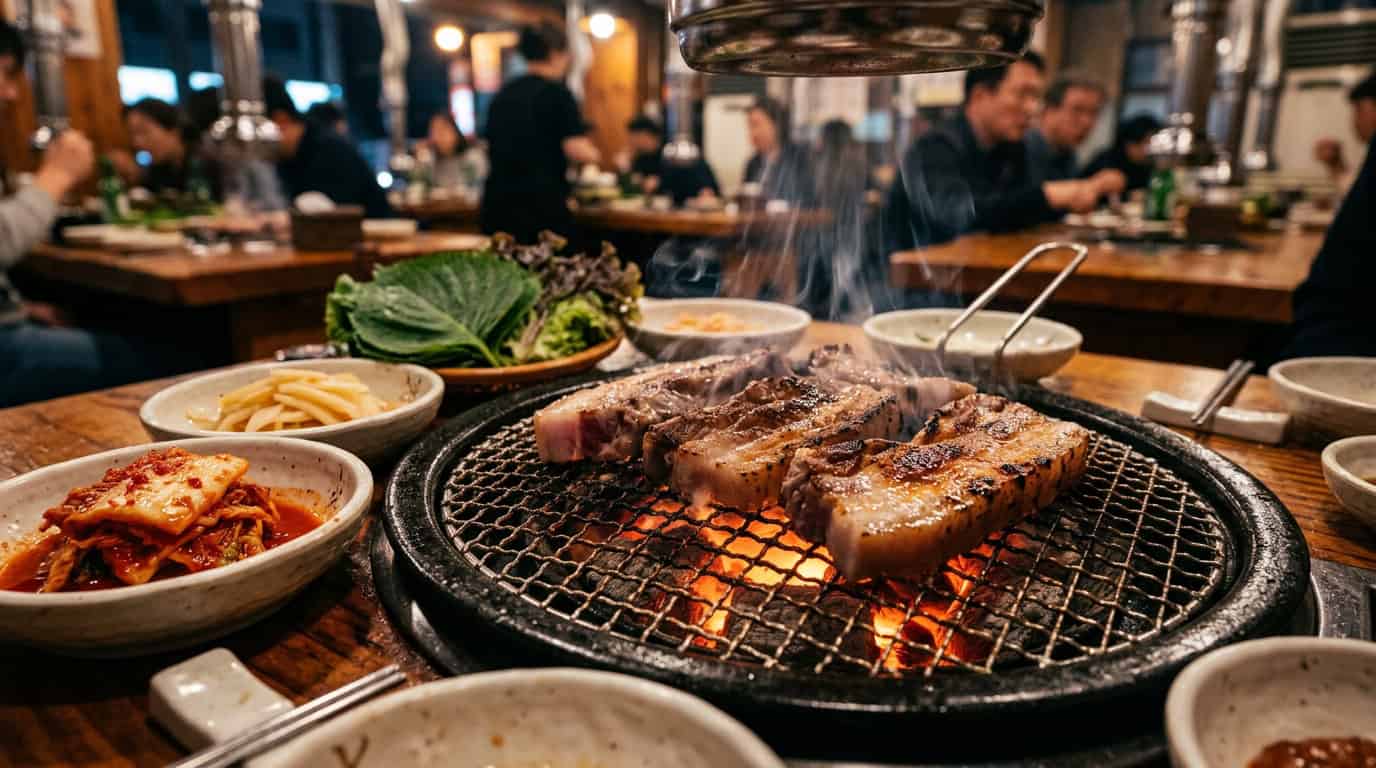
Tracking down the best Korean BBQ in Seoul took me three separate trips to South Korea, hours of translating local diner reviews, and a few burnt pieces of highly expensive meat before I finally understood how the city’s barbecue scene actually operates. If you are flying into the capital expecting a monolithic, generic barbecue experience, you need to adjust your expectations immediately. The city’s meat-grilling culture is highly specialized, hyper-competitive, and deeply woven into the local social fabric.
Quick Summary
- Specialization is mandatory: The top-tier restaurants focus exclusively on either pork or beef. Never order both at a specialty establishment.
- App-based waitlists are standard: For highly sought-after tables, you must download and use the Korean app Catchtable, which typically opens virtual queues at 3:00 PM daily.
- Affordability is high: A standard, high-quality pork barbecue meal costs between $20 and $35 USD per person, including alcoholic beverages.
- Navigation requires local apps: Google Maps is notoriously inaccurate in South Korea; you must download Naver Maps to locate these specific restaurants.
- Pacing matters: Always begin your meal with unmarinated cuts of meat before transitioning to heavily marinated options like galbi to preserve your palate.
The Direct Answer: Where to Go and What to Order
If you want the immediate answer without reading further, here are the absolute top recommendations based on specific dining goals.
For the ultimate pork experience, go to Sancheong Charcoal Garden in Euljiro and order the Jirisan Mountain black pork. For premium, melt-in-your-mouth beef, book a table at Yeoungcheon Yeonghwa in Gangnam and order the Hanwoo sirloin. If you are a first-time visitor wanting a lower-stress, all-you-can-eat introduction with English menus, head to Mongvely in Myeongdong and pay the flat ₩29,700 fee.
Expect to spend around $20 to $35 USD per person for pork-focused meals, and upwards of $60 to $100+ USD per person for premium Hanwoo beef experiences. Do not assume the most expensive restaurant is the highest quality. Some of the most spectacular pork belly (samgyeopsal) in the country is served on dented metal tables in alleyways at 2:00 AM.
If your Seoul food plan extends beyond barbecue, pair this guide with
Myeongdong Night Market Food Guide
and
Best Cafes in Apgujeong for Instagram
to build out a stronger Seoul dining itinerary.
The Golden Rule of Seoul Barbecue: Pick Your Protein
One of the most surprising lessons I learned while navigating the local food scene is the strict division of labor in high-end grilling. In North America and Europe, an upscale Korean restaurant will happily serve you brisket, pork shoulder, and marinated chicken on the same menu. In Seoul, this is a red flag.
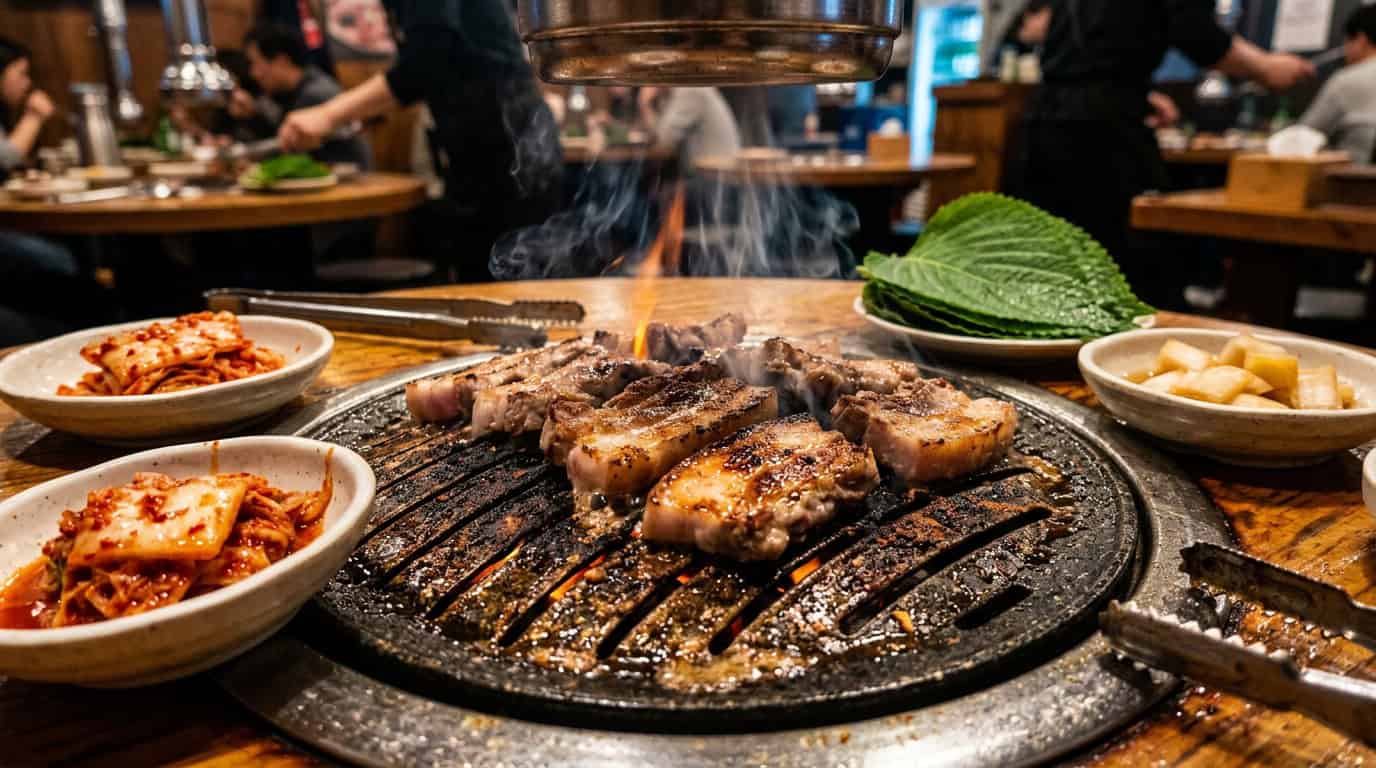
The absolute elite establishments specialize purely in one animal. This is because the equipment, the charcoal temperature, the grill grate design, and the proprietary side dishes (banchan) are entirely optimized for a specific fat content and flavor profile. Beef requires high heat and a wire mesh grill to sear the outside quickly while leaving the inside tender. Fatty pork requires a slotted iron dome to allow the excess grease to drain off without causing massive charcoal flare-ups.
If you sit down at a legendary pork restaurant and spot beef on the menu, it is likely a concession for picky tourists, not a point of pride. Stick to what the kitchen excels at.
Top Destinations for Premium Pork Barbecue
Pork is the undisputed king of everyday South Korean dining. It is affordable, deeply flavorful, and pairs flawlessly with soju. Here are the standout locations dedicated to the craft of pork.
Sancheong Charcoal Garden (Euljiro)
Tucked away near Euljiro’s famous beer alleys, Sancheong Charcoal Garden operates out of a massive room with incredibly high ceilings and a neon-lit butcher counter where whole pig carcasses hang on display.
Their claim to fame is black pork sourced specifically from Jirisan Mountain, a prized regional breed known for its exceptional meat-to-fat ratio. The staff handles the cooking for the salted black pork and the gochujang (red chili paste) glazed pork belly, searing it perfectly over roaring charcoal pits. However, if you order the more obscure cuts like pork jowls or cheeks, you will be handed the tongs to cook it yourself.
Getting a table here requires strategy. During my last visit, I tested the Catchtable app for this exact location. My party of ten logged in exactly at 3:00 PM when the virtual queue opened. By the time we secured our spot, we still had an hour and fifteen-minute wait for a 5:45 PM seating. Do not simply walk up to the door at 7:00 PM on a Friday and expect to eat.
Pigbar (Hongdae)
Hongdae is a heavily trafficked neighborhood catering to university students, which means it is flooded with cheap, mediocre meat joints. Pigbar is the massive exception.
They serve what many locals consider the crispiest, most perfectly rendered pork belly in the district. They also excel at grilled pig skin, a textural delicacy that gets delightfully chewy and charred over the charcoal. What elevates Pigbar above its competitors is the homemade condiment selection. Instead of standard salt, they provide an anchovy sauce, a proprietary mushroom-wasabi blend, and a bubbling tray of hot corn cheese that sits directly on the grill to be used as a heavy, savory dip.
Baekjeong (Multiple Locations including Myeongdong)
Founded by Korean celebrity Kang Ho-dong, Baekjeong is an incredibly lively, loud, and reliable chain. While food snobs might dismiss it due to its franchise status, its proprietary grill design is genuinely brilliant. The circular iron plates feature a moat around the outer edge. As your pork belly cooks in the center, the staff pours raw egg batter and corn cheese into the side compartments. By the time your meat is ready to eat, you have a perfectly steamed egg custard that has absorbed the smoky runoff from the pork.
Top Destinations for Exceptional Beef
While pork is for Tuesday nights with coworkers, premium beef—specifically domestic Hanwoo beef—is for celebrations, impressing clients, or treating yourself to world-class marbling.
Yeoungcheon Yeonghwa (Gangnam)
If you want the high-profile, K-pop celebrity experience, this is the destination. The walls are practically structural with the sheer volume of celebrity signatures, including regular visits from massive acts like BTS and Blackpink.
They specialize in premium Hanwoo beef, which is essentially the South Korean equivalent to Japanese Wagyu, prized for its intricate fat marbling and sweet, grassy flavor. I highly recommend allocating your entire dining budget toward their premium sirloin cuts and their rich bulgogi stew.
I must share a mistake I made here: during my second trip, I made the rookie error of ordering their highly marketed beef tartare, assuming the premium price tag guaranteed a life-changing dish. It was notably lackluster compared to cheaper tartare specialists in the Gwangjang Market. Stick to the grilled sirloin.
Legendary Ribs / 전설의 우대갈비 (Chain)
For diners wanting a quieter, more exclusive atmosphere, Legendary Ribs provides entirely private dining rooms featuring comfortable booth seating. You never have to shout over the table next to you.
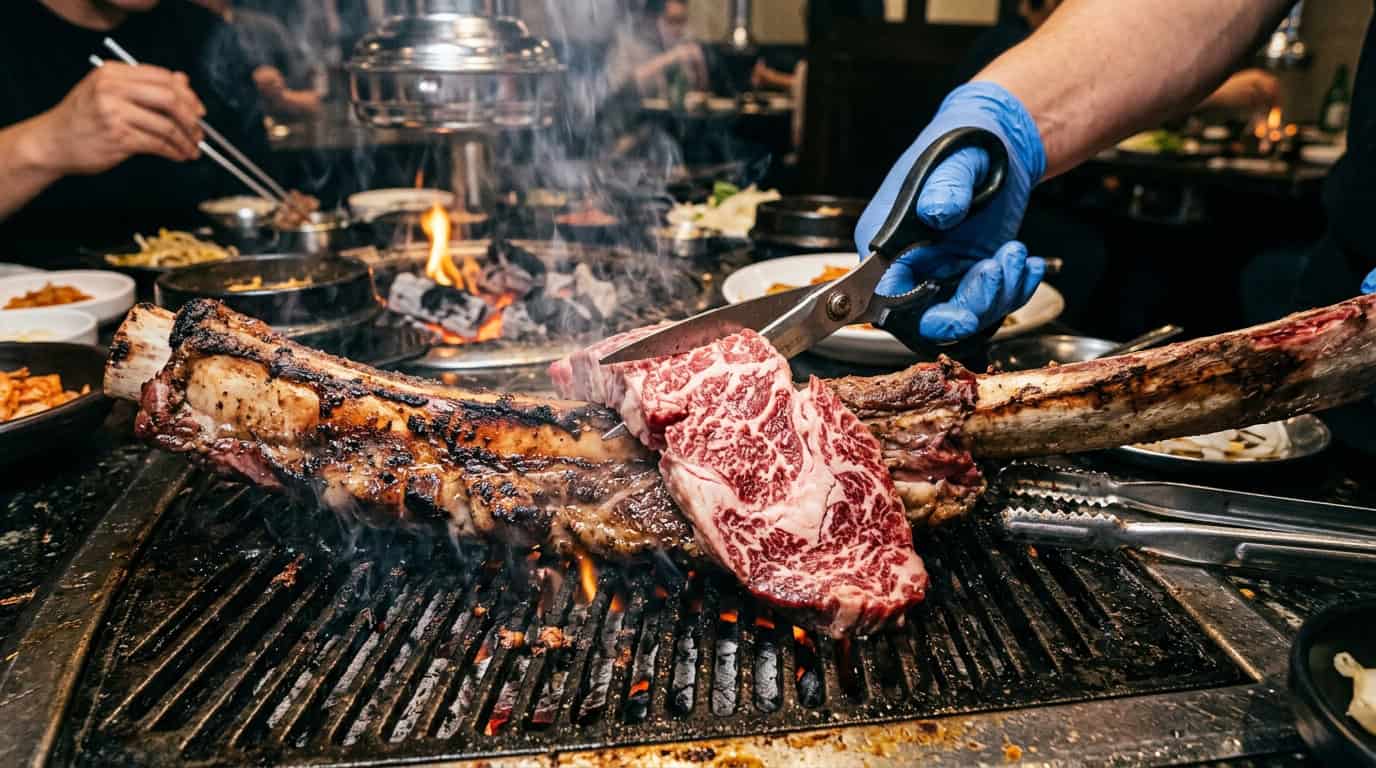
Their specialty is woodae galbi—a massive, visually imposing bone-in short rib cut specifically from the middle three ribs of the cow, ensuring maximum tenderness. The staff provides full-service cooking, slicing the meat off the massive bone with heavy shears and walking you through exactly which salt or sauce pairs best with each bite.
One honest downside to this establishment is the banchan. The side dishes are incredibly basic and lack the complex fermentation and variety you find at older, traditional spots. To counteract the heavy, fatty ribs, you must order their spicy cold noodles (nangmyeon) to cleanse your palate between bites.
Tourist-Friendly & Late-Night Alternatives
Sometimes you do not want to battle an app-based waitlist or decipher a strictly Korean menu. For those moments, specific restaurants cater beautifully to international guests and night owls.
Mongvely (Myeongdong)
Myeongdong is the retail heart of the city, and Mongvely sits right above the shopping chaos. This is an All-You-Can-Eat (AYCE) venue that charges a flat rate of ₩29,700 for 120 minutes of dining.
What makes Mongvely exceptional for beginners is the transparency and infrastructure. The menus are fully translated into English, Japanese, and Chinese. They feature a self-service meat bar allowing you to inspect and choose your own cuts of beef brisket, pork shoulder, and marinated ribs. Most importantly, they feature a 17-item sauce bar including non-traditional options like cheese powder and spicy teriyaki, alongside unlimited cold noodles.
The 120-minute time limit can feel a bit rushed if you are managing a large group of slow eaters, but the flat pricing entirely eliminates the risk of bill shock at the end of the night.
Saemaeul Sikdang (Hongdae)
If you leave a club at 2:00 AM and need immediate caloric support, Saemaeul Sikdang stays open until 4:00 AM. It is a strictly self-service, heavily traditional environment. You fetch your own perilla leaves, you manage your own grill, and you pour your own drinks. It lacks the polish of Gangnam establishments, but the late-night utility and aggressive seasoning make it a mandatory addition to any itinerary.
Cost Comparison and Value Breakdown
Understanding the financial mechanics of Korean dining helps you budget effectively. Unlike Western restaurants where sides and appetizers are billed separately, the quoted price of your meat in Seoul includes an endless, bottomless supply of banchan and table water.
Common Mistakes to Avoid
Even seasoned travelers make glaring errors when interacting with tabletop grills. Avoid these specific missteps to ensure you don’t ruin premium ingredients or offend the staff.
Mistake 1: Flipping the meat constantly.
Westerners are accustomed to nervously prodding and flipping burgers on a backyard grill. In South Korea, touching the meat too much is a culinary sin. For pork belly, you should let one side sear until a deep, golden-brown crust forms, flip it exactly once, sear the other side, and then cut it into bite-sized strips. Pressing the meat down into the grill with your tongs squeezes out the internal juices, leaving you with dry, tough protein.
Mistake 2: Eating the raw garlic by itself.
Your table will be supplied with small dishes of raw, sliced garlic and green chili peppers. These are not meant to be eaten solo as a side dish. They are intensely pungent. They are designed to be placed inside a lettuce or perilla leaf wrap (a ssam) along with a piece of fatty meat and soybean paste. The fat of the meat mellows the sharp bite of the raw garlic. If you want to eat the garlic whole, place it on the outer edge of your grill to roast in the pork fat first.
Mistake 3: Navigating with the wrong digital tools.
I spent 45 minutes walking in circles in Hongdae because I trusted Google Maps. Due to national security laws, Google’s mapping data in South Korea is highly restricted, leading to wildly inaccurate walking directions and misplaced restaurant pins. You must download Naver Maps or KakaoMap to successfully locate the establishments mentioned in this guide.
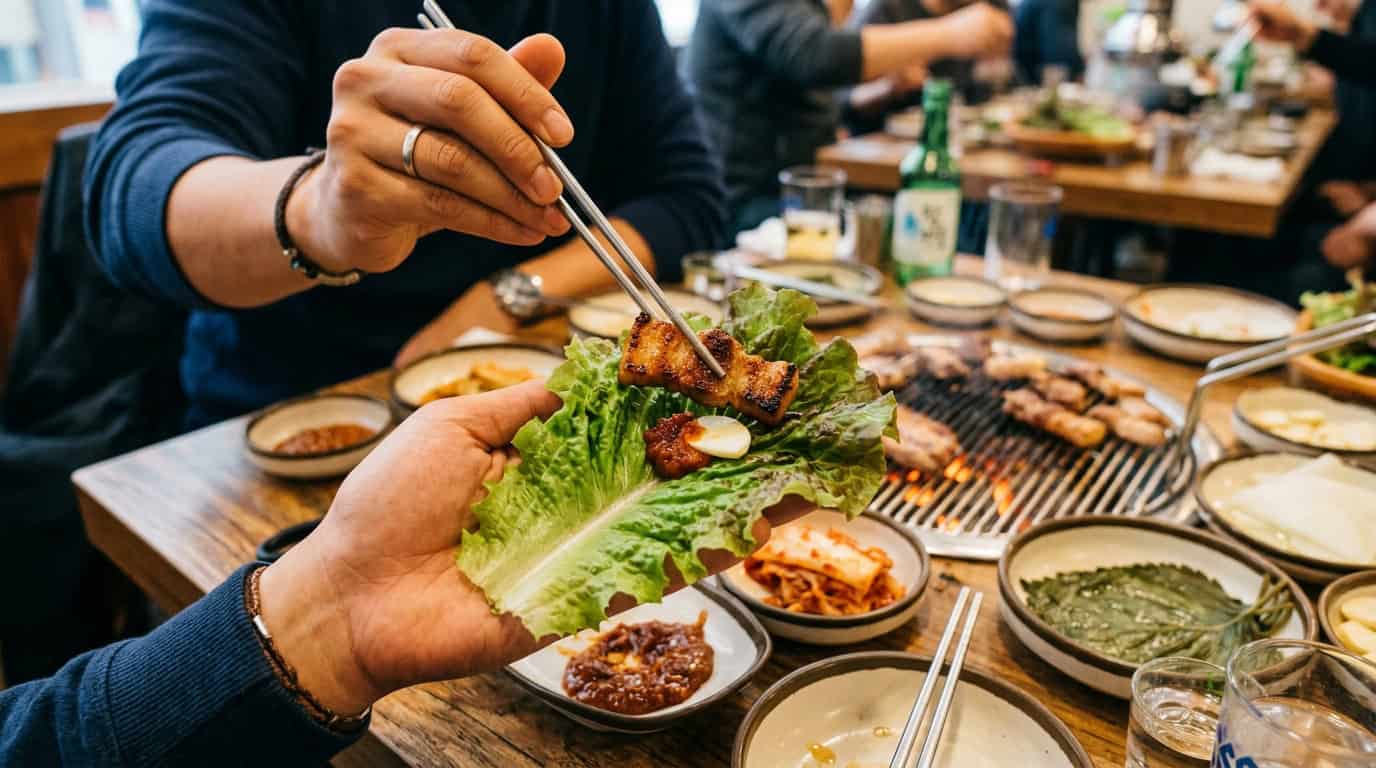
How to Eat Like a Local: The Ssam Technique
If you want to experience the food properly, you must embrace the interactive nature of the meal.
- Pacing: Always cook unmarinated meat (like raw brisket or plain pork belly) first. If you start with sweet, soy-marinated galbi, the sugars will burn onto the grill grate, ruining the flavor of any subsequent meat you try to cook.
- The Wrap: Take a fresh lettuce leaf and place it in your non-dominant hand. Layer a perilla leaf (which has a minty, herbaceous flavor) on top.
- The Payload: Dip a piece of cooked meat lightly in sesame oil and salt, and place it in the center of the leaf.
- The Condiments: Add a small dab of ssamjang (a thick, savory fermented soybean paste), a slice of roasted garlic, and a pinch of pickled radish.
- The Execution: Fold the leaf into a tight, neat parcel and eat the entire thing in a single bite. Biting a wrap in half is considered messy and causes the internal juices to spill everywhere.
Always conclude your meal by ordering a bowl of cold noodles (naengmyeon) or a bubbling soybean paste stew (doenjang jjigae). The icy broth or the fermented stew acts as a necessary palate cleanser, cutting through the heavy animal fats you just consumed.
Who Should Choose Which K-BBQ Experience (And Who Should Not)
You should choose Sancheong Charcoal Garden if: You are an adventurous eater who values meat quality above all else and is willing to navigate local queueing apps to secure a table.
You should skip Sancheong Charcoal Garden if: You hate waiting, have a strict itinerary, or prefer quiet, intimate dining environments.
You should choose Mongvely Myeongdong if: You are traveling with a family, have teenagers with bottomless appetites, or feel intimidated by language barriers and want a simple, transparent pricing structure.
You should skip Mongvely Myeongdong if: You want a deeply historical, atmospheric dining experience, or you prefer staff to handle the cooking so you can focus purely on conversation.
You should choose Yeoungcheon Yeonghwa if: You have a high travel budget, want to eat where global pop stars eat, and want to experience the highest tier of Korean cattle farming.
Frequently Asked Questions
Is it rude to cook the meat myself?
It depends on the restaurant and the cut of meat. At premium establishments paying upwards of ₩50,000 per person, the staff will generally cook the meat for you to ensure their expensive product is not ruined. At affordable or AYCE spots, self-service is expected. If a server starts cooking your meat, let them finish. If they drop the meat and walk away, use your tongs.
Do I need to tip the staff at a Korean BBQ restaurant?
Absolutely not. Tipping is not part of South Korean culture and can actually cause confusion or offense. The price you see on the menu is exactly what you pay. Excellent service is simply considered the baseline standard of the hospitality industry here.
What if my clothes smell like smoke after the meal?
This is a universal reality of eating tabletop grilled meat. Almost all reputable establishments will provide heavy plastic bags or have seats with lifting cushions where you can securely store your coats and bags to prevent them from absorbing the charcoal smoke. Many restaurants also keep a bottle of fabric deodorizer (often Febreze) near the exit door for diners to spray themselves down before leaving.
The Final Word on Seoul’s Grills
Finding the best Korean BBQ in Seoul does not mean searching for one mythical, perfect restaurant. It means understanding exactly what kind of dining experience you want on any given night. Whether you are using Catchtable to secure a highly coveted stool at a Jirisan black pork specialist, paying a flat rate for unlimited brisket in Myeongdong, or dropping serious cash on Hanwoo beef in Gangnam, the city delivers on every level. Just remember to use Naver Maps, pace your marinades, and never, ever flip your pork belly more than you have to.
For trip-planning support beyond restaurants, see
Best AI Travel Planners
before mapping out reservations, routes, and neighborhood stops across Seoul.