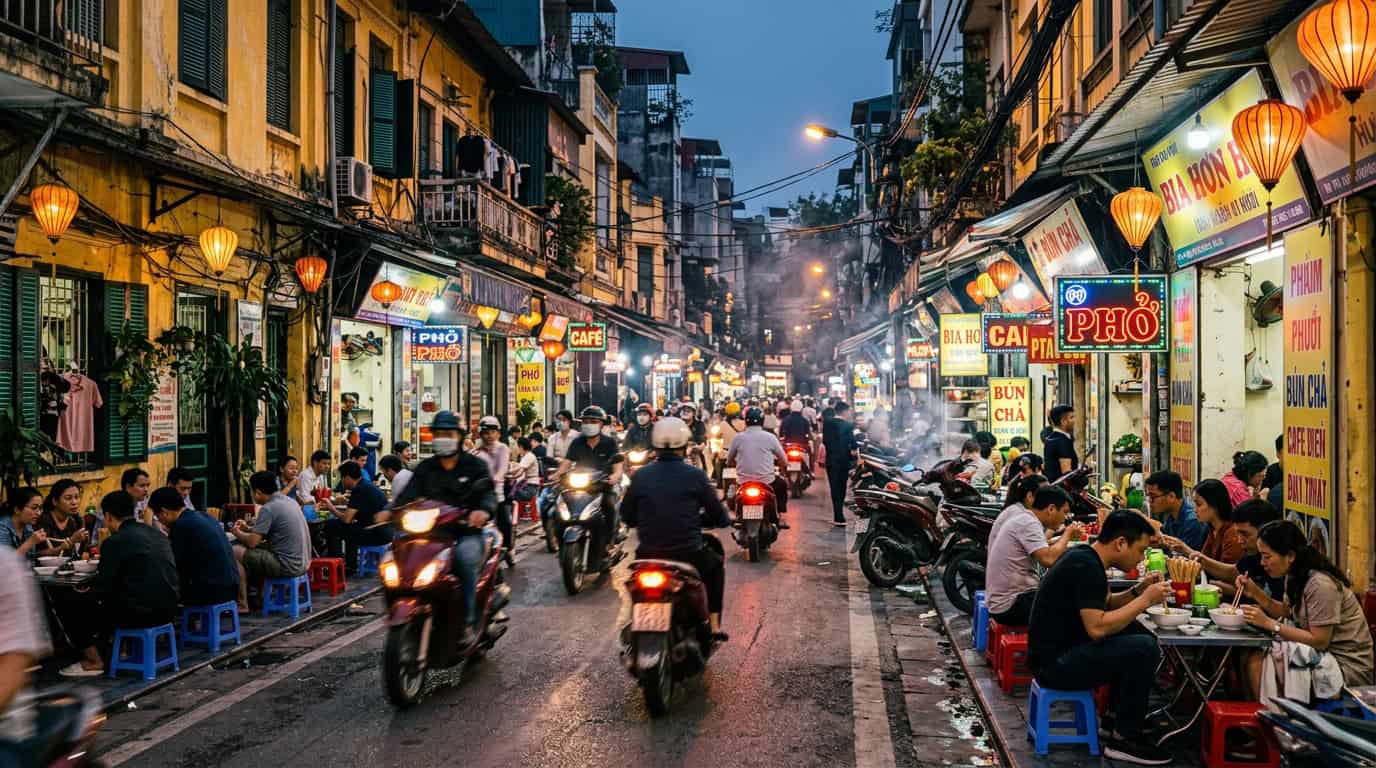
Building a functional Hanoi 3 day itinerary requires you to accept one absolute truth: you cannot control the pace of this city. Vietnam’s capital does not pause for tourists to take photographs or consult their maps. It is a relentless, thickly layered metropolis where the smell of simmering beef bone broth collides with exhaust fumes, and thousand-year-old Confucian temples sit blocks away from narrow French colonial alleyways. When I first tried to cross a road in the historic center, paralyzed by a swarm of thousands of scooters, I realized my standard approach to travel would fail here. You cannot treat this destination like a sterile checklist.
To actually understand the city without burning out from sensory overload by noon, you need a highly deliberate plan. You have to wake up when the locals do, retreat indoors when the tropical humidity peaks, and know exactly which alleys hold the best bowl of pho. This guide strips away the generic tourist advice to give you an exact, costed, and historically grounded roadmap for navigating the chaos.
Quick Summary
- Pacing is mandatory: Structure your days with 6:00 AM starts and extended indoor breaks between 11:00 AM and 3:00 PM to survive the extreme heat and humidity.
- The Monday Trap: Do not plan museum visits on Mondays. Major institutions, including the Ho Chi Minh Mausoleum and the Temple of Literature, completely shut down.
- Strategic Lodging: Book your hotel strictly inside the historic center. Commuting from outer districts means losing hours of your day sitting in gridlocked traffic.
- Digital Transit: Ignore traditional taxis on the street. Download the Grab app, link a credit card, and order rides to eliminate language barriers and aggressive price gouging.
- Skip the day trips: Cramming a five-hour round trip to the coast into a three-day schedule is a mistake. Focus entirely on the urban core and immediate surrounding villages.
The Direct Answer: How to Spend 3 Days in Hanoi
If you want the most efficient way to digest the city without extreme fatigue, here is the exact blueprint for your Hanoi 3 day itinerary.
Divide the city geographically. Dedicate Day 1 entirely to the historic 36 streets of the center, acclimatizing to the traffic, securing local SIM cards, and sampling the foundational street food culture. Spend Day 2 focused on Ba Dinh district, absorbing the heavy, monumental history of Vietnam’s ancient emperors, French colonization, and the mid-century revolutions. Finally, use Day 3 to slow down in the sophisticated French Quarter and the scenic expanse of West Lake, taking time for deep-tissue massages, cooking classes, or specialty coffee workshops.
Do not attempt to squeeze a coastal cruise into this window. The biggest mistake travelers make is using one of their three precious days to sit in a bus for five hours just to see a rushed, plastic-polluted section of the northern bay. Stay inside the city limits. Let the urban density wash over you.
If you’re building a wider Vietnam route, pair this guide with
Best Places to Visit in Vietnam
and
Ho Chi Minh City Travel Guide
to balance north and south more realistically.
Day 1: Acclimatization, Coffee, and the 36 Streets
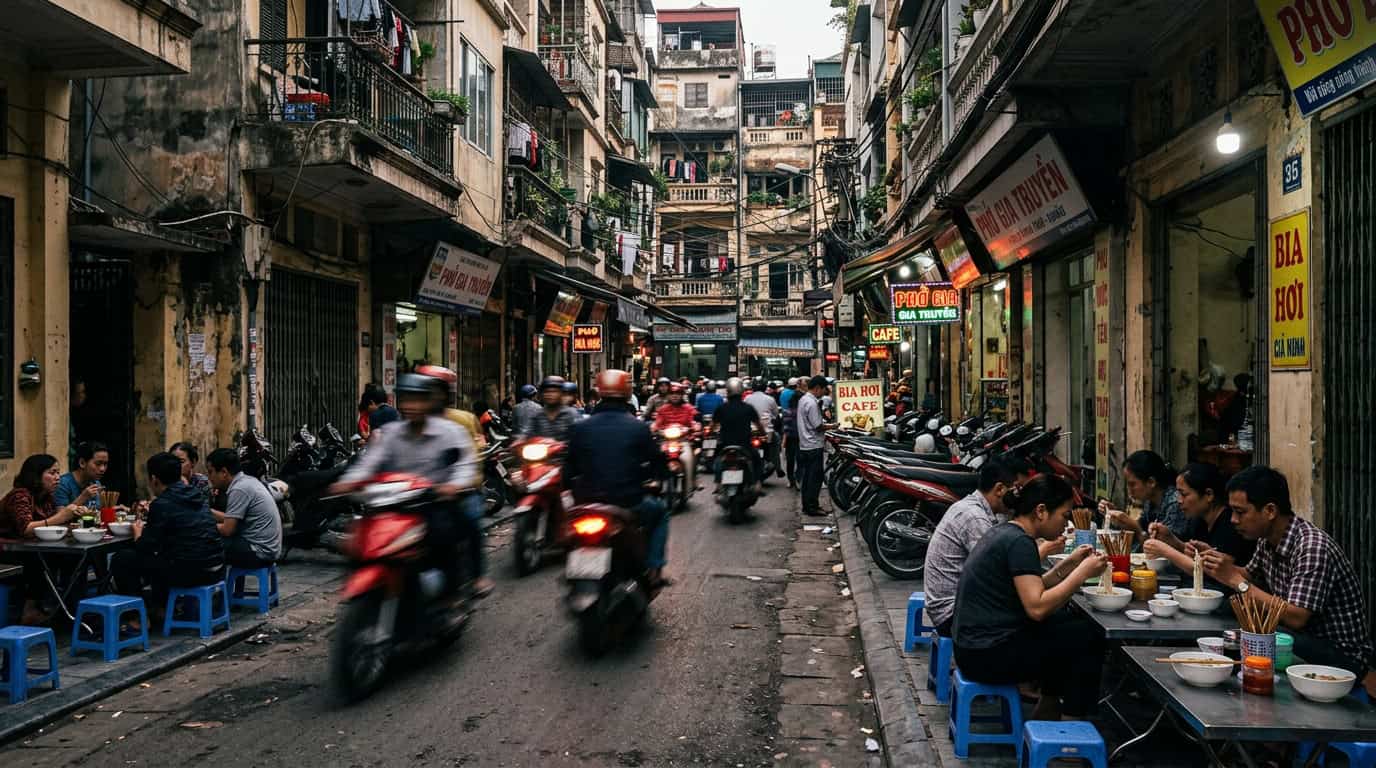
The first day is about jumping directly into the deep end. You will spend the entirety of your daylight hours navigating the historic center, a labyrinthine district that has operated as a commercial hub since the 11th century.
Morning: Liquid Tiramisu and Lake Mythology
Wake up by 6:30 AM. Walk to Café Giang at 39 P. Nguyễn Hữu Huân. In 1946, facing a severe national milk shortage caused by the French War, a bartender named Nguyen Van Giang invented a substitute by aggressively whisking egg yolks with sugar and pouring it over dark, bitter robusta coffee. The result is Cà phê trứng (egg coffee). It tastes like liquid tiramisu and costs exactly 35,000 VND (about $1.50). Sit on the low wooden stools, drink it hot, and watch the city wake up.
By 8:00 AM, walk south to Hoan Kiem Lake. This 12-hectare body of green water is the spiritual center of the capital. According to 15th-century mythology, Emperor Le Loi returned a magical sword to a golden turtle deity here after driving out the Chinese Ming dynasty. Pay the 30,000 VND entrance fee to cross the crimson Huc Bridge onto Jade Island to view the Ngoc Son Temple.
Afternoon: The Guild Streets and the First University
For lunch, grab a traditional Vietnamese baguette. While many head to heavily marketed spots, Bánh mì Mama on Lý Quốc Sư street consistently delivers a superior crunch and heavily spiced pate. Expect to wait in line for 15 minutes.
Spend your afternoon mapping the 36 Streets. Historically, each street belonged to a specific artisan guild. The naming convention remains: Hang translates to merchandise. Walk down Hang Bac to hear the rhythmic tapping of silversmiths, or navigate Hang Ma, which is entirely awash in bright red paper lanterns and spiritual votive offerings used for ancestor worship.
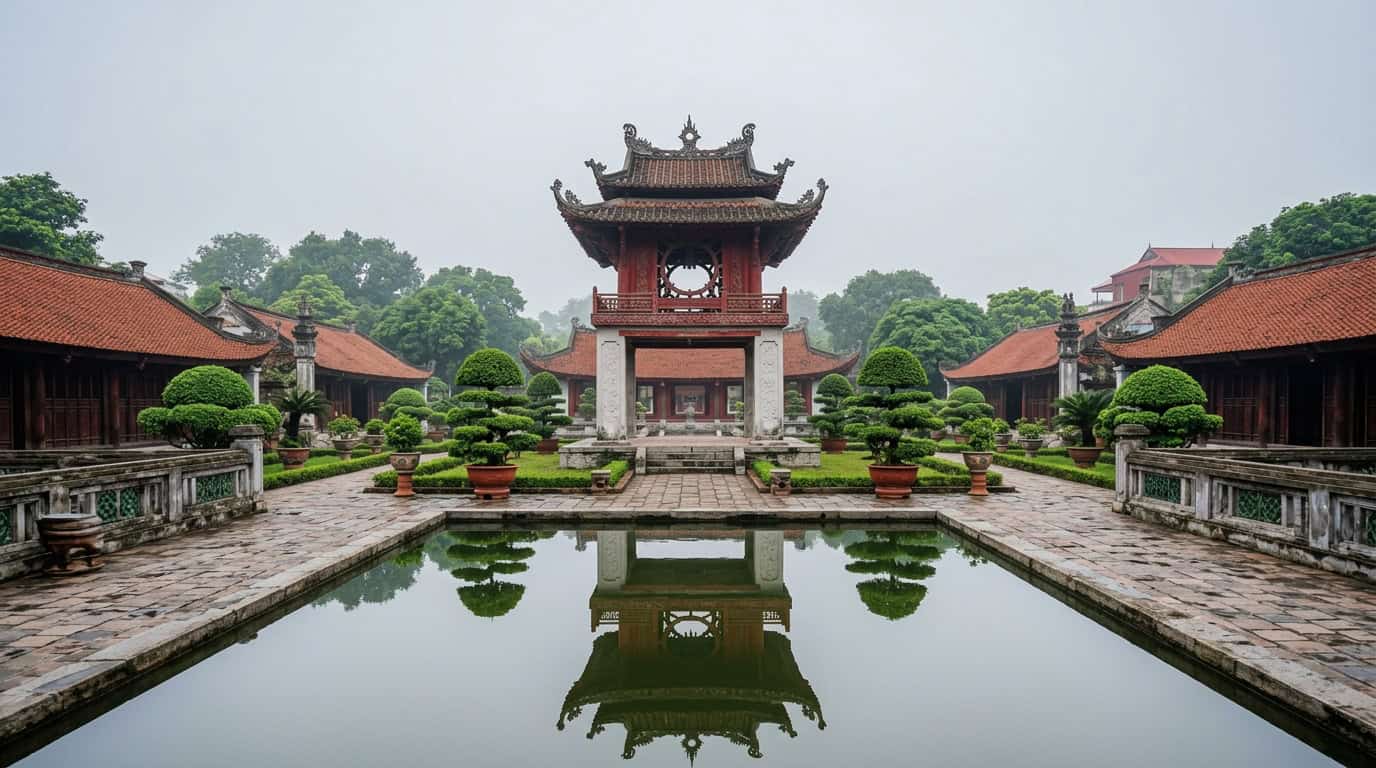
Once the midday heat becomes oppressive around 2:00 PM, take a short Grab car ride to the Temple of Literature (70,000 VND entry). Built in 1070, this serene, walled complex served as Vietnam’s first national university. It is heavily shaded by ancient trees and completely isolated from the traffic noise outside. Pay special attention to the 82 massive blue stone tortoises carrying tall stelae on their backs; they are carved with the names of scholars who passed the famously grueling royal exams centuries ago.
Evening: Ceramic Bowls and Water Puppets
At 6:00 PM, secure tickets for the Thang Long Water Puppet Theatre (100,000 VND). This 1,000-year-old art form originated in the flooded rice paddies of the Red River Delta. Puppeteers stand waist-deep in water behind a bamboo screen, manipulating heavy wooden figures across a liquid stage to live folk music.
After the 45-minute show, head to the intersection of Ta Hien and Luong Ngoc Quyen. Sit on a tiny plastic stool, order a plate of grilled pork skewers, and drink fresh Bia Hoi for 15,000 VND ($0.60) a glass. It is loud, cramped, and entirely authentic.
Day 2: Revolutionary Relics and Urban Trains
Your second day requires a shift in tone. You are leaving the commercial district to examine the stark political realities and military history that shaped modern Vietnam.
Morning: The Uncle Ho Complex
Dress conservatively today—shoulders and knees must be completely covered. Arrive at the Ho Chi Minh Mausoleum complex exactly at 7:30 AM. This massive brutalist marble structure houses the embalmed body of Vietnam’s revolutionary leader.
The security and behavioral rules here are absolute. When I visited, I absentmindedly put my hands in my pockets while standing in the queue and was immediately reprimanded by a guard in an immaculate white uniform. You must walk in continuous single file, remain completely silent, and keep your hands visible. Photography inside the freezing, dimly lit chamber is strictly forbidden. The experience is incredibly solemn and offers profound insight into the nation’s reverence for its leaders. (Note: The mausoleum is closed Mondays, Fridays, and annually from September to November for maintenance.)
Walk behind the mausoleum to view the Presidential Palace—a bright mustard-yellow French colonial mansion that Ho Chi Minh famously refused to live in, opting instead for a modest wooden stilt house over a carp pond nearby.
Afternoon: The “Hanoi Hilton” and Grilled Pork
For lunch, you are tracking down Bun Cha. Head to Bun Cha Huong Lien at 24 Le Van Huu Street. This is the exact restaurant where Anthony Bourdain and President Barack Obama shared a meal. You will be served a bowl of sweet, smoky broth filled with fatty grilled pork, alongside a mountain of fresh herbs and cold rice noodles.
Next, take a taxi to the Hoa Lo Prison Relic (40,000 VND entry). Built by the French in the late 19th century as Maison Centrale to incarcerate and execute Vietnamese political dissidents, it was later used by the North Vietnamese army to hold American Prisoners of War—who sarcastically dubbed it the Hanoi Hilton. Rent the 50,000 VND audio guide. The exhibits heavily emphasize the brutal French occupation, presenting a historical narrative that differs sharply from Western textbooks.
Evening: The Railway Cafes
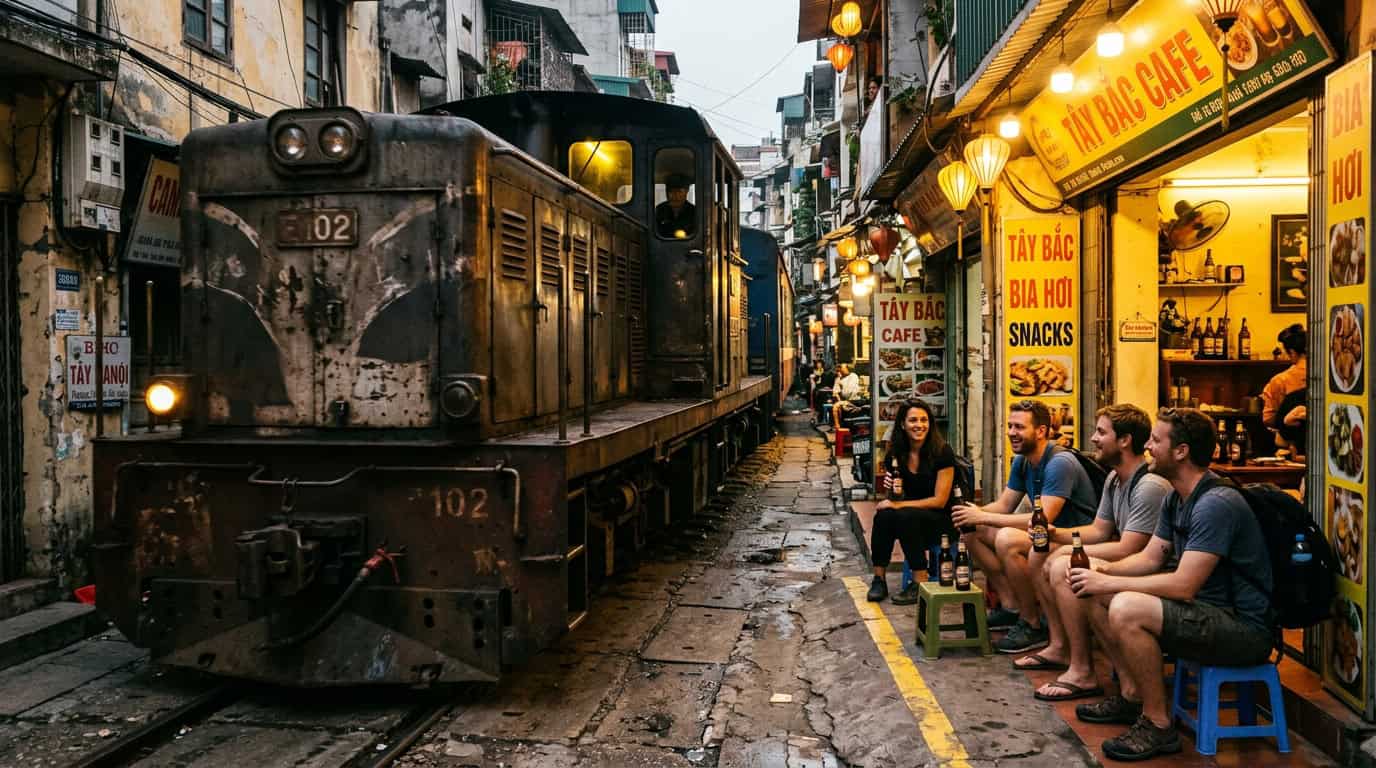
Around 7:00 PM, head to Train Street. This is a narrow residential alley where active railway tracks sit just inches from people’s front doors. Due to safety crackdowns, the northern section is heavily policed and often closed to tourists. Instead, head south to Alley 224 on Le Duan Street. You must sit inside a designated cafe, order a drink, and press your back against the wall as the massive metal train thunders past, rattling the coffee cups on your table.
For dinner, indulge in Cha Ca at the legendary Cha Ca La Vong (14 Cha Ca Street). It costs about 350,000 VND per person—expensive by local standards—but the experience of pan-frying chunks of turmeric-marinated fish with massive fistfuls of fresh dill at your table is unmatched.
Day 3: Lakeside Serenity and French Elegance
By day three, culinary and historical fatigue usually sets in. Today is about spacing out your activities, changing the visual landscape, and enjoying the city’s cosmopolitan elements.
Morning: Market Chaos and Culinary Science
Skip the hotel breakfast. Book a morning street food or cooking tour (I highly recommend the Eat Like a Local guided walks). A local guide will pull you away from the tourist-heavy zones and walk you through a wet market.
You will see skinned frogs, massive tanks of live carp, and mountains of fresh star anise. Having a translator is invaluable here. I finally learned the difference between the dozen varieties of local mint and basil that accompany every meal. If you opt for a cooking class, you will spend the rest of the morning learning to properly roll fresh spring rolls in translucent rice paper and simmer a fast-cheater’s version of pho broth.
Afternoon: The Massive Freshwater Expanse
Take a Grab car 15 minutes north to West Lake (Hồ Tây). This massive body of water has a 17-kilometer shoreline and offers a complete escape from the claustrophobia of the center. Rent a bicycle for 40,000 VND and ride along the eastern edge.
Stop at the Tran Quoc Pagoda. Dating back to the 6th century, it is the oldest Buddhist temple in the city. Its towering, 11-tiered red brick stupa looks incredible against the grey water. Ignore the aggressive vendors trying to sell you incense or scarves at the gate; you can walk right past them into the quiet courtyards.
If you prefer indoor culture, skip the lake and take a taxi to the Vietnamese Women’s Museum (30,000 VND). It is arguably the best-curated museum in the country, detailing the heavily overlooked role women played in carrying weapons during the guerrilla wars, alongside fascinating displays of tribal marriage customs from the nation’s 54 ethnic minorities.
Evening: Colonial Architecture and Modern Mixology
Spend your final evening walking through the French Quarter. The boulevards here are wide, tree-lined, and flanked by high-end boutiques and massive colonial villas. Stop to photograph the Hanoi Opera House, completed in 1911 and modeled directly after the Palais Garnier in Paris.
For your final meal, break away from street food. Book a table at Pizza 4P’s near Hoan Kiem Lake. It sounds absurd to eat pizza in Vietnam, but this Japanese-owned chain produces their own fresh burrata cheese in the central highlands and serves a half-and-half mushroom and parma ham pie that genuinely rivals anything in Naples.
Realistic Cost Breakdown
This destination remains one of the greatest values in global travel. Even if you upgrade to premium experiences, your money stretches incredibly far. Keep in mind that virtually everywhere prefers cash, and utilizing a foreign credit card usually incurs a mandatory 3% surcharge.
Who Should Visit (And Who Should Definitely Not)
This destination is ideal for:
Culinary purists: If you are willing to sit on a six-inch plastic stool on a slanted sidewalk to eat a bowl of noodles, you will experience some of the most complex, balanced flavors on earth.
History buffs: The physical layers of dynastic rule, harsh French colonialism, and Cold War-era conflict are piled on top of each other in a way few other Asian cities can match.
Budget-conscious travelers: The high quality of mid-range boutique hotels and food available for under $40 a day is staggering.
You might want to skip this if:
You require pristine order and quiet: The traffic noise is constant, personal space does not exist on the sidewalks, and the air quality can be poor during dry months.
You struggle with extreme humidity: If you can only travel in July or August and despise sweating profusely within minutes of stepping outside, the tropical urban environment will make you miserable.
- You prefer highly sanitized environments: This is a gritty, living, breathing city. You will see rats near drains at night, raw meat hanging in open-air markets, and chaotic hygiene standards at street stalls.
3 Common Mistakes to Avoid
1. Hesitating in the Crosswalk
Traffic lights are treated as mere suggestions here. When crossing a road filled with motorbikes, the absolute worst thing you can do is sprint, stop abruptly, or step backward. The riders are constantly calculating your trajectory. If you step off the curb and walk forward at a slow, painfully steady pace, the sea of scooters will organically flow around you like water around a stone. It is terrifying the first three times, but it works flawlessly.
2. Misjudging the Climate Reality
Many travelers assume Southeast Asia is just generally warm year-round. I planned a trip in early August, completely unprepared for the reality of 95-degree heat combined with 90% humidity, topped off by sudden torrential downpours that flooded intersections ankle-deep in minutes. Conversely, visiting in January means facing grey skies, bone-chilling dampness, and temperatures dropping to 55 degrees Fahrenheit. Pack specifically for the month you arrive.
3. Falling for the Toll Scam
When taking a Grab car from Noi Bai International Airport into the city center, you will pass through a toll booth. Unscrupulous drivers will frequently turn around and demand 15,000 to 20,000 VND in physical cash for the toll. Do not hand them cash. Simply point to your phone and gesture; the toll fee is legally supposed to be added directly to your final digital app fare.
Frequently Asked Questions
Do I need to book attraction tickets in advance?
For daily historical sites like the Temple of Literature, Hoa Lo Prison, or the mausoleum, you do not need advance tickets; simply pay in cash at the gate. However, if you want good seats at the Thang Long Water Puppet Theatre or wish to secure a table at a premium restaurant, you must book at least 24 to 48 hours ahead of time.
Is it safe to walk around the city at night?
Yes. Violent crime against tourists is exceptionally rare. The most significant threats you will face are petty pickpockets in dense crowds at the weekend night market, and the very real physical danger of being clipped by a motorbike while staring at your phone near the street. Keep your phone secure and maintain situational awareness.
What happens if I visit during Tet (Lunar New Year)?
The Lunar New Year (which shifts annually but usually lands in late January or early February) is the most important holiday in the country. For nearly a full week, the majority of local restaurants, museums, and markets completely shut down as workers return to their home provinces. Travel during this week is incredibly difficult, and I highly advise adjusting your dates to avoid it unless you plan to stay exclusively in expensive international hotels.
Can I drink the tap water?
Absolutely not. Consuming the local tap water is a guaranteed path to severe stomach illness. Stick exclusively to bottled water. However, you do not need to panic about the ice served in your iced coffee or bia hoi; commercial ice in the city is heavily regulated, machine-made from purified water, and generally safe to consume.
Conclusion
Executing a successful Hanoi 3 day itinerary comes down to balancing the city’s chaotic energy with deliberate moments of rest. You cannot see every pagoda, and trying to do so will only leave you exhausted and frustrated. Dedicate your mornings to the heavy historical sites like the mausoleum and the prison, use your afternoons to hide from the heat in a cafe with a cold egg coffee, and let your evenings unfold naturally on a plastic stool in the historic center.
Your next step should be downloading the Grab app, securing a hotel strictly within the Hoan Kiem district, and preparing yourself for the sensory overload of a lifetime.
To extend the trip beyond Hanoi, use
Best Places to Visit in Vietnam
for wider route ideas, or compare the pace and style with
Ho Chi Minh City Travel Guide.
For planning support, this also pairs naturally with
Best AI Travel Planners.