When researching a reliable Fukuoka travel guide alternative in regional Japan, you will quickly notice a glaring statistic: this incredible southern metropolis captures a shockingly small fraction of the foreign tourists visiting Japan. While international travelers endure hours-long queues in Tokyo and squeeze shoulder-to-shoulder through the cramped alleys of Kyoto, Japan’s sixth-largest city sits comfortably on the shores of Kyushu, offering massive ancient temples, unmatched culinary superiority, and highly walkable streets with almost zero friction. I have spent weeks navigating the tight grids of the Hakata district and taking regional trains out into the surrounding Saga prefecture. I can tell you firsthand that if you have tourist fatigue from central Japan, this city is the ultimate antidote.
Quick Summary
The Direct Answer: How to Approach Your Trip
If you are wondering exactly how to allocate your time here, the direct answer is to dedicate three to four full days, utilizing the city as a strategic basecamp for the wider region.
Do not treat this destination as a quick, overnight transit stop on your way to Nagasaki or Hiroshima. On day one, orient yourself around the Hakata Old Town, visiting Kushida Shrine and eating at the riverside stalls after dark. On day two, move west toward the Tenjin district, exploring the castle ruins at Ohori Park and the coastal Fukuoka Tower. Dedicate days three and four exclusively to regional excursions. A 30-minute train ride east puts you at the feet of a 41-meter reclining bronze Buddha at Nanzoin, while a short bus ride south takes you to the historic plum groves of Dazaifu. Book a single hotel near Hakata Station and take advantage of the flawless regional rail network rather than dragging your luggage from town to town.
Hakata vs. Fukuoka: Understanding the Split City
Before you step off the bullet train, you need to understand a geographical quirk that confuses nearly every first-time visitor. You will notice the primary train station is called Hakata, but the municipality is Fukuoka.
Historically, these were two distinct entities separated by the Naka River. The eastern side was Hakata, a gritty, pragmatic merchant town and port that handled trade with Korea and China. The western side was Fukuoka, an elevated, highly fortified castle town established in the early 1600s by samurai lord Kuroda Nagamasa. In 1889, local leaders merged the two sides. Following a narrowly decided council vote, “Fukuoka” became the official city name, but “Hakata” was retained for the railway station, the port, and the local ramen style. Today, locals use the terms interchangeably, but knowing the difference will save you a massive headache when looking at subway maps.
The Logistics: Getting There and Getting Around
The Five-Minute Airport Miracle
I cannot overstate how luxurious the arrival experience is here compared to almost anywhere else in the world. In major global capitals, getting from the tarmac to your hotel requires an expensive hour-long express train or a heavily inflated taxi fare. Fukuoka Airport completely flips the script.
The domestic terminal connects directly to the local subway system. A ride from the airport to Hakata Station takes exactly five minutes and costs roughly 260 yen (under $2.00 USD). If you fly into the international terminal, a free shuttle bus drives you to the subway gates in about ten minutes. This level of infrastructure means you maximize every hour of your itinerary.
Arriving by Shinkansen
If you are traveling down from the main island of Honshu, Hakata Station serves as the final stop on the Tokaido/Sanyo Shinkansen line, and the starting point for the Kyushu Shinkansen.
Note: If you hold a Japan Rail Pass, be aware that you cannot ride the direct Nozomi trains without paying a heavy supplemental fee. You will need to take the slightly slower Sakura or Hikari trains and likely transfer at Shin-Osaka.
Where to Base Yourself: Hakata vs. Tenjin
Choosing your accommodation dictates the flow of your trip. You generally have two optimal choices:
What to Do: The Core City Itinerary
Kushida Shrine and the Old Town
Start your morning in the Hakata Old Town. Kushida Shrine, established in 757 AD, is the spiritual anchor of the neighborhood. It is entirely free to enter and serves as the focal point for the Hakata Gion Yamakasa festival held every July. Even outside of festival season, you can view the massive, heavily decorated ten-meter-tall parade floats permanently displayed on the grounds.
Just a short walk away is Tochoji Temple. For a 50-yen entry fee, you can view the Fukuoka Great Buddha, a towering wooden statue housed inside the temple complex. The grounds also feature a striking five-story red pagoda that provides excellent contrast against the modern office buildings surrounding it.
Ohori Park and the Castle Ruins
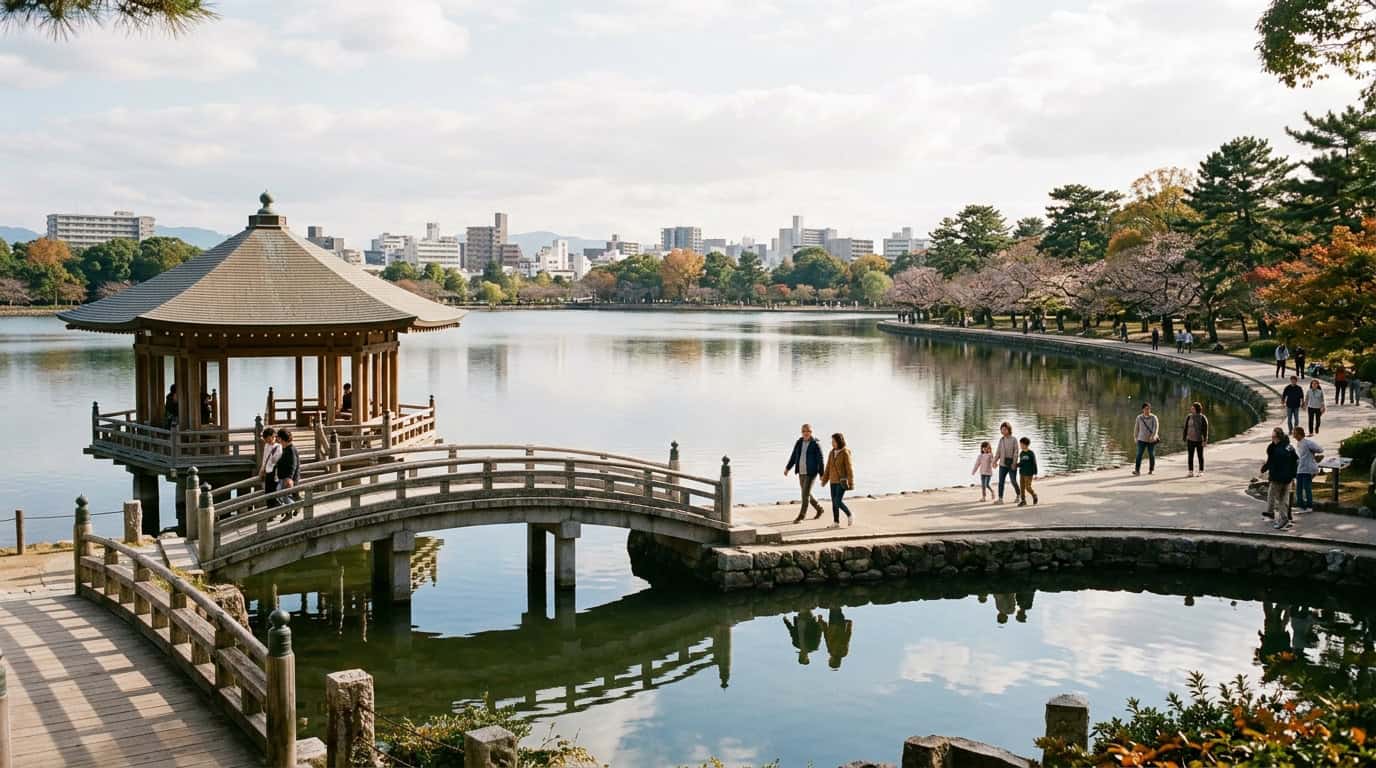
When you need to decompress from concrete and traffic, take the subway to Ohori Park. Built in the 1920s and inspired by classical Chinese water gardens, the park centers around a massive lake that originally served as the moat for Fukuoka Castle. You can rent a swan boat, grab a matcha latte at the waterside cafes, or explore the adjacent Japanese Garden for a 250-yen entry fee.
Immediately next door sits Maizuru Park, home to the Fukuoka Castle Ruins. The primary keep was dismantled centuries ago, but the massive stone ramparts and several guard towers remain intact. It is a quiet, highly atmospheric area, particularly in late March when the cherry blossoms erupt against the old stonework.
Fukuoka Tower and Seaside Momochi
Head to the coast before sunset. Fukuoka Tower stands 234 meters tall, covered entirely in two-way mirrors. For an 800-yen ticket, you can ride the elevator up to the 123-meter observation deck for an unobstructed, 360-degree view of Hakata Bay and the jagged Sefuri mountains to the south.
Right below the tower is Momochihama Seaside Park, an urban, man-made beach. While the water is not highly recommended for swimming, the wide, clean sand and pier-side eateries make it an excellent place to watch the sun drop below the horizon.
The Food Scene: Navigating Yatai Stalls and Tonkotsu
The Reality of Yatai Culture
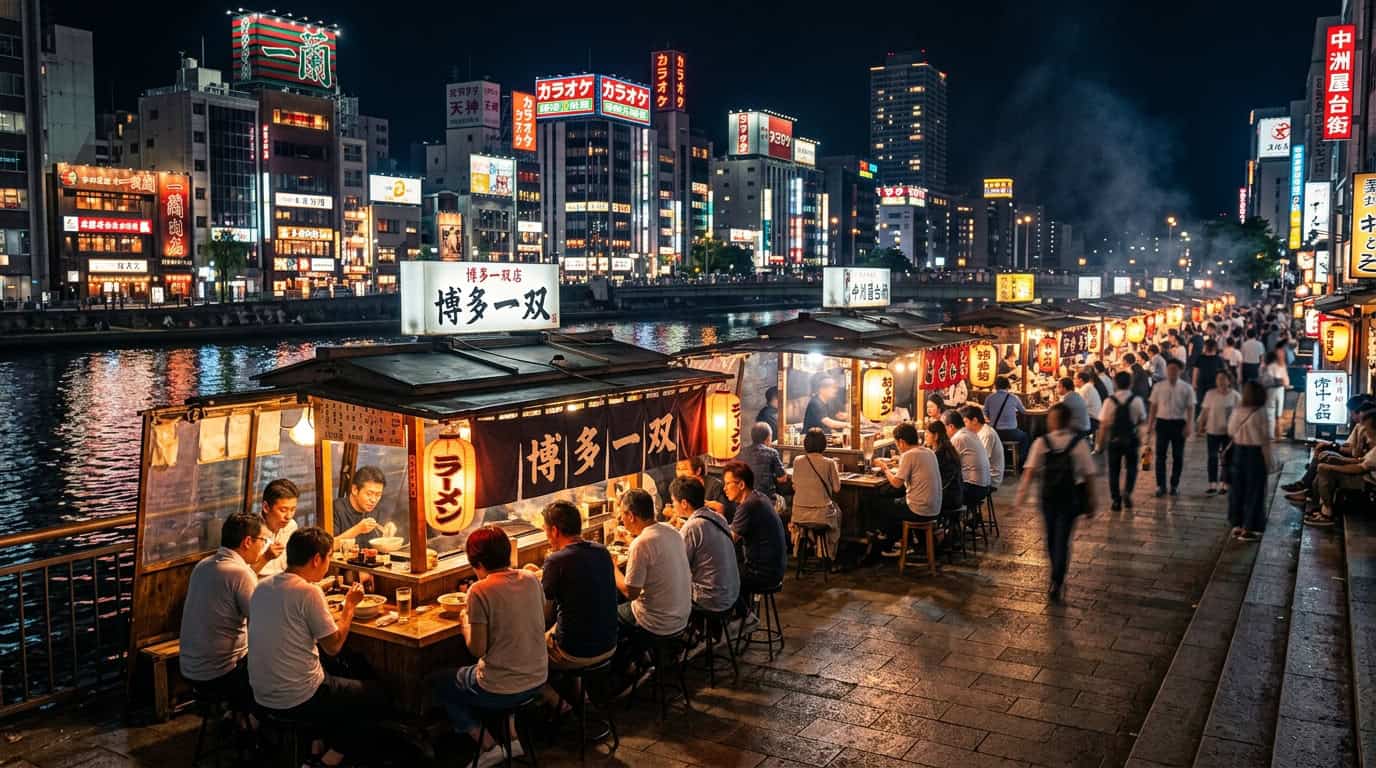
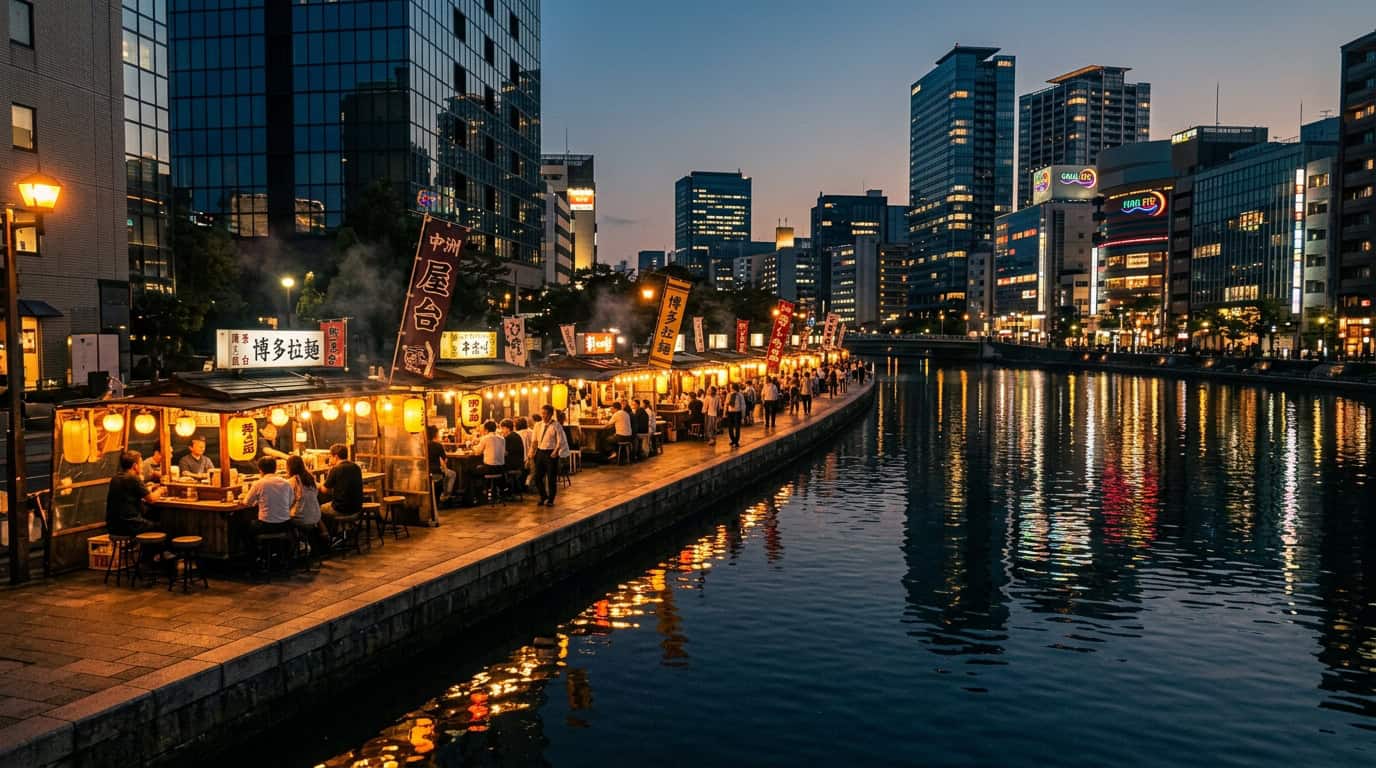
This city is the last major municipality in Japan to legally protect and preserve a massive street food cart culture. Every evening around 6:00 PM, dozens of wooden yatai carts open along the sidewalks, specifically on the southern tip of Nakasu island and around the Tenjin district.
Eating at a yatai is a fiercely intimate, highly social event. You will sit shoulder-to-shoulder with tired salarymen and local university students. However, I have to offer a massive warning: some stalls located directly on the main tourist thoroughfares in Nakasu omit prices from their English menus and tack on heavy seating charges. Always confirm the price of a beer or a bowl of ramen before sitting down. If you want a more authentic, fairly priced experience, walk 15 minutes away from the neon lights toward the Nagahama area.
Hakata Ramen Rules
Fukuoka is the undisputed king of tonkotsu (pork bone) ramen. The broth is boiled at high heat for hours until it becomes thick, opaque, and incredibly savory. It is paired exclusively with ultra-thin, straight noodles.
Because thin noodles turn soggy quickly in hot broth, locals never order a massive bowl. Instead, they order their noodles firm (katame) and ask for a noodle refill (kaedama) halfway through their meal. Leave enough broth in your bowl, hand the chef a 150-yen coin, say “kaedama please,” and they will dump a fresh nest of hot noodles directly into your soup.
Motsunabe and Mentaiko
If you want to eat like a true local, grab a group of friends and order motsunabe. This is a heavy, aggressively flavorful hot pot made of beef or pork offal (usually intestines), heaps of cabbage, and mountains of garlic chives simmered in a soy or miso broth. The fat from the offal melts into the soup, creating a rich, sweet profile that pairs perfectly with cold beer.
You will also see bright red, slightly spicy paste served on rice or folded into omelets everywhere you go. This is mentaiko (spicy marinated pollock roe). Heavily influenced by Korean cuisine following WWII, it is the signature flavor of the prefecture.
The Ultimate Hub: Best Day Trips from Fukuoka
As mentioned earlier in this Fukuoka travel guide, the geography of the area demands you take day trips. Here are the three non-negotiables.
1. Dazaifu Tenmangu Shrine
Located 30 minutes south by direct bus, Dazaifu served as the administrative center of Kyushu for over 500 years. The main draw is Dazaifu Tenmangu, a grand Shinto shrine dedicated to the deity of learning. The approach to the shrine is lined with vendors selling umegae mochi—a warm, grilled rice cake filled with sweet red bean paste that you absolutely must eat fresh off the grill.
Important reality check: The main historic shrine hall is currently covered in scaffolding for a massive renovation lasting until 2027. Do not let this stop you. A temporary hall designed by renowned architect Sou Fujimoto has been erected in front of it, featuring a stunning, floating roof covered in a live forest of plants. It is an architectural marvel in its own right.
2. Nanzoin Temple and the Bronze Buddha
A 25-minute train ride east into the rural town of Sasaguri brings you to Nanzoin Temple. This forested, deeply spiritual complex is home to a spectacular bronze reclining Buddha statue measuring 41 meters long and weighing 300 tons.
This is an active place of worship, not a theme park. The temple monks strictly enforce rules regarding respectful attire, and large tour groups are frequently turned away. Walk quietly, explore the tunnel of the Seven Gods of Fortune lined with copper figures, and gently touch the intricately decorated soles of the Buddha’s feet for good luck.
3. Itoshima Peninsula
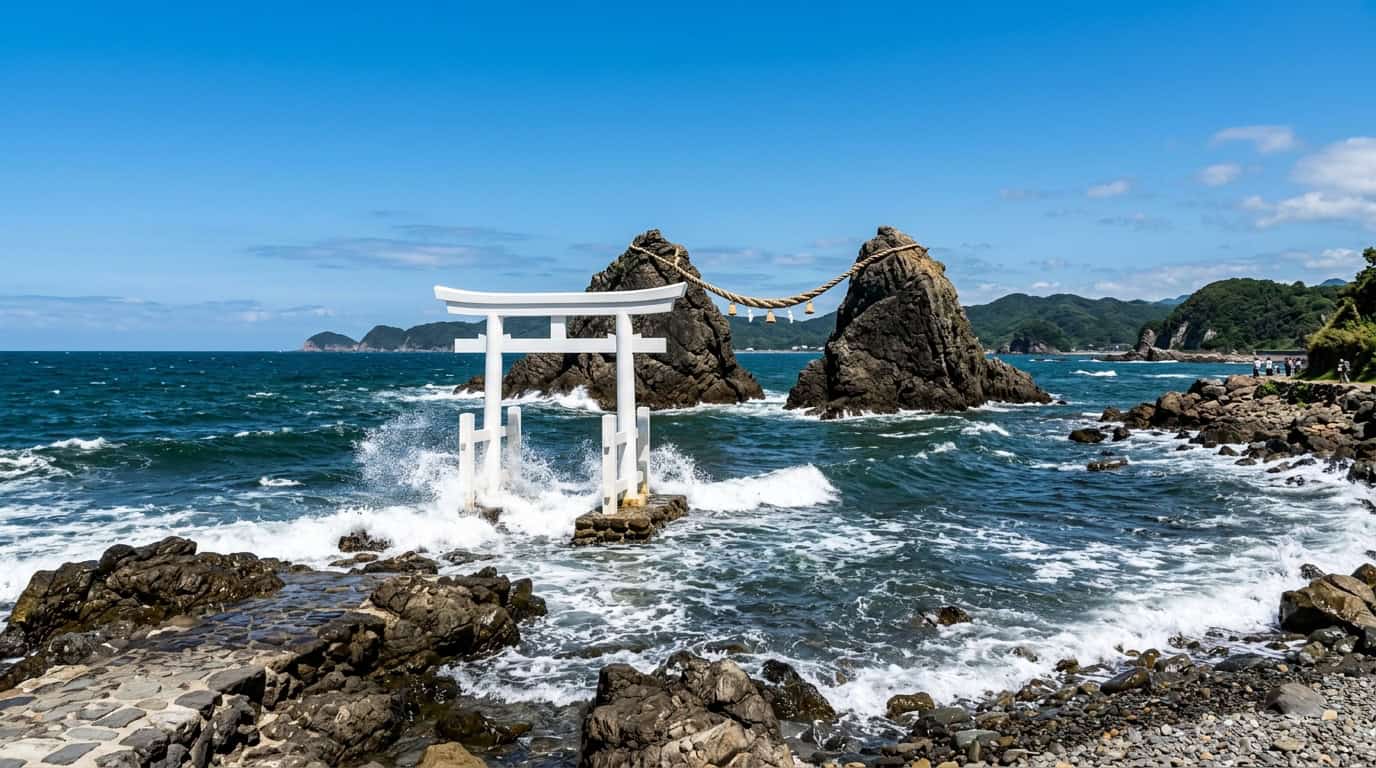
If you want coastal views, rent a car and drive 45 minutes west to Itoshima. Public transit here is poor, but driving allows you to loop the peninsula at your own pace. The primary target is the Sakurai Futamigaura Torii gate—a stark white shrine gate standing in the ocean in front of two “married” rocks joined by a heavy sacred rope. The area is heavily populated by trendy cafes, craft shops, and surprisingly clean beaches.
Cost and Budget Breakdown
Because the city is not burdened by hyper-tourism like Kyoto or Osaka, prices for accommodation and food remain grounded in local economic reality.
Note: Exchange rates fluctuate. The USD conversions above are rough estimates based on recent historical averages. Always check current rates before your trip.
Common Mistakes to Avoid
Even with top-tier infrastructure, travelers consistently make a few highly preventable errors. Here are the pitfalls I noticed, and a few I fell into myself:
Mistake #1: Attempting Nagasaki as a single day trip.
Looking at a map, Nagasaki seems close enough for a quick afternoon run. It is not. Between the Shinkansen transfer, the local tram system, and the sheer density of historical sites (Peace Park, Mount Inasa, Glover Garden), attempting to cram Nagasaki into a six-hour window guarantees a miserable, stressful day. If you want to see Nagasaki, allocate a dedicated overnight stay.
Mistake #2: Wasting hours in line at the Ichiran headquarters.
The multi-story Ichiran ramen headquarters in Nakasu is famous globally. Consequently, I made the mistake of trying to eat there on a Friday night and faced a two-hour wait wrapping around the block. Skip the line. You can find superior, much grittier, and cheaper bowls of ramen at independent shops like Hakata Issou or Shin-Shin without losing half your evening to a queue.
Who Should Visit Fukuoka (And Who Should Not)
This is ideal for…
You might want to skip this if…
Frequently Asked Questions
Do I need to speak Japanese to navigate the city?
Not strictly, though a few basic phrases go a long way. The city has invested heavily in bilingual signage (English, Korean, and Chinese) across the subway systems and major shopping malls. However, at smaller yatai carts or local izakayas, English menus might not exist. Downloading a visual translation app with offline capabilities will solve 90% of your communication barriers.
Is Fukuoka a walkable city?
Extensively so. The central core, particularly the stretch between Hakata Station and the Tenjin district, is incredibly flat and well-paved. Furthermore, the city features a massive network of underground, climate-controlled walking malls that allow you to traverse huge sections of the downtown area without ever stepping into the summer humidity or winter rain.
Can I use my Tokyo Suica or Pasmo transit card here?
Yes. Japan operates on a nationwide IC card interoperability system. Your standard transit cards purchased in Tokyo (Suica/Pasmo) or Osaka (ICOCA) will work perfectly on the local subways, regional JR trains, and Nishitetsu buses.
Is it hard to find vegetarian or vegan food?
Yes, it requires active effort. Tonkotsu (pork bone) broth is the foundation of the local culinary identity, and fish stock (dashi) is used in almost everything else. You will need to rely on specific research, utilize the HappyCow app, or navigate the convenience stores (looking for plain onigiri and edamame) rather than expecting standard restaurants to accommodate strict vegan diets.
Final Thoughts and Next Steps
Fukuoka is not a destination that demands you rush from one monumental landmark to the next. Instead, it invites you to slow down, eat aggressively well, and appreciate a side of urban Japan that remains deeply tied to its regional traditions. By utilizing the incredibly efficient airport, prioritizing the local street food scene, and using the city as a launchpad to explore the wider Kyushu region, you will experience a trip that feels distinct, authentic, and genuinely relaxing.
Your next step is to secure your accommodations early—ideally securing a hotel near Hakata Station if you plan on executing the day trips mentioned above. Then, start practicing your noodle-slurping technique; you are going to need it. If you want another Japan destination that offers a similarly less-crowded pace, compare it with Gifu Hachiman travel guide or browse broader ideas in bucket list travel destinations.