Finding the best sand dunes in the US might seem like a niche pursuit, but the diverse landscapes across the country offer surprisingly massive and varied sandy terrains. When I first started hunting for rideable sand, I wrongly assumed I needed to book a flight to the Middle East or Namibia to find towering, 700-foot peaks. I quickly learned that from the high alpine backdrop of Colorado to the coastal winds of North Carolina, the United States holds world-class dune fields that rival international destinations.
However, tracking down these locations is only half the battle. The culture, rules, and physical demands of American sand dunes vary wildly. If you pack a dirt bike for a protected national park—or show up to an off-roading mecca expecting a quiet sunset hike—your trip is doomed before you even unbuckle your seatbelt.
Quick Summary
Tallest Peaks: great Sand Dunes National Park in Colorado features the tallest dunes in North America, with peaks reaching up to 750 feet.
The Critical Divide: US dunes are strictly categorized into motorized OHV playgrounds (Glamis, Dumont) and protected non-motorized parks (White Sands, Mesquite Flat).
Lethal Summer Heat: Desert sand absorbs and amplifies heat. Midday summer sand temperatures frequently exceed 150°F, easily blistering feet through thin shoes.
Gear Reality Check: Most National Park visitor centers do not rent sandboards. You must secure specialized wax-coated boards from third-party outfitters outside park boundaries.
The Budget Hack: The $80 America the Beautiful pass pays for itself if your road trip includes multiple federal sites like Great Sand Dunes, Death Valley, and White Sands.
The Direct Answer: Where Should You Go?
If you want the definitive answer on where to find the best sand dunes in the US, the choice depends entirely on your travel style and risk tolerance.
For the ultimate all-around outdoor adventure that includes grueling hikes, seasonal creek wading, and dedicated sandboarding, Great Sand Dunes National Park in Colorado is the undisputed champion.
If you want the surreal, highly accessible experience of sledding on crisp, snow-like sand with the whole family, head to White Sands National Park in New Mexico.
For high-octane ATV riding, dune buggies, and massive tailgating crowds, Imperial Sand Dunes (Glamis) in California offers 118,000 acres of aggressive terrain.
Finally, if you are stuck on the East Coast and want a free, accessible option, Jockey’s Ridge state Park in North Carolina features massive coastal dunes perfect for hang gliding.
Understanding the Great Dune Divide
Before you pack the car, you must understand the deep cultural and legal divide in American sand dune management. Destinations fall strictly into two categories, and mixing them up will result in either a miserable time or massive federal fines.
The Protected Wilderness (Hikers and Boarders)
National Parks and Monuments (like White Sands, Great Sand Dunes, and Death Valley) strictly prohibit motorized vehicles on the sand. These areas prioritize environmental preservation, wildlife protection, and dark-sky stargazing. They are quiet. You access the dunes by parking your car and hiking in on foot.
The OHV Capitals (Engines and Adrenaline)
Locations managed by the Bureau of Land Management (BLM) or specific state recreational departments (like Glamis, Dumont, and Little Sahara) are designed for Off-Highway Vehicles (OHVs). These areas are loud, aggressive, and incredibly fast-paced. You will hear the constant roar of two-stroke engines and the whine of paddle tires throwing 40-foot sand roosts. Walking on these dunes for a casual nature hike is physically dangerous due to blind crests and high-speed traffic.
Deep Dive: Great Sand Dunes National Park (Colorado)
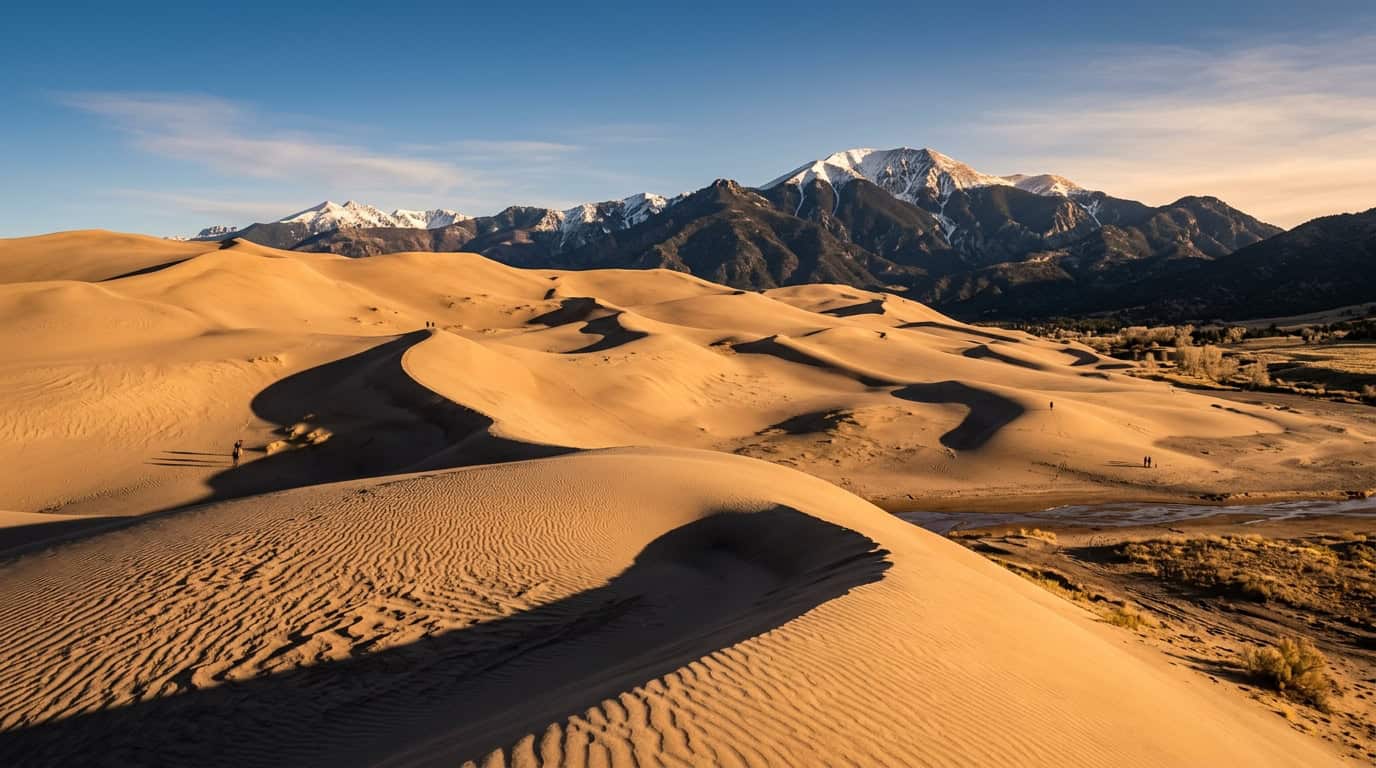
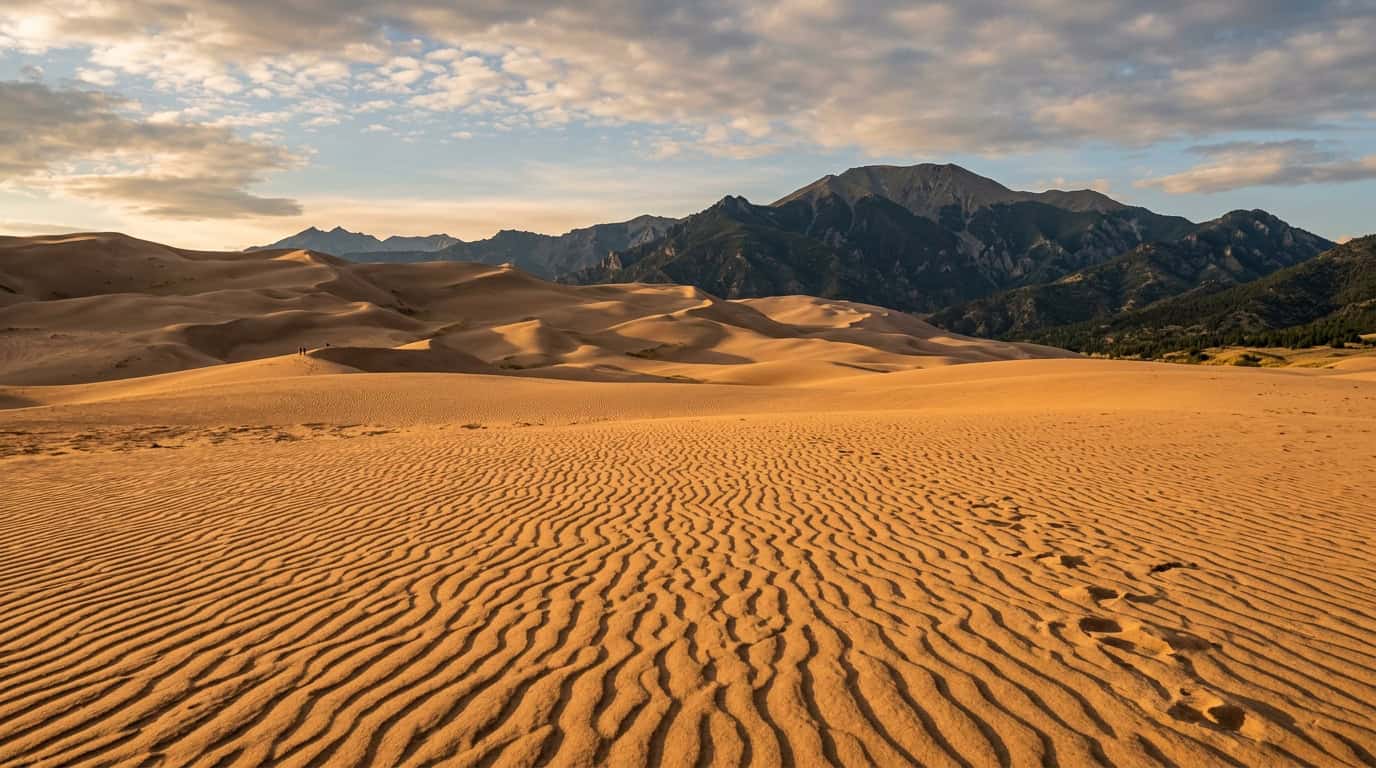
Located about four hours south of Denver, Great Sand Dunes National Park is a geographical anomaly. Nestled against the base of the Sangre de Cristo Mountains, this 30-square-mile dunefield was formed over millions of years as ancient glacial lakes dried up and prevailing winds trapped the remaining sand in a mountain pocket.
The Brutal Reality of Scaling the Giants
Walking into this park feels like stepping onto an alien landscape. To reach the main dunefield from the parking lot, you must first cross the Medano Creek bed. If you visit in late May or early June, mountain snowmelt creates “surge waves” in the creek, allowing families to float on inner tubes directly next to 700-foot sand peaks. By late July, the creek is a dry, mosquito-ridden sand flat.
Once across, there are no marked trails. You forge your own path. High Dune, standing at 699 feet, is the primary target for most visitors. I learned the hard way that it is far more punishing than it looks. The park sits at a base elevation of 8,000 feet, meaning the air is noticeably thin. Every step in the loose sand results in sliding backward. It took me an hour and twenty minutes of agonizing calf-burning effort to reach the top.
If you want true bragging rights, you can hike to Star Dune—the tallest dune in North America at 750 feet. It requires an 8-mile round trip hike that generally takes six hours of climbing up and down successive ridges.
The Sandboard Rental Trap
The single most important logistical detail about Great Sand Dunes is that the National Park Service does not rent gear. Traditional plastic snow saucers, wooden toboggans, and fiberglass snowboards simply will not slide on dry quartz sand. You need a specialized board with a Formica base coated in sand wax.
You must rent these outside the park. The Oasis Store, located about 4 miles outside the park entrance, rents them for roughly $20 a day, but they close entirely from November through February. If you are coming from Alamosa, Kristi Mountain Sports is a highly reliable outfitter, but you must reserve boards days in advance during the peak summer season.
Beyond the Sand: Medano Pass Primitive Road
If you own a legitimate high-clearance 4WD vehicle (AWD crossover SUVs will get hopelessly stuck), driving the 22-mile Medano Pass Primitive Road is a phenomenal addition to your trip. The trail crosses Medano Creek nine times and climbs to a 10,000-foot alpine pass. It takes about three hours to complete and features 21 free, first-come, first-served campsites right off the trail.
The White Anomaly: White Sands National Park (New Mexico)
Deep in the Northern Chihuahuan Desert lies a dune field that tricks your brain into thinking you have driven into a blizzard. Upgraded to National Park status in 2019, White Sands is completely distinct from every other dune field in the country because the sand is made of pure gypsum crystals, not quartz.
Gypsum rarely exists as sand because it dissolves in water. However, the Tularosa Basin has no outlet to the sea, trapping the mineral. When water evaporates, it leaves behind fragile crystals that the wind breaks down into pure white powder. Because it reflects the sun, gypsum sand stays remarkably cool to the touch, even on a 95-degree afternoon.
Accessibility and Missiles
Unlike the grueling vertical hikes of Colorado, New Mexico offers an incredible 8-mile scenic drive directly through the heart of the dunes. You can pull over at dozens of designated areas, walk 30 feet up a moderate slope, and instantly start sledding.
White Sands is also one of the rare federal parks whose gift shop actually sells plastic sand sleds (usually $10 to $15). They even run a buy-back program where you can return the sled at the end of the day for a small partial refund.
Honest Downside: Because the park shares a border with the White Sands Missile Range, the entire park and the surrounding Highway 70 are occasionally closed without much warning for military testing. Always check the official NPS closure schedule before making the three-hour drive south from Albuquerque.
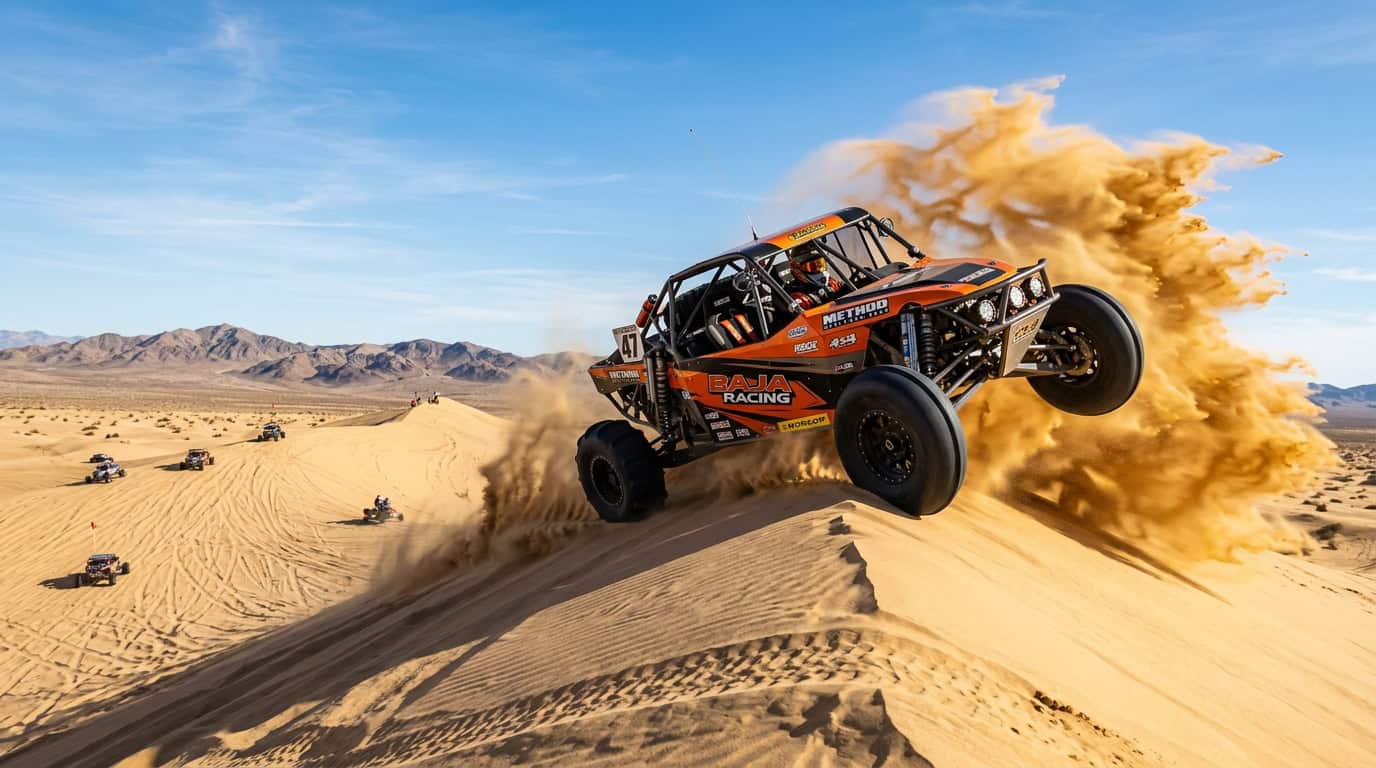
The OHV Capitals: Glamis, Dumont, and St. Anthony
If you prefer horsepower over hiking boots, the western United States holds massive tracts of public land dedicated entirely to motorized chaos.
Imperial Sand Dunes (Glamis), California
Located two and a half hours east of San Diego, Glamis is the largest mass of sand dunes in California, spanning nearly 40 miles in length and covering 118,000 acres. If the landscape looks familiar, it is because George Lucas used it to film Tatooine scenes in Star Wars Episode VI: Return of the Jedi.
Glamis sees roughly 1.4 million visitors annually. During major holiday weekends like Thanksgiving and Halloween, upwards of 200,000 people descend on the sand, turning the desert into a massive RV city.
You must purchase permits to visit between October 1 and April 15. Buying them online in advance costs $35; buying them at the gate jumps the price to $50. If you don’t own an ATV, local vendors like Glamis Dunes Rentals provide everything from quads to heavy-duty side-by-sides.
Dumont Dunes, California
Situated in the Mojave Desert roughly 40 miles from Baker, Dumont features 8,150 acres of sand. It is famous within the OHV community for its extreme angles. Areas like “Competition Hill” and the “North Pole” feature incredibly steep inclines designed to test heavily modified, high-horsepower sand rails.
I highly advise against bringing small children or novice drivers to the main Dumont area on busy weekends. The sheer volume of high-speed traffic cresting blind hills is intimidating. If you do bring family, stick strictly to “Little Dumont,” a designated, slightly calmer offshoot area. Expect to pay a $30 weekly pass, which spikes to $40 during holidays.
St. Anthony Sand Dunes, Idaho
A massive, high-elevation dune system in a landlocked state, St. Anthony covers over 41,000 acres. Because it sits at a 5,000-foot elevation, it offers a stark contrast to California’s lethal summer heat. Summer temperatures here rarely exceed 90°F, making it one of the few OHV dune areas that are actually pleasant to ride in July and August. However, it gets snowed out entirely in the deep winter.
Coastal and Midwestern Alternatives
You do not need to trek deep into the arid desert to find massive sand formations. Coastal and lakeside dunes offer entirely different biomes.
Oregon Dunes National Recreation Area (ODNRA)
Stretching for 40 miles along the Pacific coast, this 10,000-acre area blends dense pine forests, green sea grass, and ocean beaches into one environment. Unlike dry desert dunes, the high precipitation here creates internal lakes and streams right in the middle of the sand.
Divided into three main areas (Florence, Winchester Bay, and Coos Bay), the ODNRA allows for a unique mix of off-roading, hiking, and ocean fishing. If you want to try sandboarding without buying gear, head to Sand Master Park in Florence—a dedicated, privately run 40-acre park specifically built for the sport.
Jockey’s Ridge State Park (North Carolina)
Sitting directly on the Outer Banks, this park holds the title for the tallest active sand dune system on the East Coast. Entry is completely free year-round. The prevailing coastal winds make it the premier destination for hang gliding in the United States. Kitty Hawk Kites operates right out of the park, offering lessons for adults and children as young as four.
Sleeping Bear Dunes National Lakeshore (Michigan)
Perched on the edge of Lake Michigan, these dunes offer a visually striking palette: massive slopes of golden sand dropping straight off into deep blue freshwater, surrounded by thick green forests. The entry fee is $25 per vehicle. While off-roading is strictly prohibited here, the “Dune Climb” provides a rigorous physical challenge that ends with a rewarding plunge into the lake.
Under-the-Radar State Parks (On-Site Rentals & Easier Access)
If you want a low-stress sandboarding experience without hunting down third-party outfitters or fighting massive National Park crowds, three state parks stand out for their logistical convenience:
-
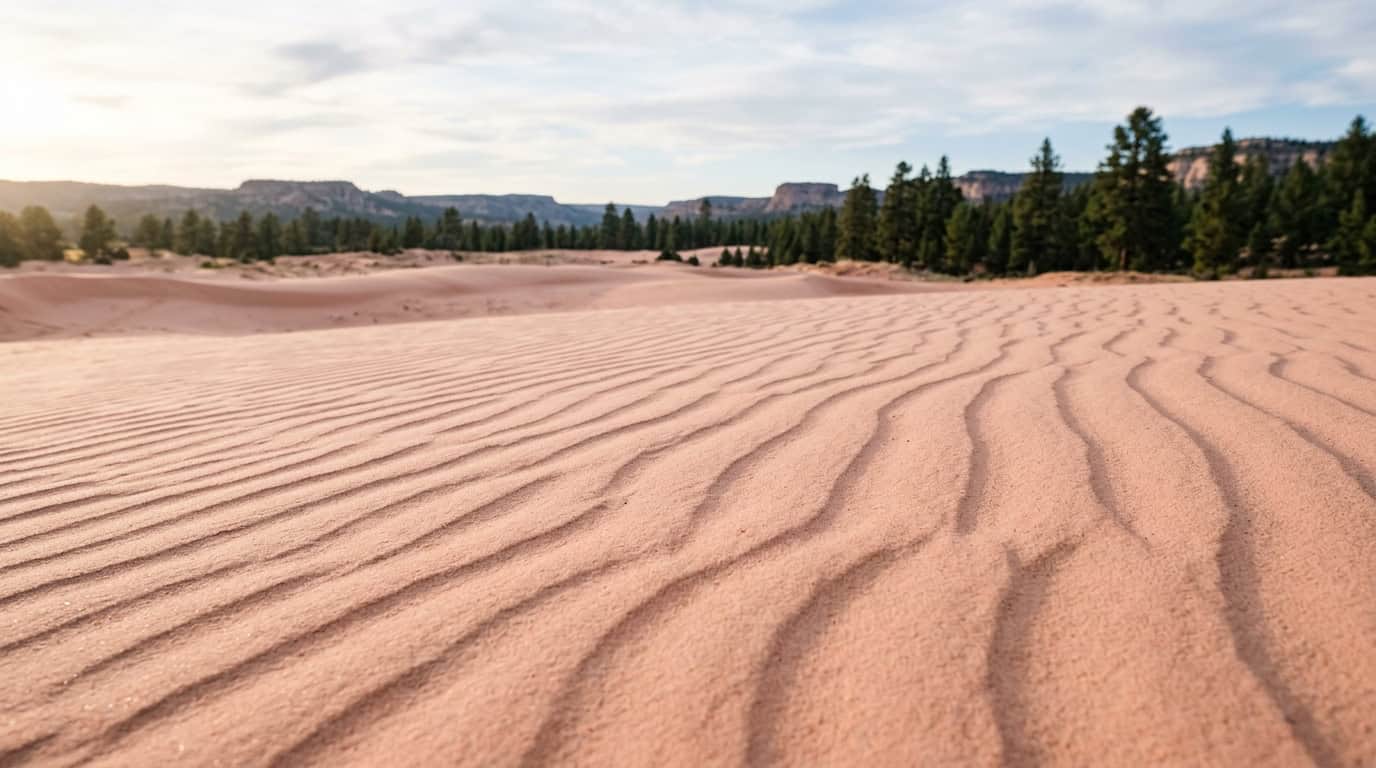
- Coral Pink Sand Dunes State Park (Utah): Located an hour from Zion National Park, the sand here gets its distinct reddish-pink hue from eroding Navajo sandstone. The park charges $10 per vehicle. Crucially, the visitor center rents boards and sleds directly over the counter for $25 a day. It offers a great mix of hiking and ATV trails.
- Bruneau Sand Dunes State Park (Idaho): About an hour south of Boise, this park features a single, massive 470-foot dune. They charge a mere $7 entrance fee, and the Visitors Center Nature Store rents sandboards for just $15 a day.
- Little Sahara State Park (Oklahoma): You don’t need to be on the West Coast to find motorized dunes. Waynoka, Oklahoma, boasts over 1,600 acres of rideable sand ranging from 25 to 75 feet tall. The park charges a flat $10 per person daily fee. It is open 24 hours a day, making it a massive weekend draw for RV campers across the Midwest.
Cost & Value Breakdown
Navigating entry fees across different state, federal, and BLM jurisdictions gets confusing. Here is a realistic look at what you will spend at the gate:
Federal/National Parks (Great Sand Dunes, White Sands, Death Valley): Usually $25 to $30 per vehicle, valid for 7 consecutive days.
State Parks (Bruneau, Coral Pink, Little Sahara): Generally cheaper, ranging from $7 to $10 per vehicle or person per day.
OHV Recreation Areas (Dumont, Glamis): The most expensive due to high vehicle impact and required maintenance. Expect to pay $30 to $50 for weekly passes, with surge pricing during major holidays.
Free Entry: Jockey’s Ridge (NC) and Kelso Dunes in the Mojave National Preserve (CA) cost absolutely nothing to access.
The Ultimate Budget Hack: If your western road trip includes Great Sand Dunes, White Sands, and Death Valley, do not pay the individual $30 gate fees. Purchase the $80 America the Beautiful annual pass at the first park you visit. It grants unlimited access to all federal lands for a full 12 months and mathematically pays for itself after just three stops.
Who Should Visit (And Who Should Not)
Choosing the wrong dune environment will ruin your vacation. Use these decision rules to plan your itinerary:
The Wilderness Dunes (Great Sand Dunes, White Sands, Kelso)
Who Should Go: Hikers, landscape photographers, families wanting a safe sledding environment, and travelers looking for certified Dark Sky stargazing.
Who Should Skip It: Anyone looking to ride a dirt bike, ATV, or dune buggy. Motorized vehicles are strictly prohibited, and sneaking one in will result in severe federal fines and equipment impoundment.
The OHV Dunes (Glamis, Dumont, Little Sahara)
Who Should Go: Adrenaline seekers, experienced off-road drivers, and RV owners who want to camp directly on the sand with a massive cooler and their motorized toys.
Who Should Skip It: Hikers seeking peace and quiet. The physical danger of blind crests makes these areas terrible for a casual nature walk, and the noise pollution from thousands of engines eliminates any chance of serenity.
Common Mistakes to Avoid
Mistake 1: Underestimating Desert Summer Heat
This is the most dangerous, frequent mistake tourists make. Desert air temperatures might read 90°F on your car dashboard, but unshaded sand absorbs and severely amplifies that heat. At places like Kelso Dunes, Mesquite Flat, and even Great Sand Dunes in Colorado, midday summer sand temperatures regularly exceed 150°F.
This will literally melt the glue on cheap sneakers and physically blister your bare feet. I made this mistake my first time in Colorado, attempting to hike at 1:00 PM in late July. The heat radiating off the ground was suffocating, and I was forced to turn back after 20 minutes. If you visit between June and August, restrict your dune activities strictly to the hours before 10:00 AM or after 5:00 PM.
Mistake 2: Assuming Every Park Rents Gear On-Site
Do not drive four hours from Denver to Great Sand Dunes, or two hours from Las Vegas to Death Valley, expecting to casually rent a sandboard at the ranger station. Federal parks rarely facilitate extreme sports rentals due to liability constraints and logistical headaches. If you show up empty-handed to a National Park, you will simply be walking. Always research and secure third-party rentals in the gateway towns before you arrive at the park entrance.
Mistake 3: Running the Wrong Tires in OHV Areas
If you are taking an off-road vehicle into the sand, tire setup dictates your success. Many novices bring heavily aggressive “knobby” mud tires into deep, dry sand like Glamis. Knobby tires dig straight down, immediately burying your vehicle to the axles. In pure sand environments, you need specialized “paddle” tires in the rear and smooth tires in the front to float on top of the surface.
However, if you are visiting a mixed-terrain park like Sand Hollow in Utah or Coral Pink Sand Dunes, you must* leave the paddle tires at home. Because those parks heavily integrate dirt trails and sharp red rock obstacles alongside the sand, paddle tires will be instantly destroyed.
Frequently Asked Questions
Can I use a regular snow sled on sand dunes?
No. Traditional plastic snow saucers, wooden toboggans, and fiberglass snowboards will not work on dry quartz sand. The friction coefficient is far too high, and you will barely inch forward. You must use a dedicated sand sled or sandboard, which features a slick Formica base that must be regularly treated with specialized sandboard wax before every run.
What is the best time of year to visit the desert sand dunes?
For deep Mojave Desert locations like Kelso Dunes, Dumont, and Death Valley, the riding and hiking season is strictly between October and April. Summer months bring lethal 120°F air temperatures. For higher elevation parks like St. Anthony in Idaho or Great Sand Dunes in Colorado, late May to early June is optimal, offering manageable temperatures and unique seasonal water features.
Are there any massive sand dunes on the East Coast?
Yes. Jockey’s Ridge State Park in Nags Head, North Carolina, features the tallest active sand dune system on the East Coast. While it doesn’t match the 750-foot peaks of the western deserts, the dunes are massive enough to support a robust local hang-gliding industry, and the park is completely free to enter year-round.
Is it hard to walk on sand dunes?
Walking up a steep sand dune is physically exhausting. Unlike packed dirt trails, loose sand causes your feet to sink with every step, forcing you to expend nearly double the energy. When hiking steep inclines, you will often slide backward half a step for every full step you take forward. Always bring significantly more water than you think you need, and stick to the ridge lines where the sand is usually packed tighter by the wind.
The Final Verdict
Exploring the best sand dunes in the US offers a dramatic, physically engaging shift from traditional forest hiking or standard beach vacations. Whether you are grinding your way up a 700-foot peak in the thin Colorado air, floating over pink sand in Utah, or throttling a 200-horsepower dune buggy through the Imperial basin in California, these environments demand respect, specific gear, and proper seasonal planning.
If you are planning your first trip, I strongly recommend starting with either White Sands National Park for its highly accessible, family-friendly sledding infrastructure, or Coral Pink Sand Dunes State Park for its on-site gear rentals and manageable crowds. Just remember to check the seasonal temperatures, secure your wax-coated boards before you hit the park gates, and prepare to be dumping sand out of your shoes for weeks after you return home.