Quick Summary
Event-Driven Urgency: 2026 features rare, time-sensitive events like the total solar eclipse in Iceland (August), the Winter Olympics in Italy (February), and the newly opened Grand Egyptian Museum in Giza.
Secondary Cities Are Mandatory: Swapping Amsterdam for Utrecht, or the crowded southern Albanian coast for the northern Alps, is the most effective way to lower daily costs and avoid crushing crowds.
Beat the 2027 Tax Hikes: Destinations like Bhutan are doubling their Sustainable Development Fee to $200 per night in late 2027, making 2026 the final window for budget-conscious explorers.
Regenerative Tourism Dominates: New Zealand’s North Island and British Columbia are leading the charge in Indigenous-owned tourism, where your premium dollars directly support local conservation and community infrastructure.
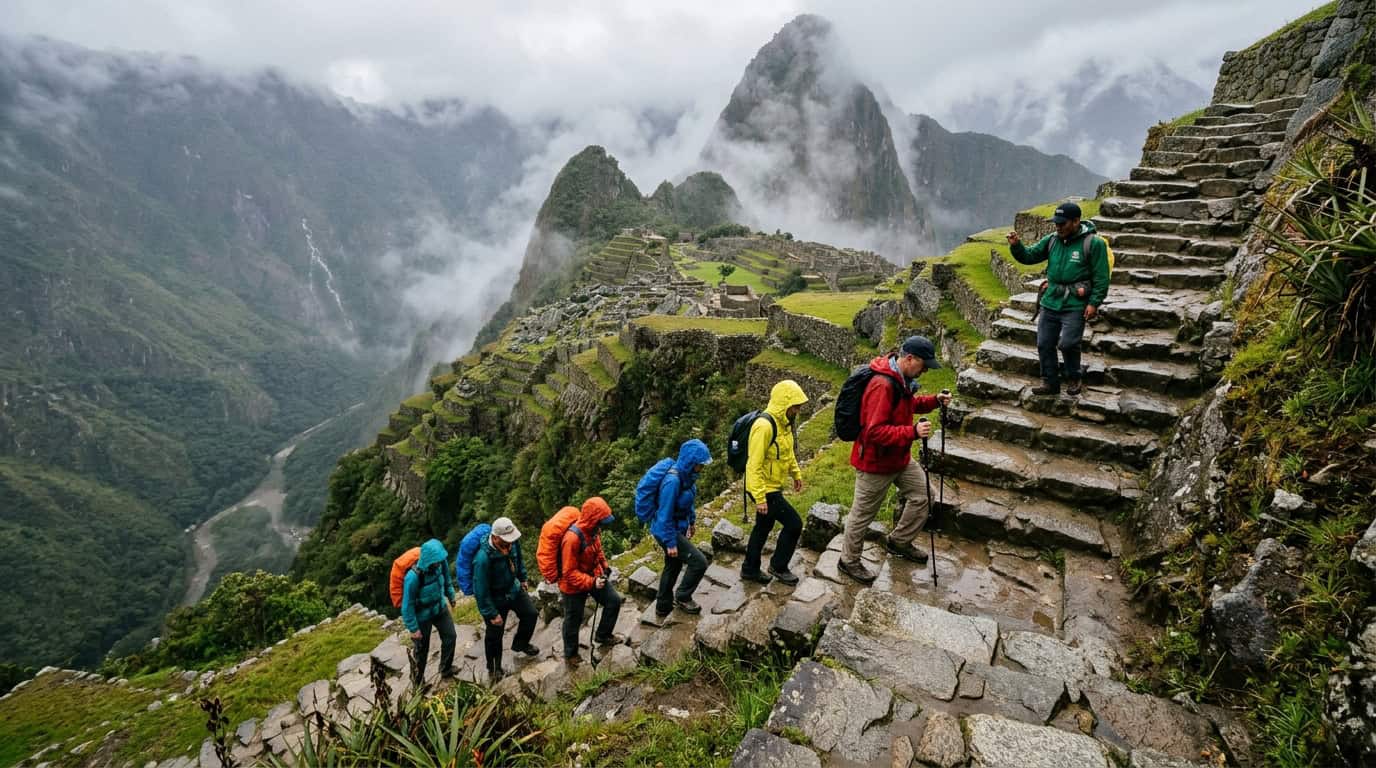
Permit Complexity is Rising: You can no longer just show up to major historical sites. Places like Machu Picchu now require navigating a highly complex matrix of 3 new circuits and 10 specific walking routes.
The Direct Answer: Where Should You Go Next?
If you want maximum value, manageable crowds, and authentic cultural access in the coming year, you need to target locations categorized by one of three strategies: time-sensitive global events, secondary alternative cities, or destinations facing imminent price hikes.
For the budget-conscious traveler seeking deep culture without the western European price tag, book a flight to Taiwan or Sri Lanka. Both offer exceptional rail infrastructure, massive culinary scenes, and access to pristine nature for a fraction of the cost of Japan or Bali. If you require a high-end, highly structured experience, look toward Botswana for a strictly regulated, low-impact safari, or Mendoza, Argentina, which now boasts four distinct Michelin-starred restaurants amid its massive wine country.
Ultimately, your 2026 itinerary should be dictated by timing. Go to Iceland in August for the eclipse. Go to Kyrgyzstan in the summer for the World Nomad Games. Go to Bhutan before their daily tourist tax doubles the following year.
The Urgency of 2026: Event-Driven Travel
Certain destinations demand your attention this specific year due to rare alignments of astronomy, sports, and infrastructure completions. Timing your trip around these events requires booking 12 to 18 months in advance, but the payoff is absolute.
The August Solar Eclipse in Iceland
On August 12, 2026, a total solar eclipse will pass directly over Reykjavík, Iceland. This is a massive deal for astrotourism, as it represents the first total eclipse visible from the Icelandic capital since the 1400s, and the first in the country overall since 1954.
Reykjavík serves as the ideal base camp for this event. You can spend the morning walking between the tectonic plates at Þingvellir National Park, and position yourself near the iconic Hallgrímskirkja church for the afternoon eclipse. However, I learned a hard lesson during my last summer trip to the Nordic region: Iceland in August is still brutally cold. Do not let the word “summer” fool you. The average high peaks around 58°F, and the coastal wind is relentless. Pack insulated layers and waterproof shells, and warm up afterward at local spots like ÓX Restaurant or the geothermal Sky Lagoon. (Pro tip: When soaking in the geothermal spas, keep your hair out of the silica-rich water unless you want it feeling like straw for a week).
The Grand Egyptian Museum Finally Opens
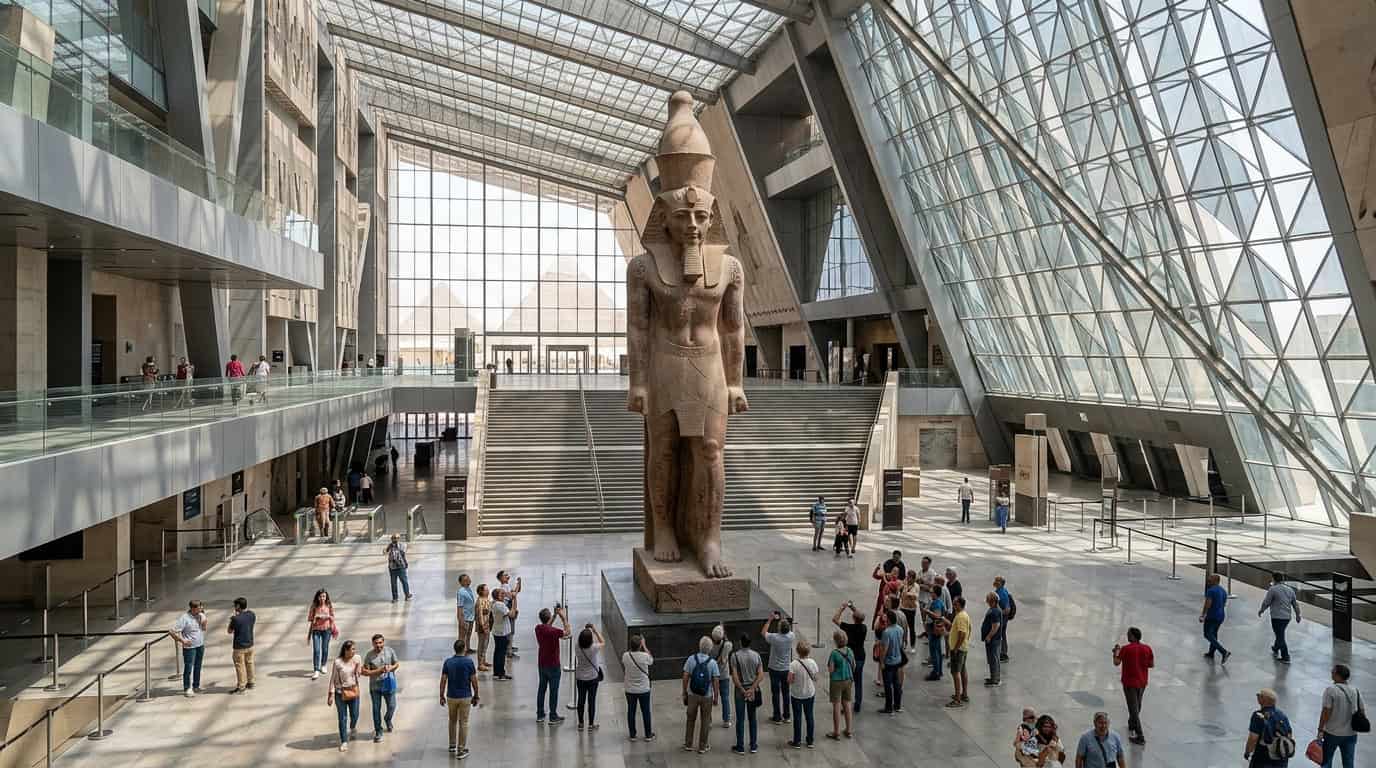
If you have been delaying a trip to North Africa, 2026 is the year to finally pull the trigger on Cairo and Giza, Egypt. Initially proposed in 1992 and plagued by decades of construction delays, the monumental Grand Egyptian Museum (GEM) is fully functional.
Sitting on the Giza plateau just outside Cairo, the complex houses over 100,000 artifacts, including the complete collection from King Tutankhamun’s tomb and a towering 40-foot statue of Ramses II at the entrance. The massive halls of the new museum smell faintly of fresh plaster and polished stone, a sharp contrast to the diesel fumes and hot dust waiting just outside the doors. To avoid the notoriously chaotic Cairo traffic, skip staying in the downtown core. Instead, book a room directly in Giza at a location like the Great Pyramid Inn for two nights so you can walk to the museum and the pyramids at sunrise before the massive tour buses arrive.
The Decentralized Winter Olympics in Italy
Italy is retaining its heavy appeal, but the focus is shifting entirely to the north. Between February 6 and March 15, 2026, the country will host the Winter Olympics and Paralympics. Unlike past games confined to a single host city, Italy is deploying a highly decentralized model featuring 16 venues spread across four main clusters, including Milan, Cortina d’Ampezzo, Valtellina, and Val di Fiemme.
This offers a unique logistical advantage. Instead of fighting for a single $800-per-night hotel room in one city, you can rent a vehicle (use an aggregator like DiscoverCars) and build a road trip through the Dolomites, catching different events in different mountain towns. Just ensure your rental is equipped with proper winter tires, as the alpine passes in February are completely unforgiving.
Beating the Crowds: The Secondary City Strategy
The most consistent complaint among modern travelers is the sheer volume of humanity clogging major tourist hubs. The solution is straightforward: look at the most popular capital on a map, and explicitly book a train to the second or third largest cultural center instead.
Bypassing European Bottlenecks
Instead of fighting the masses in Amsterdam, savvy travelers are heading to Utrecht, Netherlands. This relaxing alternative features unique two-level canals with 13th-century cellars right on the water. You can climb the 465 steps of the Gothic Domtoren tower without throwing elbows to get a photograph, and actually find a seat at local cafes along the Oudegracht.
Similarly, while Madrid and Barcelona remain heavyweights, Cádiz, Spain is capturing attention. Located in the southwest, Cádiz is famous for its massive Carnaval celebration in February and March, which features 10 days of parades and over 300 local bands called murgas. Unusually for a major port city, it also boasts pristine white sand beaches right alongside deep historical architecture.
The Split in Albania: Go North
Over the past three years, the southern coast of Albania (specifically around Saranda) exploded in popularity on social media. Consequently, it has become crowded, loud, and significantly more expensive.
To find the quiet, rugged charm that originally made Albania famous among backpackers, you must head north to the Albanian Alps. When I first hiked the trail from Valbona to Theth in Northern Albania, I expected a casual walk. Instead, I spent seven hours sweating up steep limestone ridges, eventually dropping down into a remote valley where local families served fresh cheese and homemade bread out of stone guesthouses. The northern hub of Shkodër remains incredibly affordable and serves as the perfect jumping-off point for exploring the teal waters of the Komani River.
Skipping the Bali Crush for Sri Lanka
If you are searching for the dense jungles, world-class surf, and affordable luxury that Bali offered fifteen years ago, book a flight to Sri Lanka.
The island is compact but geographically diverse. You can spend your mornings surfing the breaks at Weligama on the southern coast, and your afternoons taking the highly photogenic train ride through the cool, misty tea plantations from Ella to Kandy. The country has fully stabilized, and a massive backpacker scene is quietly booming. A two-week cross-country journey here often costs around $4,000 per person, making it an exceptional value play before major resort chains buy up the remaining coastal real estate.
Nature, Wildlife, and the Exclusivity Factor
Access to pristine, completely isolated nature is becoming a premium commodity. Getting to these locations requires larger budgets, specific timing, and a willingness to disconnect completely from the grid.
The Financial Urgency of Bhutan
Bhutan offers unparalleled access to Himalayan peaks and historic cliffside structures like the Tiger’s Nest Monastery. However, the country operates on a strict “High Value, Low Volume” tourism model, enforced through a mandatory Sustainable Development Fee (SDF) charged to every visitor for every night they stay.
Currently, the SDF is set at $100 USD per night. However, this promotional rate expires in September 2027, when the fee is scheduled to double back to $200 USD per night. If you plan a standard 10-day trip, waiting until 2027 means paying $2,000 just in taxes before you even book a hotel or a flight. 2026 is the absolute final window to visit this remote kingdom without facing that massive financial penalty.
Namibia vs. Botswana: The Safari Divide
When planning an African wildlife experience, travelers face a stark choice in strategy.
Botswana is the premier destination for a highly exclusive, low-impact safari. The government severely limits guest and vehicle numbers in private concessions to protect the ecosystem. The trade-off is the price tag: a typical 9-day itinerary starts at a staggering $7,750 per person.
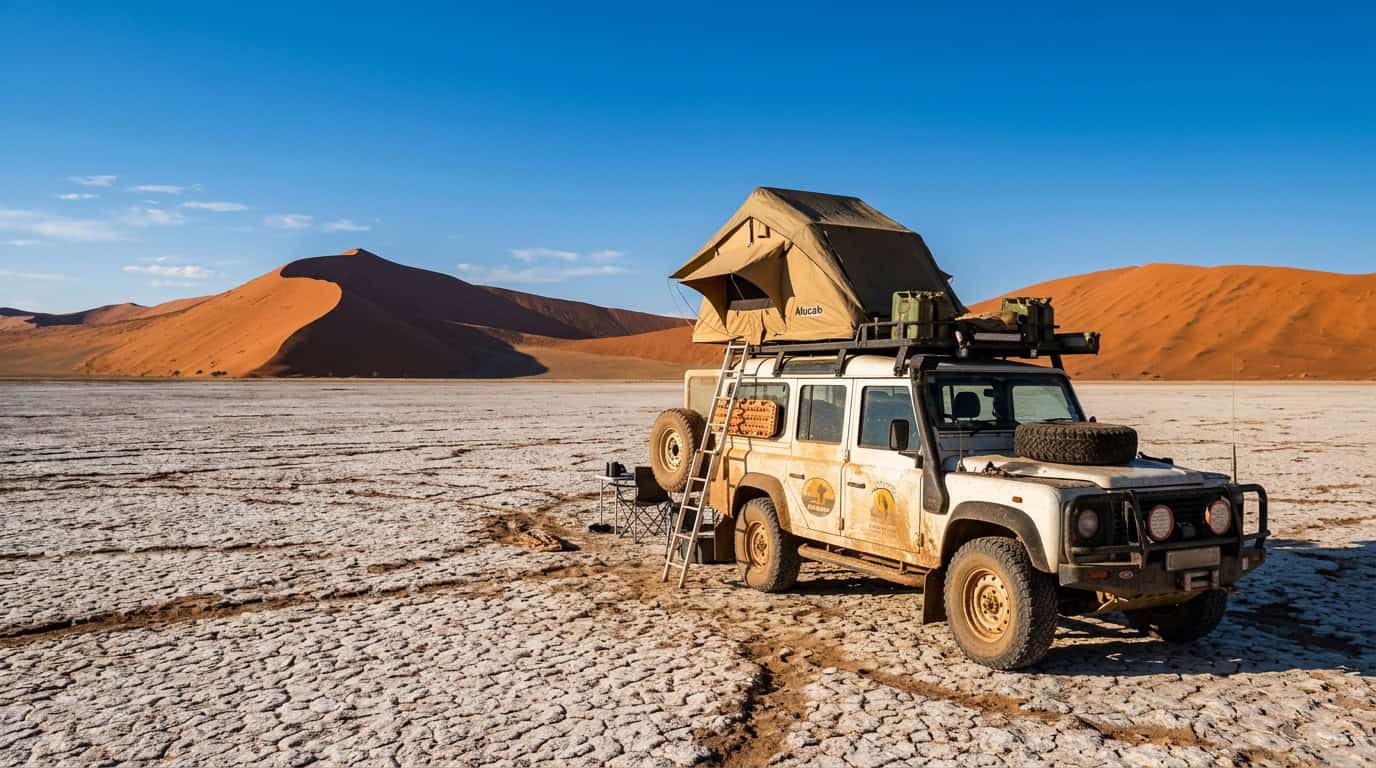
If that breaks your budget, look directly west to Namibia. Featuring burnt orange sand dunes, shipwreck-strewn beaches, and wide-open skies, Namibia offers a radically different, highly independent wildlife experience. It is one of the few places in Africa uniquely suited for self-drive “overlanding” road trips. You can rent a 4×4 with a rooftop tent and track desert-adapted elephants at your own pace, entirely devoid of the massive convoy crowds found in East Africa.
Regenerative Tourism in New Zealand
We are moving past the era where tourism purely extracts resources from a location. New Zealand’s North Island (Aotearoa) is establishing the global standard for regenerative, indigenous-led travel driven by the Māori worldview (te ao Māori).
This translates to real economic impact. For example, staying at Kohutapu Lodge in Murupara means your dollars contribute to the $500,000 NZD they have already reinvested back into their disadvantaged local community. You can visit Wai Ariki in Rotorua, the area’s first luxury spa fully developed, owned, and operated by the local Māori tribe. Exploring places like Kapiti Island allows you to fund the direct protection of 1,200 little spotted kiwi birds. A standard 11-day trip focusing heavily on these ethical operators starts around $6,500 per person.
Cost Breakdowns and Value Evaluation
Understanding how far your dollar will go is critical when inflation remains volatile. Below is a breakdown of baseline costs for a single person based on 2026 projections for mid-tier, small-group guided travel (excluding international airfare).
Technical Hack: Do not pay international roaming fees to your domestic carrier. For locations like Taiwan, Europe, and South America, purchase a regional eSIM. Providers like Airalo or Holafly offer massive data packages for under $30. (Lonely Planet currently lists the promo code LONELYPLANET for Holafly discounts across their recommended 2026 destinations).
Who Should Choose Which Destination (And Who Should Not)
Selecting the wrong environment for your specific travel style guarantees a miserable week. Use these explicit decision rules to guide your 2026 planning.
Choose Event-Driven Mega-Cities (Mexico City, Chicago, Milan) IF:
You prioritize high-energy sports, massive crowds, and world-class culinary scenes over quiet relaxation.
You are comfortable navigating complex public transit systems during peak surge hours.
Skip this if: You hate booking restaurants months in advance, or if you suffer from crowd-induced anxiety. During the 2026 World Cup, Mexico City’s transit will be heavily strained.
Choose Remote Overlanding (Namibia, Kyrgyzstan, Northern Albania) IF:
You possess a high tolerance for physical discomfort, long driving days, and zero cellular service.
You prefer setting up a rooftop tent and cooking your own meals over luxury hotel buffets.
Skip this if: You require constant high-speed WiFi for remote work, or if you do not know how to change a tire on a 4×4 vehicle.
Choose Secondary Cultural Cities (Utrecht, Xela, Quy Nhon, Taipei) IF:
You are a “slow traveler” who enjoys sitting in cafes for hours observing local life.
You want your daily budget to stretch twice as far as it would in Paris, Tokyo, or London.
Skip this if: You absolutely must check off world-famous monuments on your first international trip to a specific region.
Common Mistakes to Avoid in 2026
Even highly experienced travelers fall into predictable traps when planning major international excursions. Avoid these two massive pitfalls.
1. Ignoring the Realities of Digital Nomad Gentrification
Cities like Mexico City have become massive hubs for remote workers carrying heavy USD or Euro salaries. While the Roma Norte and Condesa neighborhoods look beautiful on Instagram, you must be aware of the intense local tension. I learned the hard way that visiting Roma Norte during a major holiday weekend without dinner reservations means eating stale convenience store chips at 10 PM because the popular spots, like Taqueria Orinoco, had lines wrapping around the block.
More importantly, local protests against gentrification are rising because foreign nationals are pricing residents out of their own homes. If you travel to a nomad hotspot, do not just rent a foreign-owned apartment, work from a laptop, and order delivery. Ensure your money stays in the local economy by eating at locally owned stalls, staying in neighborhood guesthouses, and hiring local guides for day trips to Teotihuacan.
2. Failing to Navigate New Permit Systems
The logistical landscape of global landmarks has fundamentally changed. You can no longer just show up at a world wonder and buy a ticket at the gate.
Take Machu Picchu in Peru as the prime example. To combat severe physical degradation of the ruins, authorities recently implemented a highly complex system featuring 3 completely new circuits and 10 specific walking routes. You must know exactly which parts of the ruin you want to see—and how physically demanding they are—months in advance, as the best permits sell out instantly. If you show up in Cusco assuming you can wing it, you will likely be turned away at the mountain base.
Frequently Asked Questions
Are international flights getting cheaper for 2026?
No, baseline costs for international airfare are largely stabilizing at their post-2023 highs due to aircraft shortages and fuel costs. However, you can significantly reduce your total trip cost by targeting highly affordable secondary destinations like Taiwan or Northern Vietnam, where your daily food and lodging expenses will offset the high cost of the initial flight.
What is the best trending destination for medical tourism?
Istanbul, Türkiye is experiencing a massive boom in medical tourism for 2026. Visitors are flocking to the city for medical, dental, and cosmetic procedures (specifically hair transplants) because the out-of-pocket costs are significantly cheaper than in Western Europe or the United States, and the clinical standards in the major private hospitals are exceptionally high.
Do I need specialized travel insurance for these remote locations?
Absolutely. If you are hiking in the Albanian Alps, overlanding in Namibia, or surfing in Sri Lanka, standard domestic health insurance will not cover an international evacuation. Services like SafetyWing (specifically their Nomad Essential plan) are mandatory. They cover scooter accidents, hiking injuries, and severe food poisoning, which are highly common when stepping off the traditional tourist trail.
When should I visit Taiwan to avoid the heat?
Taiwan is an incredible alternative to Japan, but the summer humidity is suffocating. The optimal windows for visiting cities like Taipei or hiking in Yangmingshan National Park are the shoulder seasons: March to May, or October to December. Avoid July and August entirely unless you plan to spend your entire trip indoors.
Final Guidance
The upcoming year of travel heavily rewards those who do their homework, adjust their timing, and step slightly off the predetermined path. You do not need to spend $10,000 or fight thousands of people for a single photograph to have a meaningful experience.
Whether you decide to chase the solar eclipse in the freezing winds of Iceland, invest in regenerative Māori hot springs in New Zealand, or embrace the wild, open roads of Namibia, make sure your presence respects the local infrastructure. Pick a destination that aligns with your actual tolerance for weather and connectivity, book your primary permits 12 months early, and prepare to adapt when the journey inevitably surprises you. The world is heavily crowded, but the edges of the map are still wide open for those willing to look.