Exploring italy Castles: A Definitive 2026 Guide
When you start exploring Italy castles, you aren’t just visiting historic sites; you are stepping into a complex timeline where Roman mausoleums, Renaissance fortresses, and medieval ghost stories collide. Many travelers land in Rome or Milan and immediately prioritize the obvious landmarks, often overlooking the sheer architectural weight of Italy’s fortified heritage. Whether you are hunting for the haunting atmosphere of Caccamo or the geometric precision of Castel del Monte, the key to a successful trip is balancing high-demand urban centers with the strategic, off-beat locations that offer more than just a selfie backdrop.
Quick Summary
Strategic Planning: The 2026 calendar is dominated by the Milano-Cortina Winter Olympics; expect major logistics disruptions in the north.
Smart Routing: Utilize the ‘hub and spoke’ model, basing yourself in cities and taking regional trains to remote, high-reward fortresses.
Budgeting: Anticipate costs in major Italian hubs to mirror Paris; prioritize booking museums and specialized sites at least three months in advance.
Off-Path Value: Focus on regions like Sicily or Puglia to find better value and avoid the intense, event-driven crowds of the northern regions.
Pro Tip: Always carry physical backup copies of your entry tickets, as digital scanners in older stone structures often fail due to signal interference.
Your Direct Answer: How to Plan Your 2026 castle Tour
If you want to maximize your time exploring Italy castles, treat them as distinct cultural hubs rather than just “old buildings.” In 2026, the influx of tourists for the Winter Olympics means that spontaneous visits to major landmarks will likely end in long lines or sold-out signs. My primary advice is to lock in your priority bookings—such as the Sforzesco Castle or the Last Supper—immediately upon confirming your flights. Do not attempt a “see everything” itinerary. Instead, choose one primary urban base and schedule two days of dedicated regional transit to reach gems like Caccamo in Sicily or the octagonal Castel del Monte in Puglia.
The Intersection of History and Modernity
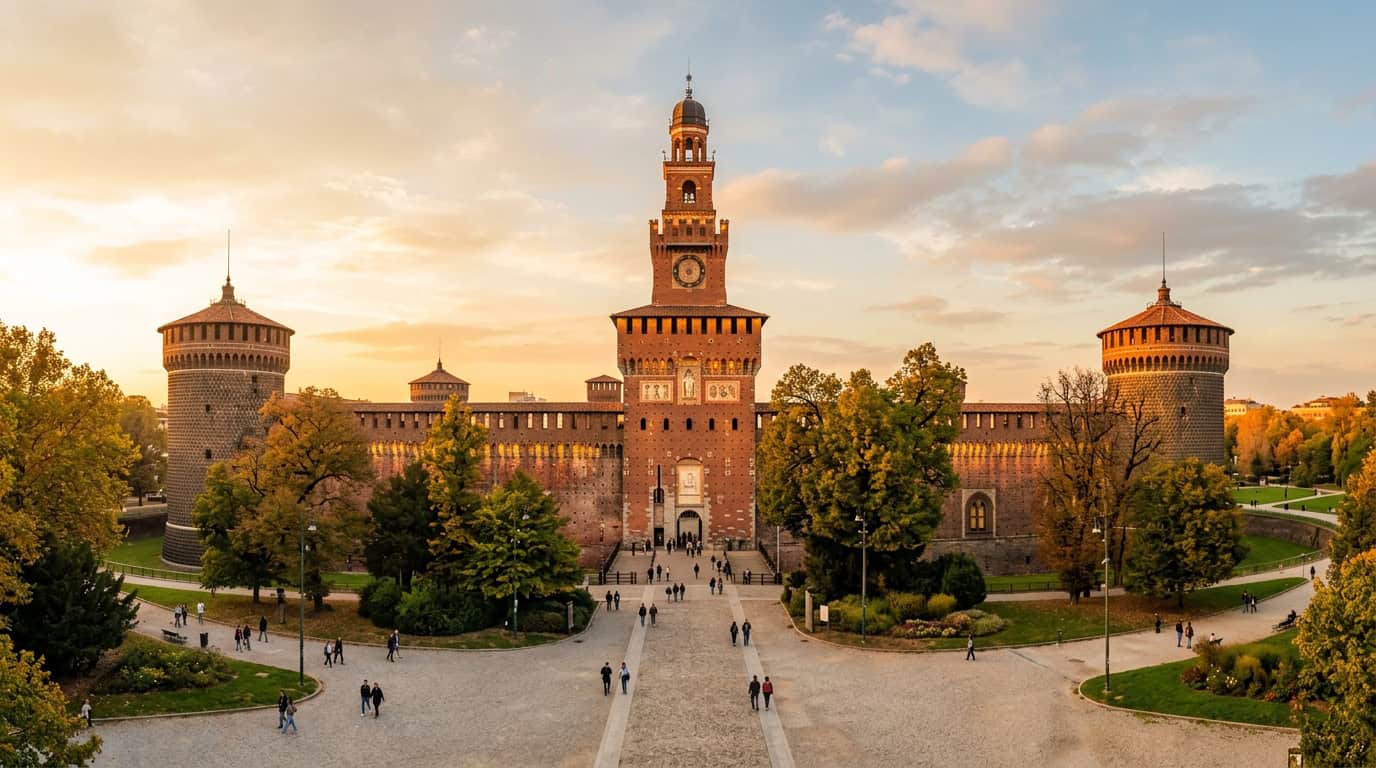
When I first mapped out a trip through Italy, I fell into the trap of trying to see everything by train, only to realize that the most compelling history is often found where the tracks end. In 2026, the travel landscape in Italy is heavily influenced by large-scale events. For instance, while you are exploring the Sforzesco Castle in Milan, you will feel the energy of a city transitioning into its Olympic phase. The castle is not a relic; it is an active participant in the city’s urban renewal.
Similarly, look at how the Venice Biennale approaches modern art. The way national pavilions are moving toward group exhibitions is a lesson for how we should view historic sites. Don’t just look at the stone walls; look at how these castles serve as the stage for the current cultural conversation. The Sforzesco Castle is home to the Museum of Ancient Art, but it also sits as a gatekeeper to the transition between medieval life and the Renaissance. If you treat your visit as a performance, looking for the “why” behind the architecture rather than just the “when,” your experience will transform from a standard tour into a deep historical immersion.
Deep Dive: The Evolution of Italian Fortifications
To understand Italian history, you must understand the shifts in power that dictated the construction of these walls. Italy is home to roughly 20,000 castles—an staggering number that accounts for a massive portion of the world’s total, second only to France. This is not a coincidence. The peninsula spent centuries fragmented into city-states, each requiring defensive structures to survive. When you walk through a structure like the Sant’Angelo Castle in Rome, you are seeing a hybrid. It began as the mausoleum for the Emperor Hadrian in 139 CE. By the middle ages, popes were converting it into a fortress. It reflects the layer-cake nature of Italian history.
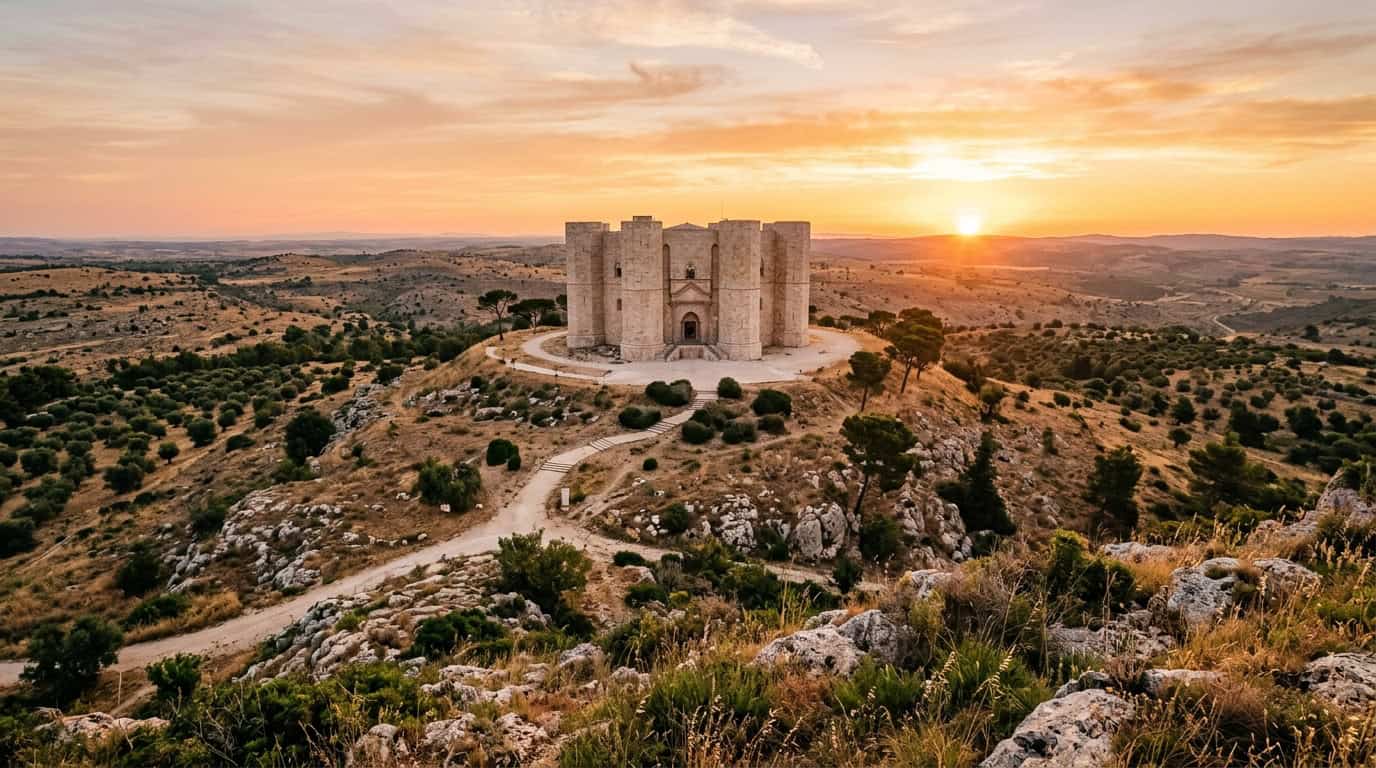
The Mathematical Mystery of Castel del Monte
In Puglia, Castel del Monte represents an anomaly in the architectural record. It is a UNESCO World Heritage site, yet it lacks the standard features of defensive warfare: no moat, no drawbridge, no slits for archers. The octagonal design is a mathematical enigma that has sparked endless debate among scholars. Some suggest it was an observatory, others a hunting lodge, and some believe it served a symbolic, ritualistic purpose.
Visiting this site is a commitment. It requires a rental car and a drive through the desolate, scrubby hills of Andria. When I arrived, the lack of crowds was stark compared to the Colosseum. The silence of the location forces you to engage with the stone. You can see the synthesis of Northern European, Islamic, and Classical Mediterranean influences etched into the masonry. If you appreciate architectural puzzles, this is your primary destination.
The Gritty Reality of Caccamo
If you prefer your history with a side of the supernatural, Caccamo in Sicily is essential. This is one of the largest and best-preserved Norman castles in the region. Unlike the polished tourist traps of northern Italy, Caccamo feels raw. The legend of Matteo Bonello, whose spirit allegedly wanders the corridors, adds a layer of local folklore that makes the tour feel intimate.
Logistically, Caccamo is a different beast entirely. The stone floors are uneven, the climbs are steep, and the lighting is dim. It is not designed for mass tourism, which makes it perfect for those who want to avoid the “tour bus” crowd. I once spent an entire afternoon here, and outside of the local groundskeeper, I barely saw another soul. The sense of isolation is part of the charm.
Who Should Explore Italy Castles (And Who Should Not)
Deciding if this style of travel suits you depends on your tolerance for logistics and your appetite for historical depth.
This is ideal for:
History Buffs: If you enjoy tracing the lineage of architecture from the Roman Empire through the Renaissance, these structures offer a physical timeline.
Budget-Conscious Travelers: By visiting regional sites in Sicily or Puglia rather than just the central hubs, you can significantly reduce your daily spend on food and lodging.
Photographers: Sites like these show how structures look best in golden hour light; the stone texture changes dramatically as the sun sets.
You might want to skip this if:
Accessibility Issues: Many of these sites, particularly older ones like Caccamo, involve steep climbs and uneven stone floors that are not suitable for those with limited mobility. The lack of elevators and ramps in medieval buildings is a harsh reality.
Strict Itinerary Lovers: If you prefer the comfort of highly organized tour buses and predictable schedules, remote sites might feel too logistically taxing for you. You need to be prepared to navigate rural public transport or drive yourself.
Budgeting for Your 2026 Italian Adventure
In 2026, the economic reality of visiting Italy has shifted. Prices in hubs like Milan are reaching parity with Paris, making careful financial planning a necessity. Here is a rough breakdown of what to expect when visiting these historic sites.
| Item | Estimated Cost | Notes |
|---|---|---|
| Standard Entry | €15 – €25 | Always check for combo tickets |
| Espresso/Spritz | €5 – €10 | Local bars are cheaper than tourist spots |
| Regional Transit | €10 – €30 | Consider regional rail passes |
| Mid-range Meal | €40 – €60 | Avoid eating within 500m of the site |
My advice for saving money? Use the local bike-sharing schemes in cities like Milan. When I visited the Navigli district after touring the Sforzesco, I saved roughly €20 on transit and saw parts of the city that taxi riders completely miss. Avoid the temptation to buy souvenirs at the castle gift shops; the prices are often triple what you would pay at an artisan shop just a few blocks away.
Common Mistakes to Avoid
-
- Underestimating the ‘Last Supper’ Factor: Many travelers assume they can just show up at famous sites. I once traveled across Italy hoping to walk into the museum holding the Last Supper, only to find the tickets were booked three months out. If you have a specific castle or museum on your bucket list, book the ticket the second you finalize your flight dates. Do not rely on luck.
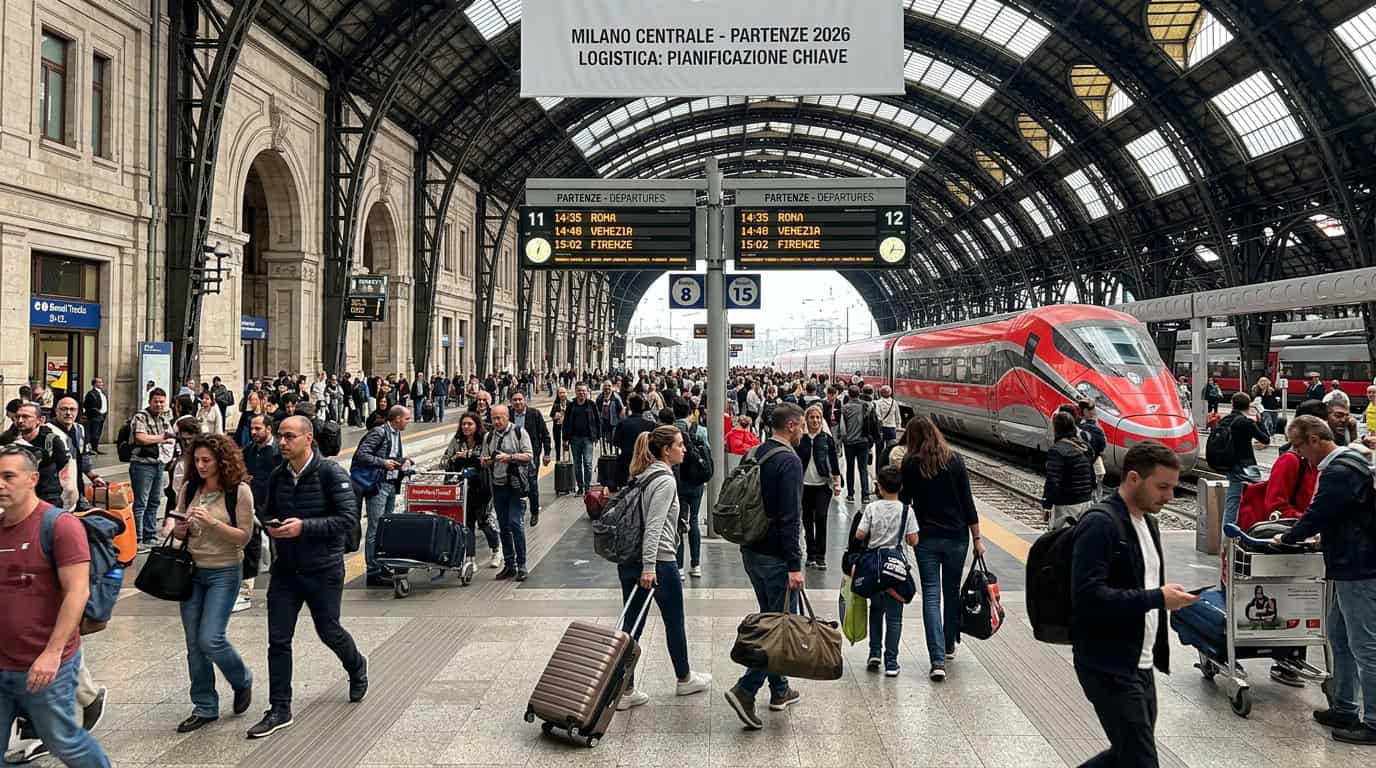
- Over-planning in the North: During the February/March 2026 Winter Olympics, travel logistics in and around Milan will be chaotic. Do not plan to arrive or depart from Milan on the same day you plan to visit a site like the Sforzesco Castle. Build in a 24-hour buffer for transport delays and crowded streets. You will thank yourself when the trains are running at capacity and the city is hosting thousands of extra visitors.
Frequently Asked Questions
1. Are there any hidden costs I should watch for when visiting Italian castles?
Yes, the most frequent hidden cost is the “service fee” on tickets purchased through third-party resellers. Always try to purchase your tickets directly from the official government-run museum website first. Also, watch for the difference between a simple ground-entry ticket and an “all-access” ticket—sometimes the secret passages or high-tower access are sold as separate, often slightly more expensive, add-ons at the door. If you aren’t careful, these small costs add up to 20% of your daily budget.
2. Is it better to visit these castles in the winter or summer?
It depends on your priority. Summer offers long, beautiful days for photography, but the heat can be grueling, especially in places like Puglia. Winter offers a moody, atmospheric vibe that is perfect for places like Caccamo or the northern castles. If you go in winter, pack for damp, cold weather, as these stone structures do not have modern heating systems and can be colder inside than out. I personally prefer late autumn when the crowds thin out but the weather is still mild enough to explore without needing five layers of clothing.
3. Do I need a guided tour to understand the history?
While you can absolutely explore on your own with a good guidebook, I’ve found that the best stories—especially the local legends at places like Caccamo—are only shared by local guides. If you are a history enthusiast, investing in a private, local guide for one major site during your trip is worth the extra €50-€100. It turns a walk through a room of rocks into a narrative-driven experience. The nuance of the local dialect and the specific family histories of the castle owners are things you simply won’t find on a plaque.
Conclusion
When exploring Italy castles, the goal should be to bridge the gap between the monumental history of the past and the fast-paced reality of the present. These sites are not merely museums; they are the anchors of Italy’s identity. From the imperial tombs of Rome to the feudal fortresses of Sicily, each structure tells a story of survival, power, and transformation.
By planning your logistics early, keeping an eye on the 2026 event calendar, and venturing away from the main tourist paths, you will uncover experiences that standard travelers never see. Remember that your most rewarding moments will likely be the ones you didn’t plan for—a quiet sunset on the battlements of a remote Sicilian ruin, or an accidental discovery of an ancient crypt in the backstreets of a town you weren’t originally going to visit. Prioritize flexibility, pack good walking shoes, and respect the age of the stone you are touching.