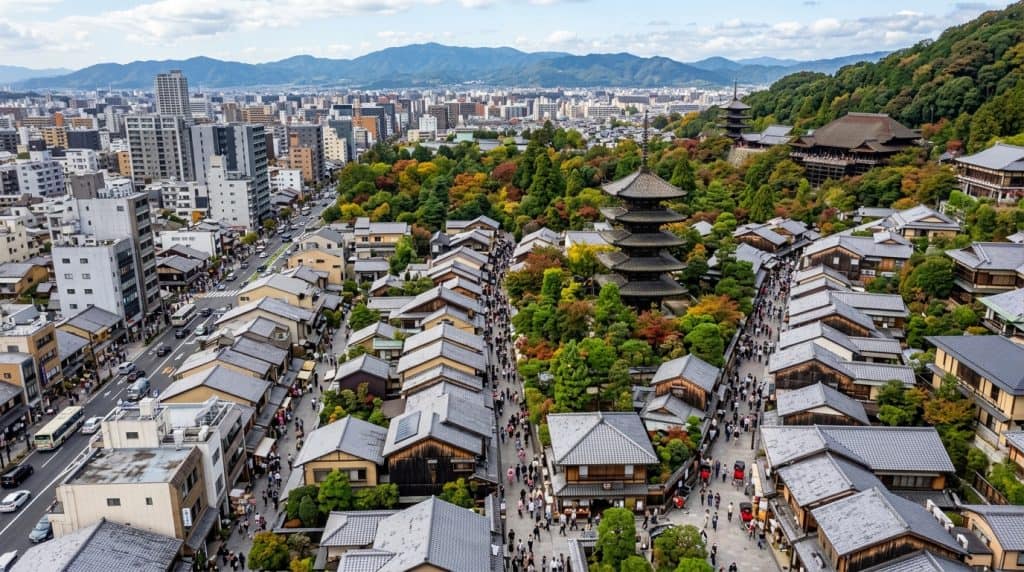
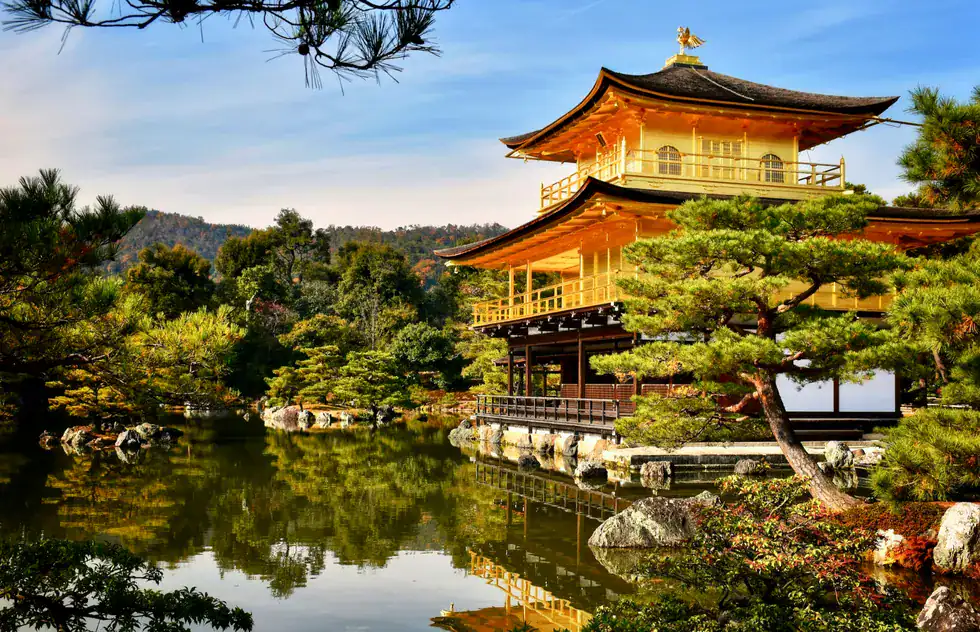
Finding a reliable Gujo Hachiman travel guide is often the exact tipping point between enduring the shoulder-to-shoulder masses of the Golden Route and actually experiencing the deeply preserved, quiet Japan you traveled across the world to see. I remember standing in Kyoto last autumn, utterly defeated by a wall of elbows and selfie sticks near Kiyomizu-dera, realizing I needed an immediate exit strategy. I wanted damp cobblestones, rushing river water, and historical architecture without having to fight for breathing room.
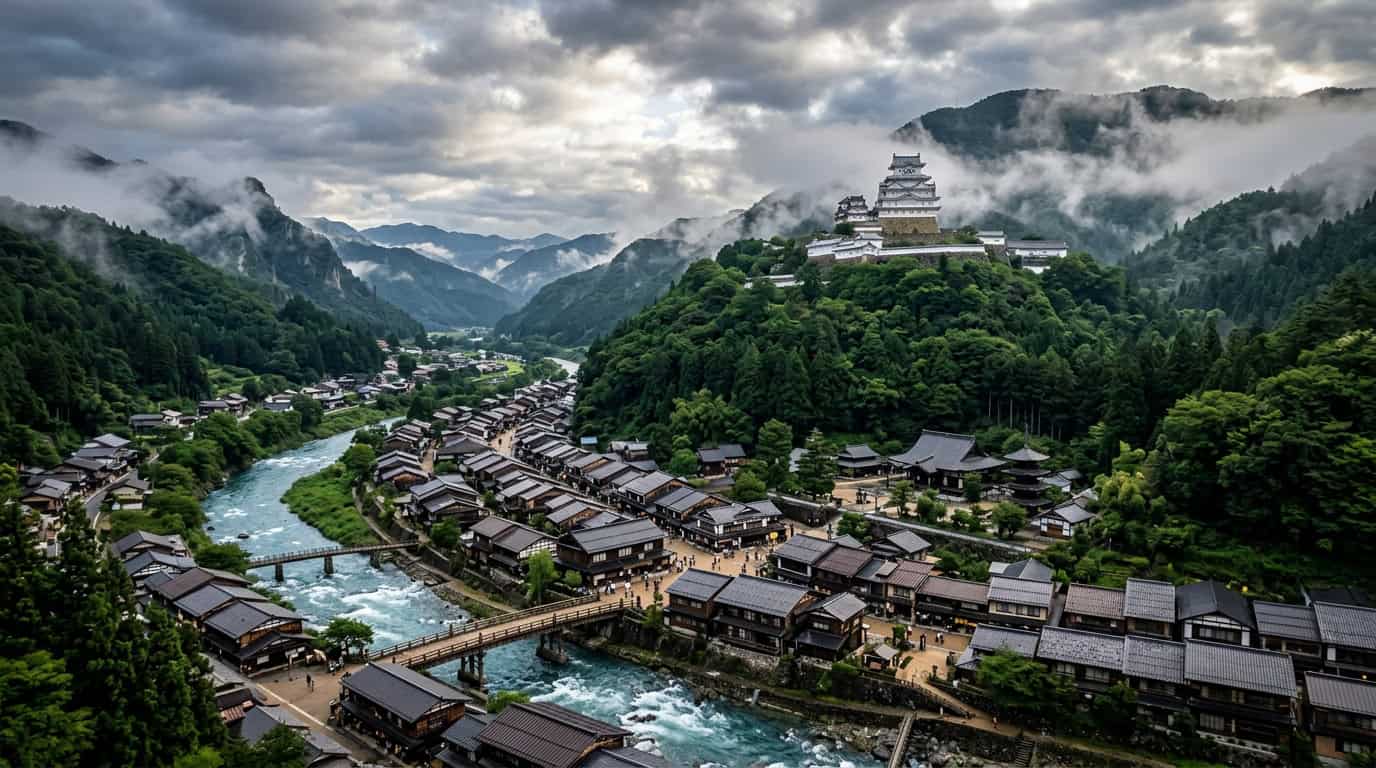
That exit strategy led me deep into the mountains of Gifu Prefecture. Gujo Hachiman, historically known as Japan’s “Water City,” delivers immaculate Edo-period merchant houses, a mountaintop fortress, and canals teeming with massive koi fish.
However, getting to this isolated mountain enclave requires specific logistical planning. You cannot treat this like a casual afternoon diversion from the capital. If you are looking for another quieter Japan destination after this, compare it with Fukuoka travel guide or the less-crowded charm of Gifu Hachiman travel guide 2026.
Quick Summary
The Direct Answer: Is Gujo Hachiman Worth Your Time?
If your goal is to experience the historic atmosphere of traditional, rural Japan while entirely avoiding the severe overtourism plaguing major cities, Gujo Hachiman is absolutely worth a dedicated one- or two-day detour. It offers the dark-wood merchant houses of Takayama and the serene temple gardens of Kyoto, but with a fraction of the foot traffic.
However, you must be ruthlessly strategic about your logistics. The single biggest error international travelers make is attempting to force this destination into a packed itinerary as a day trip from Tokyo. Travel times from Tokyo exceed five hours each way, meaning you will spend your entire day looking out of a train window. To make this trip work, you need to use Nagoya as your staging ground. From Nagoya’s Meitetsu Bus Center, a direct highway bus drops you directly into the historic center. Dedicate a full weekend to this detour, stay overnight in a local ryokan, and you will understand exactly why domestic Japanese travelers fiercely protect this isolated destination.
Mastering the Logistics: How to Get There from Nagoya
Getting into the mountains of Gifu requires abandoning the bullet train network. When I first planned my route, I blindly assumed Japan’s legendary rail system would drop me right at the castle gates. I was completely wrong.
The Highway Bus (The Recommended Route)
The most efficient, pain-free method to reach the town center is the Gifu Highway Bus. It departs from the Meitetsu Bus Center in Nagoya and drops you directly at the Gujo Jokamachi Plaza, right in the heart of the walkable historic district.
Duration: Approximately 1 hour.
Cost: 2,260 JPY for a one-way ticket; 4,100 JPY for a round-trip.
The Catch: You cannot use your JR Rail Pass for this bus. You must purchase separate tickets either online in advance or at the station counter.
Renting a Car (For Confident Drivers)
If you prefer strict autonomy, driving is fast, taking about 1 hour and 20 minutes via the E41 highway heading north out of Nagoya.
Costs: Expect to pay roughly 15,100 JPY for a standard 24-hour rental car (including basic insurance and an ETC toll card), plus an additional 4,030 JPY in highway tolls each way.
The Scenic Railway (The Slow, Visual Route)
If you have time to burn and a love for trains, the Nagaragawa Railway departs from Mino Ota station. It costs about 1,800 JPY one way and winds heavily along the Nagara River, offering spectacular visuals of river gorges that cars cannot access. The massive downside is that the local railway station is located notably outside the main historic center, requiring a long, unshaded walk or a short taxi ride upon arrival.
Conquering the “Castle in the Sky”
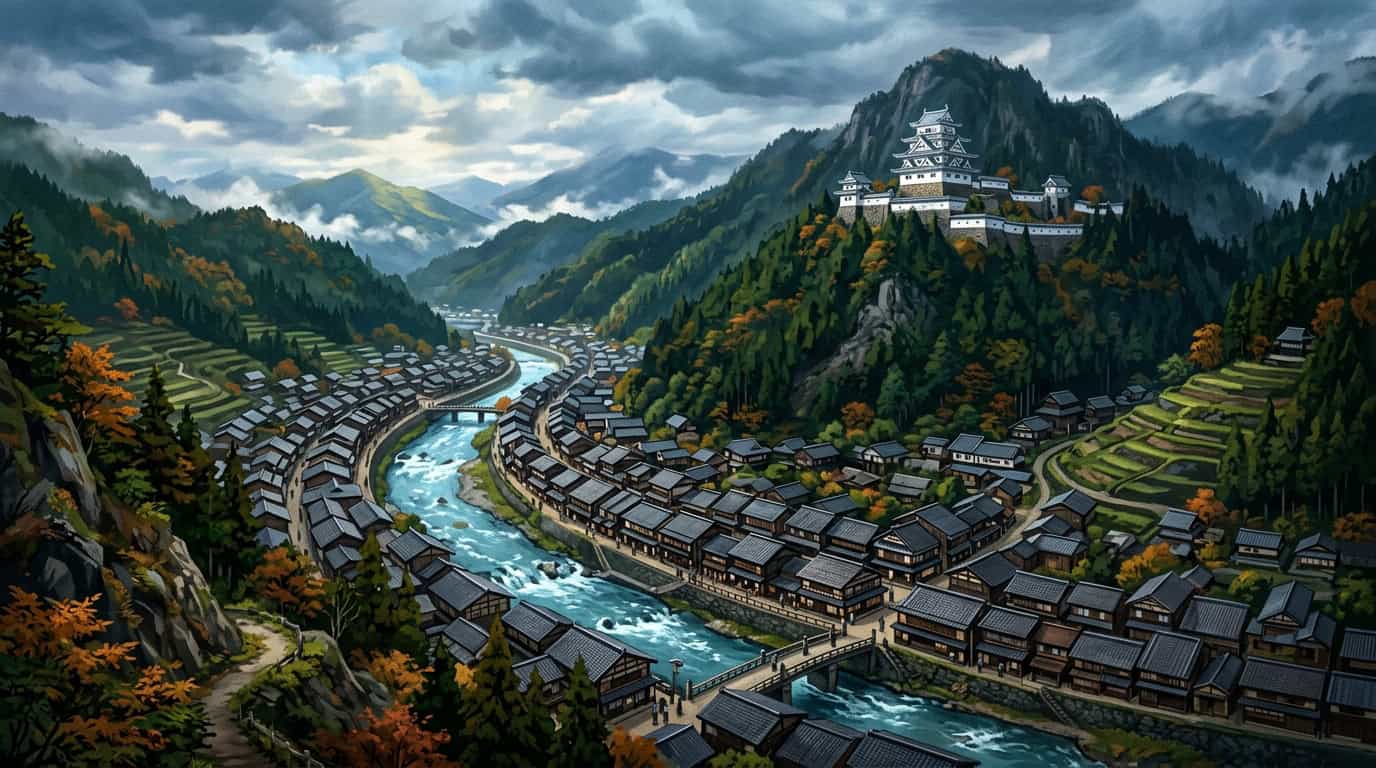
Hovering 350 meters above the valley floor on Mt. Hachiman is the town’s defining landmark: Gujo Hachiman Castle. Originally constructed in 1559 by local feudal lord Endo Morikazu, the fortress watched over the critical river trade routes for centuries.
Like many Japanese fortresses, the original structure was torn down in the late 19th century during the fall of the Tokugawa shogunate, as the new imperial government ordered the destruction of all old military symbols. The magnificent white structure you see today is a highly accurate wooden reconstruction built in 1933, making it the oldest reconstructed wooden castle in Japan.
Locals refer to it as the “Castle in the Sky” due to a specific morning weather phenomenon. In the early hours of autumn, dense white fog settles deep into the valley bowl. As the sun rises, the bright white castle walls appear to hover completely unattached above the clouds for a brief, highly photogenic window of time.
The Brutal Hike Up
The entrance fee is a modest 400 JPY for adults and 200 JPY for children. However, getting to the ticket booth requires severe physical effort. There is absolutely no public transport that runs up the mountain. From the tourist office in town, you must hike a steeply pitched 20-minute trail.
When I tackled this walk in the early afternoon humidity, carrying a heavy camera bag, I was dripping with sweat within four minutes. I quickly realized why the locals strongly recommend taking a taxi from the town center if you have any mobility concerns or are traveling with young children.
Exploring the Waterways of Japan’s “Water City”
Down in the valley floor, the town’s entire identity is defined by water. Historic canals, fountains, and natural springs weave directly through the residential neighborhoods, historically providing drinking water, washing stations for rice, and fire-prevention resources. The air around the canals smells sharply of damp moss and roasted green tea from nearby cafes.
Igawa Komichi and the Honest Box Koi
One of the most heavily photographed areas is Igawa Komichi, a narrow, 119-meter-long pathway running alongside a rapidly flowing canal. The water here is shockingly clear, fed straight from the mountains, and borders Kanazawa-style residential stone walls.
This canal is populated by massive, brightly colored koi (Japanese carp). The locals operate on a strict, charming honor system. You will find small wooden mailboxes along the path containing bags of fish pellets. You simply drop a 100 JPY coin into the box and feed the fish yourself. The koi have excellent vision and will actively follow you along the stone path, thrashing the water in anticipation of food.
Yanakamizu No Komichi
Another highly distinct water lane is Yanakamizu No Komichi. Rather than a deep canal, this is a wider walking path featuring a highly intricate stone mosaic meant to represent a flowing river. The mosaic is constructed from exactly 80,000 boulders and pebbles pulled from the nearby Nagara and Yoshida rivers. The highly specific number of stones is a deliberate nod to the town’s name—“Hachi” translates to the number eight in Japanese.
Sogi Spring and the Matcha Detour
Recognized officially as one of Japan’s “100 Remarkable Waters,” Sogi Spring is the historic birthplace of the town’s water-centric culture. Named after the renowned 15th-century poet Iio Sogi, the small shrine and spring remain a spiritual hub for residents. Directly adjacent to the shrine is Sogi-an, a local café that you should absolutely not skip. Sitting by the water eating their multi-layered matcha dessert, I realized it was the best sweet I had on my entire three-week trip. The dessert is a towering construction of roasted tea jelly, thick green tea pudding, high-grade matcha ice cream, red bean paste, and sticky rice flour dumplings.
The Fake Food Capital of the World
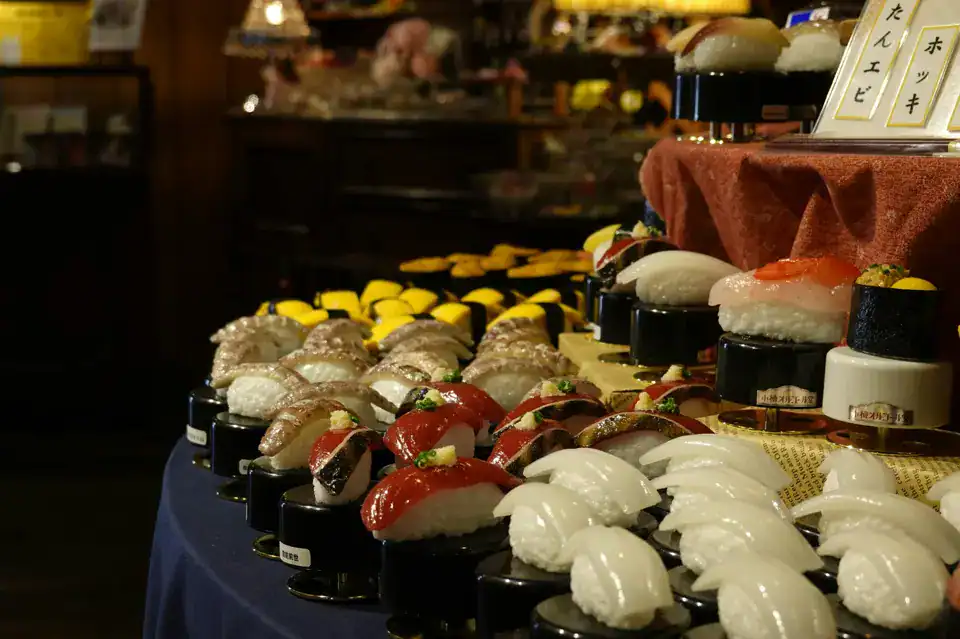
If you have ever eaten at a restaurant in Tokyo or Osaka, you have seen sampuru—the hyper-realistic wax and plastic food models displayed in front windows to tempt customers. What most international tourists never learn is that Gujo Hachiman produces over 50% of all replica food models used across the entire country.
This is not a modernized, robotic factory operation; it is a decades-old tradition of intense hand-crafting. The local streets are lined with specialized workshops churning out everything from translucent pints of fake lager to individual grains of plastic rice attached to sushi rolls.
Hands-On at Sample Kobo
You can simply buy souvenirs, but the real draw is the interactive workshops. At the centrally located Sample Kobo (located at 956 Hachimancho Hashimotocho), you can pay between 1,500 and 3,000 JPY to learn the historic wax-dropping technique. Standing over a basin of ice-cold water, an instructor teaches you how to drizzle molten yellow and green wax from a high altitude. As the hot wax hits the cold water, it instantly solidifies into a wide, floating sheet. By gently pulling, pinching, and folding the wax underwater, you can form a hyper-realistic head of lettuce or wrap a wax shrimp to create a perfect piece of fake tempura. It requires far more dexterity than it looks, and taking your imperfect creation home is a massive upgrade from a standard magnet or postcard.
The Gujo Odori Festival: Dancing Until Dawn
The Obon festival is a national Japanese custom focused on honoring deceased ancestors. While observed nationwide, Gujo Hachiman hosts one of the three most important and intense iterations of the festival in the country, drawing over 250,000 visitors and earning a spot on the UNESCO Intangible Cultural Heritage List in 2022.
The Dark Samurai History Behind the Dance
The extreme passion of this specific festival stems from a grim chapter in the town’s samurai-era history. During the Edo period, a corrupt local feudal lord grossly lied to the ruling shogun about the region’s rice yields. Based on those inflated numbers, the lord demanded impossibly high taxes from the local farmers, leaving the citizens entirely destitute and starving.
Desperate, the farmers wrote a petition to the shogun. However, the corrupt lord intercepted the document. Assuming the first signature on the list belonged to the rebellion’s leader, he had that man publicly beheaded. The citizens refused to give up. They drafted a new petition, but this time, they signed their names in a perfect circle so no single ringleader could be identified.
Eventually, the petition reached the shogun, who banished the corrupt lord and appointed a benevolent replacement. To heal his traumatized, fractured community, the new lord issued a radical decree: every year, all citizens—regardless of wealth, class, or samurai rank—must gather and dance together as absolute equals.
Experiencing the Festival Today
That decree violently survives today. Unlike other towns that celebrate for a single weekend, Gujo Hachiman’s festival spans from mid-July to early September. The dancing takes place in a different neighborhood every single night. During the peak four nights in mid-August, the live band starts playing at 8:00 PM, and the entire town dances continuously until 5:00 AM the following morning. If you visit outside of the summer months, you can still absorb this culture by visiting the Gujo Hachiman Hakurankan City Museum. For a free entry, you can view the historical artifacts and catch live weekend demonstrations of the ten specific circular dance steps.
Where to Stay: Accommodation Trade-Offs
Because of its strict geographical isolation, accommodation options here are limited. You must book well in advance, and you must choose based on your physical mobility and budget.
Miharaya Ryokan (The Traditional Choice)
Located right on the banks of the Yoshida River, this is the premium choice for authentic immersion. You get a traditional tatami mat room, access to an indoor hot spring bath, and an elaborate multi-course traditional dinner featuring local river fish. If you want the full cultural experience and are comfortable sleeping on floor futons, book here.
Hotel Sekisuien (The Modern but Difficult Choice)
This hotel boasts spacious, modern rooms, excellent food, and high cleanliness standards. However, there is a massive physical caveat: it is located directly next to the castle. Walking up to Hotel Sekisuien with heavy roller luggage is a brutal, sweaty mistake. Only book this if you are renting a car or are willing to pay for a taxi from the bus plaza.
Hotel Gujo Hachiman (The Budget Choice)
This is the most popular and budget-friendly option in town, located conveniently next to a bus stop. The staff are famously kind. However, to be completely honest, the physical building is quite old and suffers from a noticeable lack of modern maintenance. Expect peeling paint, slightly musty hallways, and highly dated 1980s interiors. It serves its purpose for a cheap night’s sleep, but do not expect luxury.
Food Guide: What to Eat (And What to Skip)
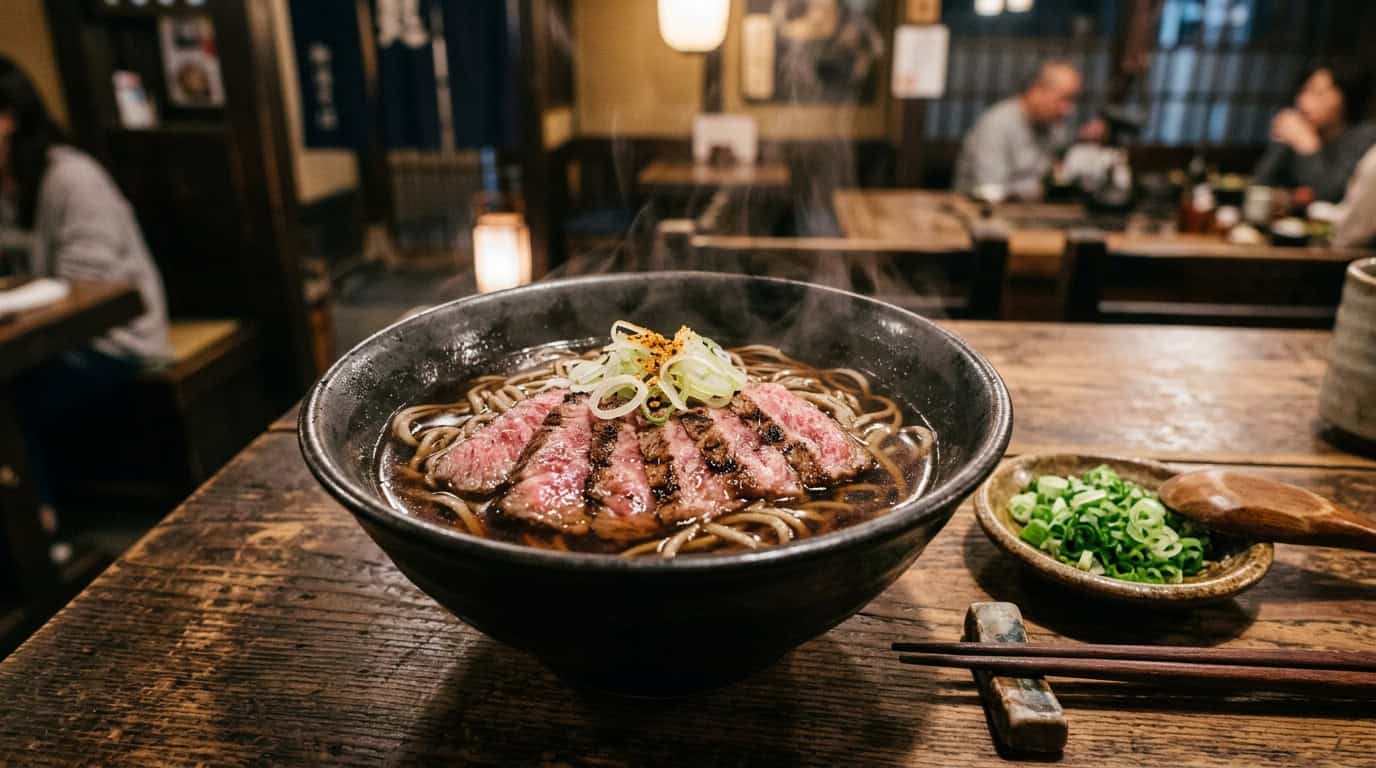
Hida Beef Soba at Soba no Hirajin: This centrally located, highly traditional restaurant serves excellent handmade buckwheat noodles. You must order their specialty: Soba noodles topped with Hida beef. Hida beef is a premium regional wagyu known for its intense marbling, and pairing the rich fat with the earthy, hot broth of the soba is exceptional.
Ayu (Sweetfish) at Shinbashi-tei: Ayu is a local river fish delicacy, caught fresh from the Nagara river. It is traditionally skewered, heavily salted, and charcoal-grilled whole. The meat is incredibly sweet and flakes apart easily.
Unagi at Yoshidaya Minokin: This establishment is famous for its unagi (grilled freshwater eel served over rice with a sweet soy glaze). The eel itself is fantastic, charcoal-grilled to absolute perfection. However, I highly recommend skipping the eel soup side dish. The accompanying broth is severely fishy, muddy, and wildly underwhelming compared to the main rice bowl.
Cost & Value Section: 2-Day Budget Breakdown
To help you plan realistically, here is a breakdown of what a standard 2-day, 1-night trip costs per person when staging from Nagoya. Japan operates heavily on cash in rural areas, so bring actual Yen.
For the sheer lack of crowds and the depth of historical preservation, this represents an incredibly high value-for-money ratio compared to staying a night in central Kyoto.
Common Mistakes to Avoid
1. Forcing a Tokyo Day Trip
I cannot stress this enough: do not look at a map, see that Gifu Prefecture is roughly in the middle of Japan, and assume you can bounce out of Tokyo for the afternoon. A round trip from Tokyo will take upwards of 11 hours of pure transit time. You will spend your entire day running through train stations. You must stage this trip from Nagoya.
2. Buying Traditional Shoes Without Checking the Fit
The Shinmachi Shopping Area is famous for selling beautiful geta (traditional wooden Japanese sandals) made from local cypress trees at shops like Gujo Mokuri. Tourists often buy these as expensive wearable souvenirs. However, local shoe sizing runs notably small, and traditional wooden geta do absolutely not stretch or break in like leather sneakers. Buying a pair that is even slightly too small will result in immediate, painful blisters on the steep cobblestone streets. Always buy a size larger than you think you need.
3. Assuming Your JR Pass Works
Many travelers build their entire Japan itinerary around the JR Rail Pass. The primary Gifu Highway Bus you need to reach the town center is privately operated. Your pass is invalid here, so budget for the separate cash ticket.
Who Should Visit (And Who Should Not)
- Travelers on their second or third trip to Japan who want a deeper, quieter cultural experience away from major cities.
- Photography enthusiasts looking for Edo-period architecture and morning mountain fog without tourists ruining the frame.
- Anyone deeply interested in highly localized Japanese crafts, specifically the sampuru workshops or silk screen printing.
- You are strictly bound to a 7-day JR Rail Pass budget and refuse to pay for out-of-network transit.
- You have severe physical mobility issues. Reaching the castle, upper temples, and many hillside streets requires steep walking on uneven terrain.
- You are looking for high-end luxury shopping, modern amenities, or late-night bar scenes. Outside of the August festival window, the town shuts down completely by 6:00 PM.
Frequently Asked Questions
When is the absolute best time to visit?
If you want cultural energy, visit in August for the month-long Bon Odori dancing festival. If you prefer photography, cooler weather, and zero crowds, mid-November is spectacular, as the Japanese maple trees surrounding the mountaintop castle turn a brilliant, fiery red.
Can I drink the water from the canals?
While the water at the designated Sogi Spring source is completely safe and celebrated nationwide as premium drinking water, you should absolutely not drink directly from the open street canals like Igawa lane. They contain live koi fish, natural runoff, and algae.
How much time do I actually need here?
The town is geographically compact. A single overnight stay (arriving at noon on day one, leaving at 2:00 PM on day two) is the perfect amount of time to hike to the castle, make wax food, explore the evening streets when the day-trippers leave, and eat at the local restaurants without feeling artificially rushed.
Are credit cards widely accepted?
No. While major hotels will take standard credit cards, Gujo Hachiman is a rural, traditional town. Most small noodle shops, street vendors, local transit options, and temple entrances operate strictly on a cash-only basis. Bring plenty of Yen from Nagoya.
Final Thoughts
Gujo Hachiman represents a rare, deliberate survival of old-world Japan. It requires a bit more logistical effort to reach than the heavily marketed stops on the Golden Route, but that exact friction is what keeps the overwhelming crowds at bay.
By planning your transit smartly from Nagoya, preparing for the physical mountain inclines, and embracing the slow pace of the historic waterways, you will experience a version of Japan that most travelers only ever see in history books. Book your highway bus ticket, secure a tatami room at a local ryokan, and prepare for a genuinely quiet escape into the mountains. For another alternative to crowded classic routes, you can also explore bucket list travel destinations or revisit the quieter regional appeal in Fukuoka travel guide 2026.