Phuket Rainy Day Activities: The Slow Travel Nature Guide
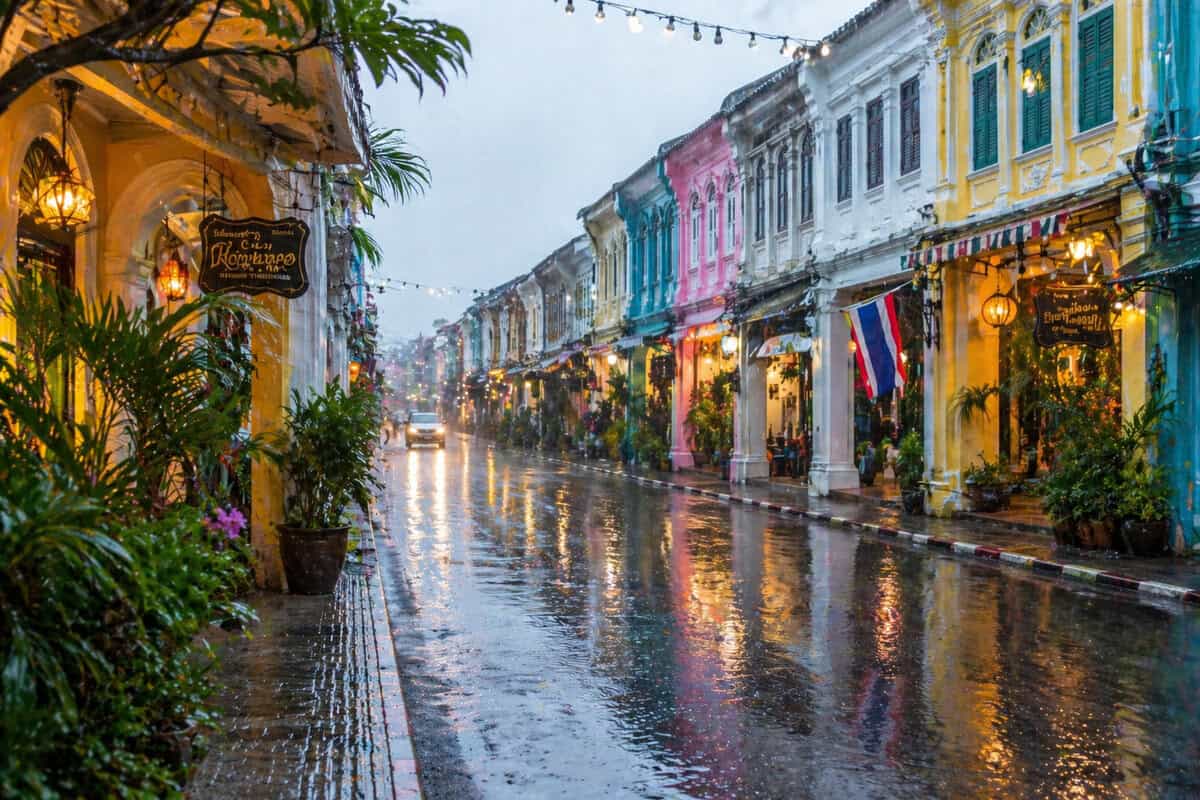
When searching for Phuket rainy day activities, most travelers default to wandering aimlessly through generic shopping malls or retreating to their hotel beds with a glowing screen. Instead, spend a day wandering through the covered archways and vibrant shophouses of historic Old Phuket Town. You saved up, flew halfway across the world, and woke up to a grey sky dumping sheets of monsoon water against your villa windows. But treating tropical rain as an inconvenience is a massive missed opportunity. Rain days ask for a slower pace than the sun-drenched itinerary ever allows.
Instead of fighting the weather, the smartest travelers pivot. The “Green Season” in Thailand (roughly May to October) is an open invitation to slow down, regulate your nervous system, and engage with the environment in ways that high-season crowds simply cannot. Drawing from biophilic design principles and sustainable family play, this guide reimagines how you spend your wet weather days. The air cools and the streets empty, leaving the scent of wet earth as your only company.
The Direct Answer: How to Save a Rainy Vacation
If you want to know exactly what you should do right now while the rain pours down, the answer is to stop looking for indoor commercial entertainment and start looking at the nature around your accommodation.
Your best immediate action is to set up a “slow-living station” on your covered balcony or patio. Send the kids (or yourself) outside for five minutes to gather fallen palm fronds, wet hibiscus flowers, stones, and twigs. Bring them back to the table. Boil hot water for local lemongrass tea. Use the collected materials to build a miniature terrarium in a glass cup, create natural art, or construct small boats for puddle racing later.
If you absolutely must leave the resort, do not force an open-water boat tour. Instead, hire a local taxi for about 500 to 800 THB and head to Phuket Old Town. The Sino-Portuguese architecture offers deep overhangs that keep the sidewalks dry, allowing you to seamlessly hop between coffee roasters, local textile shops, and street food stalls serving hot, comforting bowls of Hokkien noodles.
The Psychology of Tropical Rain: Regulating the Nervous System
Modern travel is often plagued by a manic need for constant, Instagram-worthy productivity. We pack our itineraries so tightly that a single morning of rain feels like a catastrophic failure. But from a biological standpoint, poor weather is an environmental invitation to pause.
The Science of Contrast Therapy
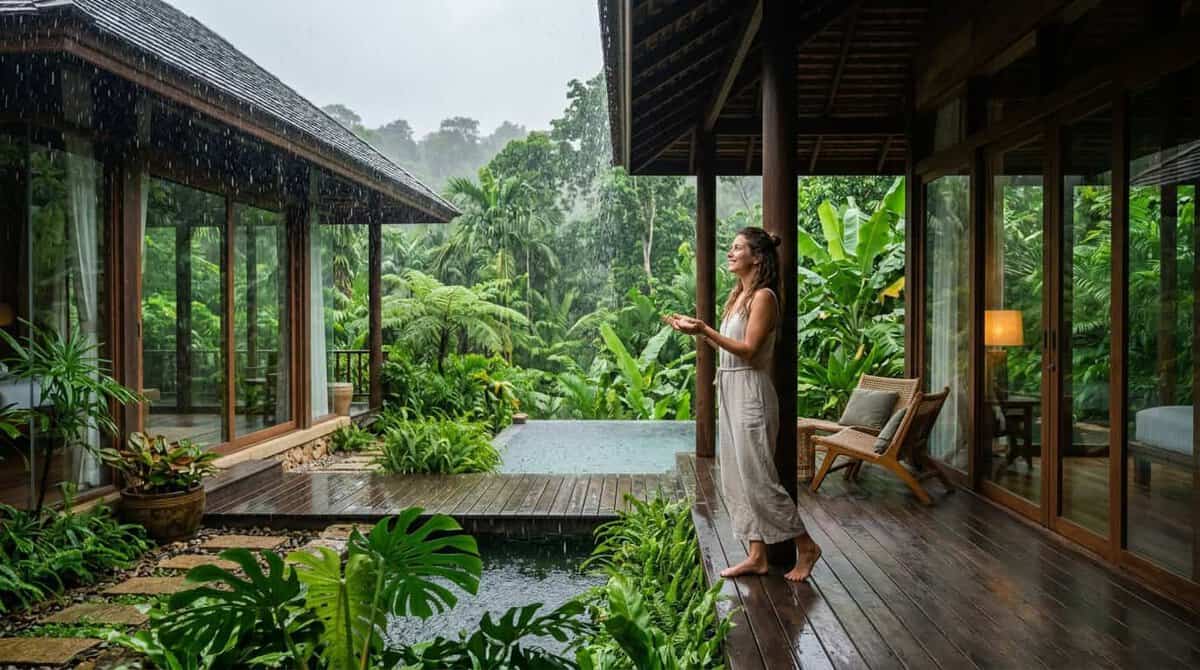
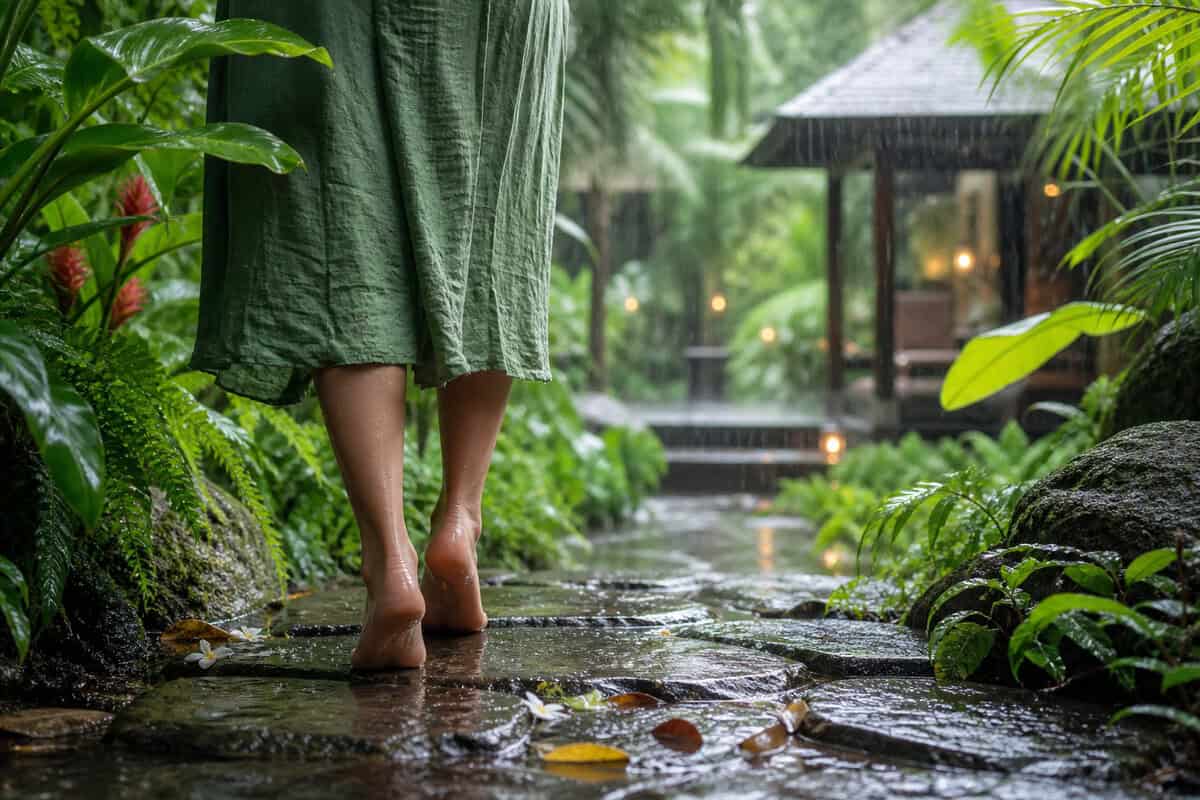
One of my favorite rituals when a monsoon hits is practicing a modified version of contrast therapy. Step out of your air-conditioned room and walk barefoot onto the wet grass, stone patio, or sand. The rain in southern Thailand isn’t freezing; it is usually a heavy, warm deluge. Stand out there for just two minutes. Feel the sheer volume of water and the soft earth beneath your feet.
Then, immediately retreat inside. Dry off with a thick towel, put on dry clothes, and wrap your hands around a hot mug of ginger or pandan tea. This sharp transition from the overwhelming sensory input of the storm to the quiet, dry warmth of your room acts as an immediate physical reset. It heightens physical awareness and safely, effectively slows down an overactive, travel-stressed nervous system.
Sustainable Indoor Botany & Crafts in Your Villa
Brewing Custom Herbal Teas
Forget the generic tea bags near the hotel kettle. Visit a local wet market during a dry spell (or order through a delivery app like Grab) and ask for fresh herbs. A bundle of lemongrass, pandan leaves, mint, and local ginger will cost you less than 40 THB (about $1.15). Back in your room, wash the herbs, tear the leaves by hand (which releases the essential oils better than cutting), and steep them in hot water. Blending fresh rosemary with lemon balm or local Thai basil with ginger is a form of grounding “kitchen alchemy.”
Making Natural Inks from Tropical Scraps
If you have kids bouncing off the walls, or if you simply enjoy art, try creating natural watercolor inks. Simmer the thick, purple rinds of mangosteens or the skins of dragonfruit in a small amount of hot water. Let the liquid cool, strain out the solids, and you have a soft, natural ink. Use a cotton swab or a cheap paintbrush to create washes on hotel stationery. The results are unpredictable, soft, and beautifully imperfect.
Visible Mending as a Travel Ritual
I once tore the strap off my favorite canvas beach bag on a ferry to Koh Yao Noi. Instead of throwing it away, I spent a deeply relaxing rainy afternoon on my balcony fixing it. Bring a small sewing kit with brightly colored thread on your trip. Use the downtime to practice “visible mending.” Repair that torn bag, the hole in your linen shirt, or a frayed hat using sashiko-inspired embroidery techniques.
Eco-Conscious Family Play: Bringing Nature Indoors
The Balcony Birdwatching Station
Set up a comfortable viewing station at your window or on a covered patio. While you might not have a feeder, tropical hotel gardens are teeming with life after the initial heavy burst of rain stops. Equip the kids with a notebook and have them sketch what they see. You’ll likely spot Common Mynas, Yellow-vented Bulbuls, or the striking White-throated Kingfisher taking refuge in the fronds.
Resort Scavenger Hunts & Temporary Terrariums
Create a list of nature-themed household items: “Find something with a rough, bark-like texture,” “Find something shaped like a palm leaf,” or “Find a material that absorbs water.” If the rain is light, allow a five-minute dash outside to collect fallen materials. Bring back wet pebbles, clumps of moss from the brickwork, and fallen flower petals. Layer these in a clear drinking glass—pebbles for drainage, a bit of soil, and the greenery on top. You have just built a self-contained, miniature ecosystem.
Embracing the Mess: Outdoor Rain Play
Mud Kitchens and Leaf Soup
If you have a private villa garden, designate a small corner for unstructured, imaginative play. Give your kids a couple of plastic cups or empty water bottles. Allow them to mix the rainwater with soil, stir in fallen frangipani petals, and snap twigs to create “leaf soup” or “mud pies.” This is pure sensory development.
Puddle Raft Racing
Heavy tropical rain creates fast-moving temporary streams and large puddles along pathways. Utilize these as makeshift racecourses. Gather natural materials like strips of banana leaves, bamboo twigs, and coconut husks to build small rafts. Test different structural designs. Does a wide leaf float better than a dense piece of wood? This introduces fundamental physics and engineering concepts without them ever realizing they are learning.
Real-World Excursions: Sheltered Bays and Old Streets
Phang Nga Bay vs. Open Sea
If you want a boat day during the green season, look northeast to Phang Nga Bay (home to James Bond Island). This area is geographically sheltered by the mainland and the island itself. The water remains relatively flat even when the Andaman Sea is furious. Booking a large, stable cruiser (typically around 1,800 to 2,500 THB per person) to go sea-cave canoeing in Phang Nga Bay is consistently the safest, most comfortable wet-weather excursion available.
Old Town Sensory Walks
When the beaches are a washout, Phuket Old Town thrives. The historical district is visually stunning in the rain. The wet asphalt reflects the neon signs and traditional lanterns, making it a photographer’s dream. Walk beneath the covered arches of Thalang Road. Duck into a heritage museum, take a Thai cooking class where you pound your own curry paste from scratch, or simply sit in a café and watch the rain wash over the colorful Sino-Portuguese facades.
The Economics of Green Season Travel
In peak season (December to February), a luxury family villa with a private pool can easily run 12,000 to 18,000 THB ($350 – $500+) per night. That same property drops to 4,000 to 7,000 THB ($115 – $200) between June and October.
If you apply the slow-living principles discussed above, your entertainment budget also plummets. Instead of spending 15,000 THB on a private yacht charter that might get rained out, you are spending 100 THB on local market herbs, utilizing free natural materials, and enjoying the sheer luxury of your discounted accommodation.
Who Should Embrace The Green Season (And Who Should Not)
This slow-travel approach is ideal for:
Families who want to teach their children resilience, adaptability, and eco-literacy.
Couples seeking privacy, quiet spaces, and cozy, romantic atmospheres.
Creative individuals (writers, artists, photographers) who appreciate moody, cinematic aesthetics.
Budget-conscious travelers who prioritize luxury accommodations over daily high-adrenaline tours.
You might want to skip this if:
Your entire vacation dream relies on tanning on a pristine, calm beach for 8 hours a day.
You suffer from severe motion sickness (the open sea routes will be miserable for you).
You have a very short trip (e.g., 3 days). A sudden storm system could dominate a short itinerary.
Common Mistakes to Avoid
1. Waiting for the Rain to Stop Entirely
Tropical weather works in highly localized bursts. If you sit in your hotel room waiting for a perfectly clear blue sky, you will waste your day. You must be willing to step out during the lulls. Put on anti-slip sandals, grab an umbrella, and go.
2. Relying Solely on Commercial Indoor Entertainment
When it rains, every tourist on the island has the exact same thought: “Let’s go to the mall or the aquarium.” The traffic gridlocks, the indoor venues become deafeningly crowded, and the stress levels skyrocket. Stay local, stay close to nature, and avoid the commercial traps.
Frequently Asked Questions
Can you still swim in the ocean when it rains in Phuket?
It depends entirely on the wind and the specific beach, but generally, it is highly discouraged on the west coast (Kata, Karon, Patong, Surin). The monsoon season brings strong underwater rip currents that are invisible from the surface. If you see a red flag on the beach, do not enter the water, even if it looks manageable. Stick to your hotel pool during rainy days.
Are the island hopping tours canceled when it rains?
Rain alone does not cancel a boat tour; wind and wave height do. Professional operators monitor the marine department’s warnings. If the sea is too rough, they will either cancel and refund you, or offer to reschedule. This is why you should always book your “must-do” boat trips for the very beginning of your vacation.
What should I pack for the green season?
Leave heavy rain boots at home. Pack a lightweight, breathable rain shell or a high-quality poncho. Bring a specialized waterproof dry-bag, sports sandals with rugged rubber grips, and quick-dry clothing made of synthetic blends.
Is it safe to ride a scooter in the rain?
I strongly advise against it, especially for tourists. The roads become incredibly slick with a mixture of water, spilled diesel, and loose gravel. Pay the extra money for a local taxi or use ride-hailing apps like Grab or Bolt.
Final Thoughts and Next Steps
The secret to enjoying a tropical vacation during the green season is psychological. If you view the weather as an enemy, you will be stressed and disappointed. But if you lean into the slow-living ethos, the rain becomes an asset. The weather you dread becomes the reason you finally stop rushing.
By integrating Phuket rainy day activities that focus on nature, sustainability, and sensory play, you strip away the frantic pressure of modern tourism. Boil some local herbs, mend your gear, let your kids build a mud kitchen, and watch the storm roll in. You might just find that the days you were forced to slow down become the most memorable parts of your entire trip. What starts as a forced pause becomes the part of the trip you miss most.