Best Bangkok Chinatown Street Food: 14 Must-Eat Dishes
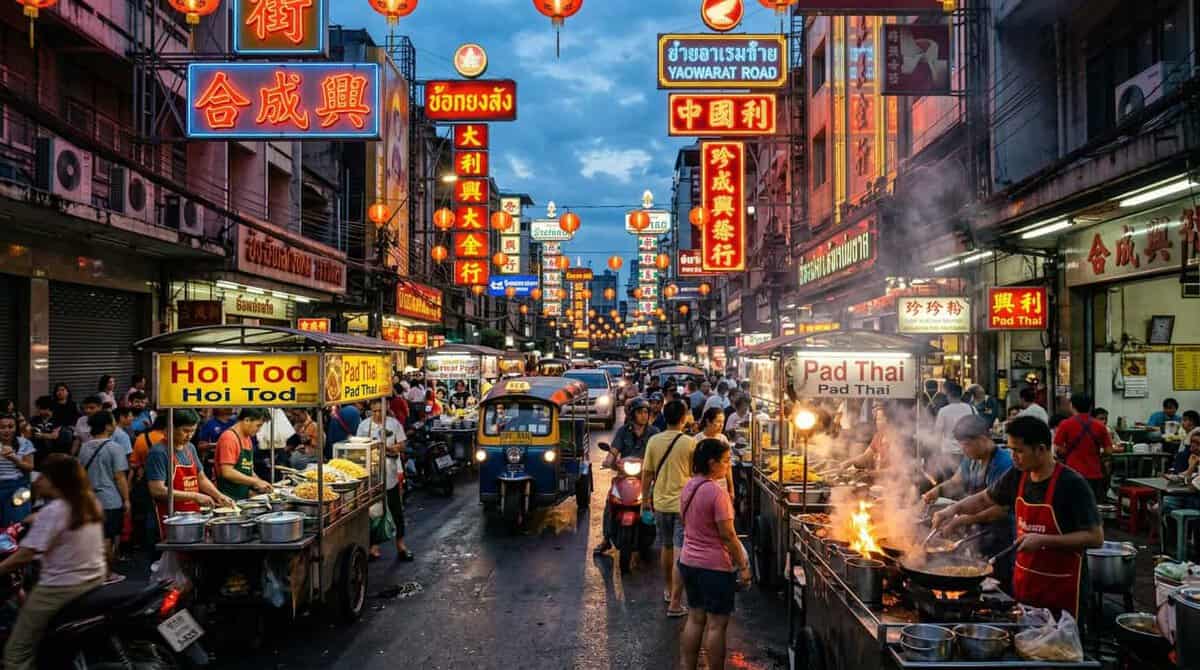
The Bangkok Chinatown street food scene hits you before you see it: the air is thick with the smell of roasted chestnuts, charcoal smoke, and fermented fish sauce, all illuminated by glowing neon signage hanging over Yaowarat Road. If you are researching where to eat in Thailand’s capital, you already know that this district is legendary. But with hundreds of carts competing for your attention, avoiding the mediocre stalls and finding the truly exceptional dishes requires a specific strategy. The chaos of neon and chatter finds a kind of rhythm once you stop trying to map it.
The Direct Answer: How to Attack Yaowarat Road
If you only have one night to experience Bangkok Chinatown street food and want the absolute highest return on your time, do this: Take the MRT to Wat Mangkorn station and arrive exactly at 5:30 PM. Walk straight to Yaowarat Road. Your first stop should be Nai Ek Roll Noodle for a bowl of peppery Kway Chap (roughly 60 Baht). Next, walk down a quieter side alley to Jek Pui Curry—grab a plate of green curry, sit on a plastic red stool, and eat it in under ten minutes.
For dessert, cross the main thoroughfare to find Pang Pang Toasted Bread and order the condensed milk bun. Wash it down with freshly squeezed pomegranate juice from any adjacent cart. By structuring your evening this way, you consume four distinct, top-tier items for under 250 Baht (around $7 USD) total, all before the massive tour groups clog the sidewalks at 8:00 PM.
Macro vs. Micro Timing: When to Plan Your Trip
Before diving into the specific dishes, we need to apply strategic travel planning to your itinerary. The “best time to visit” applies on two different scales: the month of the year, and the hour of the day.
The Seasons of Bangkok
Using standard travel industry metrics, Bangkok has three distinct seasons that dramatically impact your street food experience:
The Hours of the Day
I booked a cheaper daytime tuk-tuk thinking I would beat the dinner crowds, arriving at Yaowarat Road at 2:00 PM. This was a massive error. While daytime offers fascinating wholesale markets selling dried mushrooms and tea, the famous street food ecosystem simply does not exist yet.
Vendors begin claiming their patches of pavement around 4:30 PM. By 5:00 PM, the woks are firing up. Between 5:00 PM and 6:30 PM is your daily “shoulder season”—the food is fresh, the vendors are not yet overwhelmed, and you can actually walk without being elbowed. After 7:30 PM, the main drag transforms into a claustrophobic crawl.
14 Must-Eat Bangkok Chinatown Street Food Dishes
Food is inherently subjective, but after spending weeks eating my way through this district, I have categorized the 14 dishes you will encounter. Some are legendary, some require an adventurous palate, and one or two are completely overrated.
1. Fish Maw Soup
If you want to test your culinary boundaries immediately, start with Fish Maw Soup. Fish maw is the dried swim bladder of a large fish, historically prized in Chinese medicine for its high collagen content. Walking through Chinatown during the day, you will see huge, pale, sponge-like sheets of it hanging in shop windows.
When served as a soup, the broth is thickened with tapioca starch until it reaches a heavily gelatinous, almost gravy-like consistency. The maw itself has zero fishy flavor; it acts entirely as a textural sponge, absorbing the rich, dark soy and mushroom notes of the broth. It takes a few slurps to get past the gooey texture, but a splash of black vinegar cuts the richness beautifully.
2. Jek Pui Curry
Jek Pui Curry proves that incredible food requires absolutely no atmosphere. Located slightly off the chaotic main road, this stall gained international fame after being featured on Netflix, yet it has kept its gritty, utilitarian charm.
There are no tables. You walk up, point to a massive aluminum pot of either green curry (chicken or pork) or red curry (beef), take your plate, and sit on a tiny red plastic stool facing a peeling concrete wall. The curry costs roughly 45 Baht ($1.30 USD). The flavor profile is unapologetically traditional—heavy on the coconut fat, aggressively spiced, and served over perfectly steamed rice. It is fast, cheap, and structurally perfect.
3. Kway Chap
Kway Chap is a polarizing dish, but it is arguably the defining bowl of Bangkok Chinatown street food. The broth is notoriously peppery—not chili spicy, but loaded with enough white pepper to clear your sinuses instantly.
The soup features rolled rice noodles that look like tiny scrolls, topped with crispy pork belly and various offal (liver, intestines, and lungs). If you despise organ meats, you must explicitly ask the vendor for “crispy pork only” when ordering. I highly recommend Nai Ek Roll Noodle; the crunch of their pork belly somehow survives the hot broth for an impressively long time.
4. Pad Thai (Omelet Style)
Pad Thai is often dismissed by expats as a basic tourist dish, but the variations found in Chinatown elevate it far beyond the generic plates served near Khao San Road.
Look for the carts serving omelet-wrapped Pad Thai. Instead of scrambling the egg into the noodles, the vendor creates a paper-thin egg crepe in the wok, drops the perfectly cooked tamarind noodles inside, and folds it into a neat, golden parcel. Slicing the egg open releases a cloud of steam smelling of dried shrimp, roasted peanuts, and sharp lime.
5. Coconut Pancakes (Kanom Krok)
When you need a break from heavy garlic and chili, Kanom Krok provides instant relief. These tiny, half-moon coconut pancakes are cooked in specialized cast-iron dimpled pans. The batter is a simple mix of rice flour, coconut milk, and sugar.
A crucial warning based on painful experience: let them cool down for at least five minutes. The crispy exterior hides a core of molten, boiling coconut cream that will strip the skin from the roof of your mouth. Once cooled to a safe temperature, they offer a brilliant contrast of a salty-crisp shell and a sweet, custardy center. Expect to pay about 30 Baht ($0.90 USD) for a small box.
6. Chinese Dumplings (Shumai / Dim Sum)
You will see dozens of small metal carts pushing towers of bamboo steamer baskets. These vendors sell variations of shrimp and pork dumplings. Unlike traditional Hong Kong dim sum, the Bangkok variations often incorporate heavy doses of Thai white pepper and local cilantro roots into the meat mixture.
Because turnover is incredibly high on the main street, the dumplings rarely sit long enough to get soggy. Grab a skewer of five or six pork dumplings, drag them through the vendor’s dark soy and chili vinegar sauce, and eat them while walking to the next stop.
7. Grilled Squid
Following your nose down Yaowarat Road will inevitably lead you to the grilled squid carts. The most famous is Guy Kao, identifiable by the mountain of raw squid tentacles piled high on ice and the thick clouds of charcoal smoke.
The squid is thrown onto a roaring grill, chopped with heavy scissors into a styrofoam bowl, and drowned in a neon-green seafood sauce made from lime juice, garlic, cilantro, and bird’s eye chilies.
When I first tried the spicy green sauce here, I completely underestimated the heat. I took a massive bite and my mouth was on fire for twenty solid minutes, temporarily ruining my ability to taste anything else. Ask for the sauce “nit noi” (just a little) if your tolerance is low.
8. Crispy Coconut Pancakes (Khanom Buang)
Visually resembling miniature hard-shell tacos, Khanom Buang are an ancient Thai dessert that has been around for centuries. The crispy shell is made from a thin layer of rice and mung bean flour.
The “taco” is filled with a thick swoop of white meringue and topped with golden threads (foy thong) made from egg yolks boiled in jasmine-scented syrup. They are incredibly sweet, shattering loudly when you bite into them. They cost mere pennies per piece, making them the ultimate grab-and-go snack.
9. Wonton Soup
For a lighter, cleaner flavor profile, seek out a traditional wonton soup cart. The key indicator of a great wonton soup stall is the appearance of the noodles—they should look tightly coiled and springy, not bloated and pale.
Jae Malee Noodles is a standout option. They serve their soup in heavy metal bowls rather than cheap plastic, which somehow makes the experience feel more authentic. The pork wontons feature incredibly thin wrappers that glide down your throat, anchored by a clear, intensely savory pork bone broth.
10. Yaowarat Toasted Bread
This dish sounds like a complete gimmick until you try it. I originally had zero interest in eating white bread stuffed with sugary cream. But we stumbled across Pang Pang Toasted Bread while taking shelter from a sudden October downpour, and the smell of toasted butter broke our resolve.
The vendors take thick, fluffy buns, grill them heavily over charcoal until the outside is deeply charred and crunchy, and then inject them with your choice of filling—condensed milk, pandan custard, or chocolate. The contrast between the smoky, charcoal-grit exterior and the hyper-sweet, oozing interior is brilliant.
11. Pad Kra Pao (Holy Basil Stir-Fry)
If you hit the wall and desperately need to sit in air conditioning, abandon the carts and step inside Yaowaraj Restaurant. It maintains a street-food pricing model but offers the sanctuary of climate control.
This is the perfect place to order Pad Kra Pao—minced pork or beef stir-fried in a scorching hot wok with holy basil, garlic, dark soy, and chilies, served over rice with a fried egg on top. The holy basil gives the dish a distinct, peppery, almost medicinal anise flavor that you simply cannot replicate outside of Southeast Asia.
12. Mango Sticky Rice
No street food list is complete without Mango Sticky Rice. Glutinous rice is soaked in heavily salted, sweetened coconut milk until plump, then served alongside a freshly sliced, perfectly ripe yellow mango and sprinkled with crispy roasted mung beans.
Keep in mind that while you can find this year-round in Chinatown, mangoes are highly seasonal. If you visit during the Thai summer (April and May), the mangoes will be almost aggressively sweet and buttery. If you visit in December, the fruit will be slightly firmer and more tart.
13. Pomegranate & Tangerine Smoothies
The heat of the Bangkok pavement radiates through the soles of your shoes. Dehydration sneaks up on you quickly. Spaced evenly between the noodle and meat carts are vendors selling bottles of deeply red pomegranate juice and bright orange Thai tangerine juice.
The tangerine juice is particularly unique—Thai tangerines have a green skin but yield a vibrant orange juice that is naturally saltier and less acidic than Western oranges. Buying an ice-cold bottle for 40 Baht is essentially mandatory every forty-five minutes to survive the humidity.
14. Steamed Buns (Salapao)
To provide an honest assessment: you can probably skip the steamed buns here. While salapao (Thai steamed buns filled with BBQ pork or minced meat) are ubiquitous across Chinatown, they often fall short of expectations.
Most buns I tried here were dry and spongy, lacking the delicate, fluffy, cloud-like texture you easily find in Taiwan or Hong Kong. The dough tends to be dense, and because they sit in glass warming cases for hours facing the street, they lose their crucial moisture. Save your stomach space for the grilled meats and noodles.
Who Should Visit (And Who Should Not)
This experience is ideal for:
Adventurous Eaters: If you are willing to eat organs, massive amounts of chili, and gelatinous textures, you will be deeply rewarded.
Night Owls: The atmosphere only gets more electric as the night progresses. Those who prefer late dinners will thrive here.
Budget Travelers: You can eat like royalty and leave completely stuffed for under $15 USD.
You might want to skip this if:
You Have Strict Mobility Constraints: Sidewalks are virtually non-existent, cracked, and blocked by carts. You will spend hours dodging motorcycles, tuk-tuks, and aggressive foot traffic on the pavement.
You Have Severe Sanitation Anxieties: Dishes are washed in plastic buckets on the street corner. Meat hangs in the open air. If you require strict restaurant-grade hygiene, the visual realities of street food will cause you severe anxiety.
You Cannot Handle Heat: Both the ambient temperature and the chili levels are unforgiving.
Realistic Cost Breakdown & Value Guide
How much money do you actually need to bring? Do not bring large 1,000 Baht notes, as small vendors will struggle to make change. Break your cash at a 7-Eleven beforehand.
Total Budget: If two people share 8 different dishes and buy drinks, your total spend will comfortably sit around 600 to 800 Baht ($17 – $23 USD) for the entire evening. The total is smaller than most visitors expect for a full evening of eating.
Common Mistakes to Avoid
1. Committing the “First Stall” Error
The most common mistake rookies make is arriving starving, smelling the very first wok of fried rice, and ordering a massive plate. Rice and thick noodles are cheap stomach fillers. If you eat a 300-gram plate of Pad Kra Pao at 5:15 PM, your night is over. You must embrace grazing. Buy small portions, share everything, and prioritize proteins over heavy carbohydrates.
2. Ignoring the Local Queue Rule
In a tourist-heavy zone, you will see lines everywhere. But you need to look at who is in the line. If a stall has a massive line of Western backpackers, it might just be a viral TikTok spot. If a stall has a line of local Thai residents waiting patiently with their arms crossed, that is where you need to stand. High local turnover guarantees both exceptional flavor and safe food hygiene.
Frequently Asked Questions
How do I get to Bangkok’s Chinatown without taking a taxi?
The easiest and most efficient way is taking the MRT Blue Line to Wat Mangkorn station. From Exit 1, it is a straightforward 5-minute walk south to Yaowarat Road. Avoid taking standard taxis during the evening rush hour, as the gridlock traffic will trap you for an hour.
Is it safe to eat street food in Chinatown?
Yes, provided you follow basic rules. The most critical factor in street food safety is turnover. A cart that is constantly cooking fresh batches over a roaring fire is incredibly safe. Avoid any pre-cooked seafood that looks like it has been sitting under a weak heat lamp for hours.
Do the street food vendors accept credit cards or Apple Pay?
Absolutely not. While some local Thai banking apps allow QR code scanning, foreign tourists must rely entirely on cash. Bring a thick stack of 20, 50, and 100 Baht notes. Trying to hand a vendor a 1,000 Baht note for a 30 Baht skewer will result in a heavy sigh and a rejected transaction.
Are there vegetarian options available?
Finding strict vegetarian food on Yaowarat Road is difficult but not impossible. Many “vegetable” dishes are cooked in the same woks as pork or use fish sauce/oyster sauce as a base. Your safest bets are the sweet items (coconut pancakes, toasted bread, mango sticky rice) or specifically seeking out Chinese Buddhist vegetarian stalls, identifiable by yellow flags with red Thai script.
Conclusion
Tackling the Bangkok Chinatown street food ecosystem requires endurance, a stack of small bills, and a willingness to eat things you can barely pronounce. By timing your visit for the 5:30 PM setup window and avoiding the filler carbohydrates, you can easily sample six or seven world-class dishes in a single evening. Start with the peppery Kway Chap, endure the heat of the grilled squid, and let the toasted bread serve as your reward. Drop a pin on Wat Mangkorn station, skip lunch, and dive in. By the third stall, the heat and the crowd sort themselves into a rhythm you didn’t plan for.