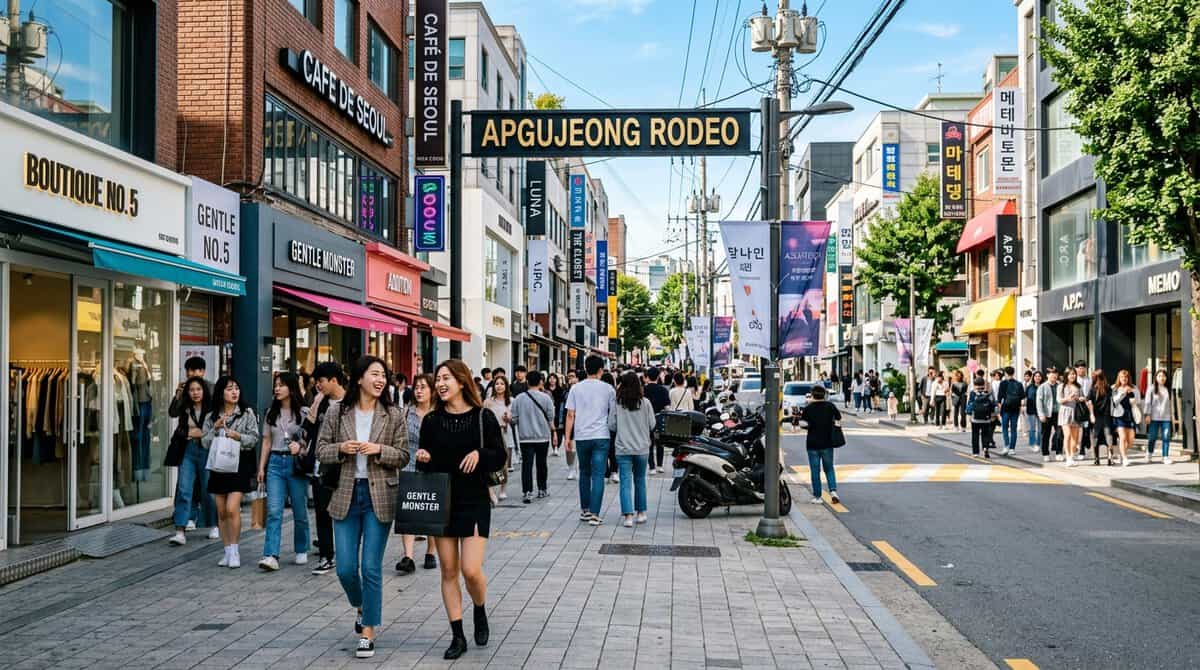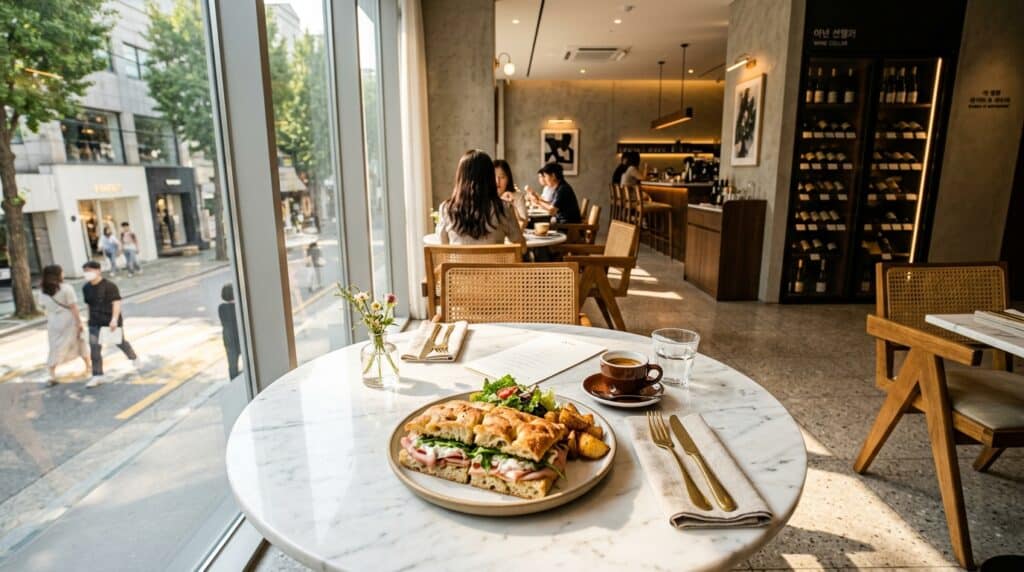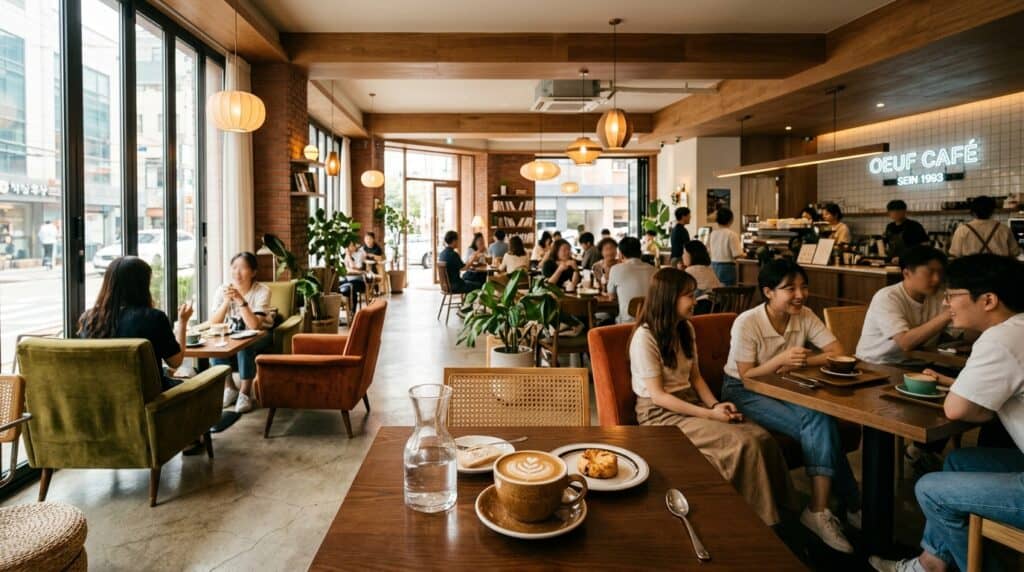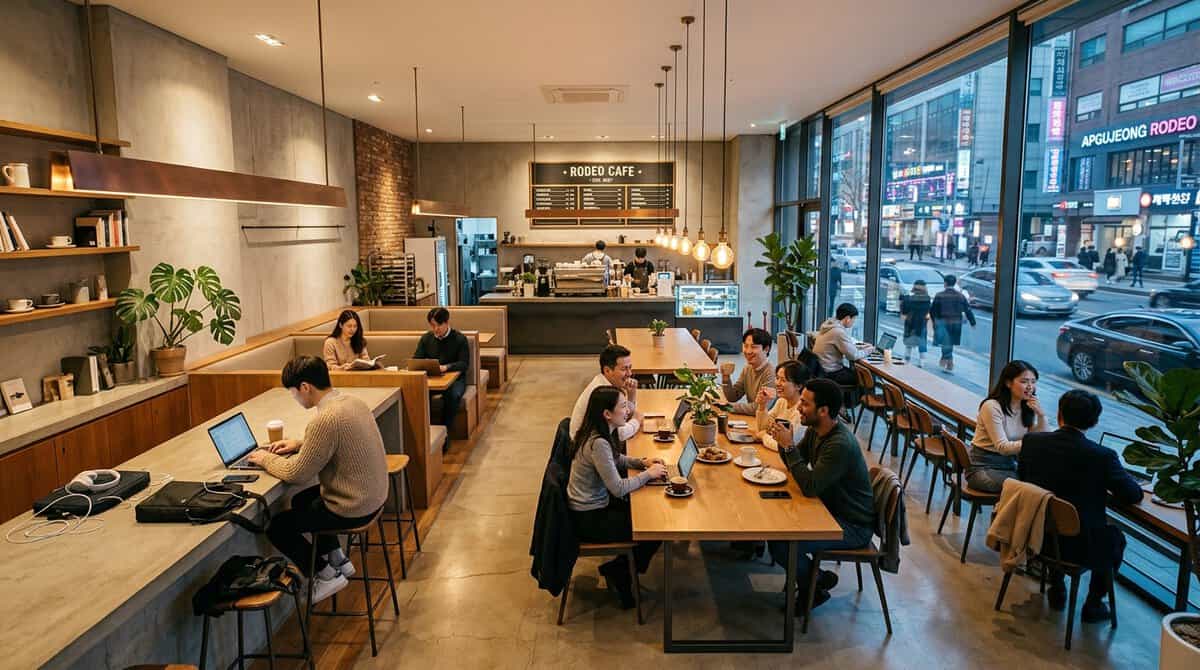
Finding the best apgujeong Rodeo Station cafes requires more than just picking a spot that looks good on Instagram; it requires understanding the specific micro-culture of this Gangnam hub. When I first moved to Seoul, I made the amateur mistake of wandering into the first shop with a pink facade, only to find myself wedged between two influencers taking photos of their lukewarm latte. Over the last few years, I have learned that this area is essentially a high-stakes ecosystem. Whether you are a digital nomad looking for reliable Wi-Fi or a group of friends trying to find a table on a Saturday afternoon, your choice of venue determines everything from your productivity to your level of comfort.
Quick Summary
-
-
- Target by Purpose: Choose high-end concept spaces for social media content and smaller, roastery-focused shops for quiet work.
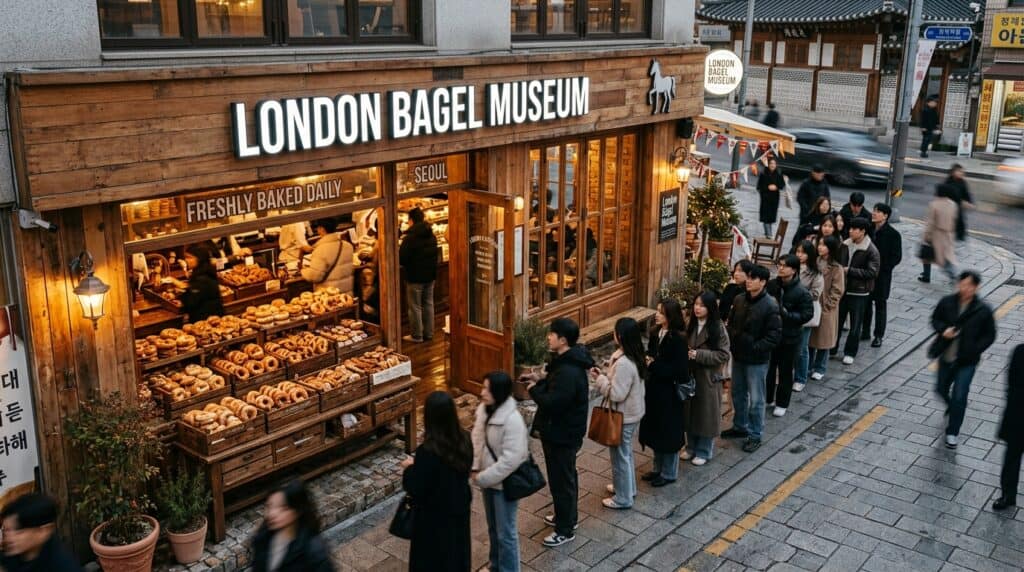
- Timing is Everything: Aim for weekday mornings (10 AM) to avoid the intense queues at popular spots like London Bagel Museum.
- Respect the Rules: Many local venues have a strict ‘one-drink-per-person’ policy and sometimes enforce time limits on weekends.
- Digital Logistics: Always check for outlet availability before ordering; many trendy boutiques prioritize aesthetic over functional desk space.
- Budget Awareness: Expect to spend 6,000–9,000 KRW for a signature drink and roughly 10,000–15,000 KRW if you add a premium dessert.
-
Your Direct Answer to Cafe Selection
If you want the most efficient path to a great experience, the secret is to categorize your intent before you even step off the train. If your goal is remote work, skip the main street thoroughfares and head into the residential alleys where shops like r.about prioritize bean quality over flashy decor. If you are meeting a group, you must head to the larger, multi-level buildings near the station exit, such as the Mooni branches, which are physically designed to handle high foot traffic. Do not try to hold a professional meeting in a boutique bakery during peak hours, as you will almost certainly be asked to leave or find the noise level impossible to manage.
The Cultural Landscape of Apgujeong
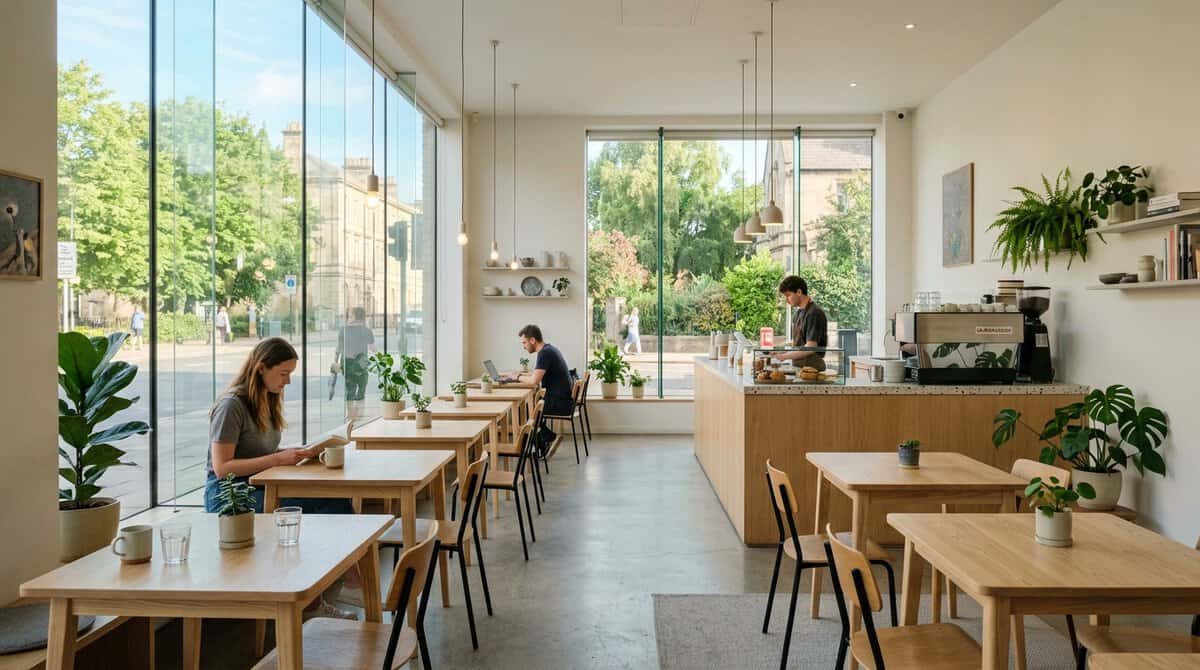
To navigate this area, you have to treat it like a series of distinct districts. Apgujeong Rodeo isn’t a monolith; it is a collection of curated sensory experiences. In the past, the area was known primarily for high-end fashion, but today, it functions as a ‘third place’ for Seoul’s creative class.
When I observe the locals here, I notice a clear division. There is the ‘content crowd’ that cycles through locations like Nudake or Panier de M. Mooni to capture the perfect seasonal pastry shot. Then, there is the ‘coffee purist’ group that avoids those spots entirely in favor of artisan roasters that treat espresso like chemistry. Understanding which group you identify with will save you from frustration. If you walk into a place like Cafe Dior, do not expect a quiet corner to type out a report; expect a luxury showroom experience where the price tag reflects the branding rather than the coffee quality.
Strategies for Solo Workers and Nomads
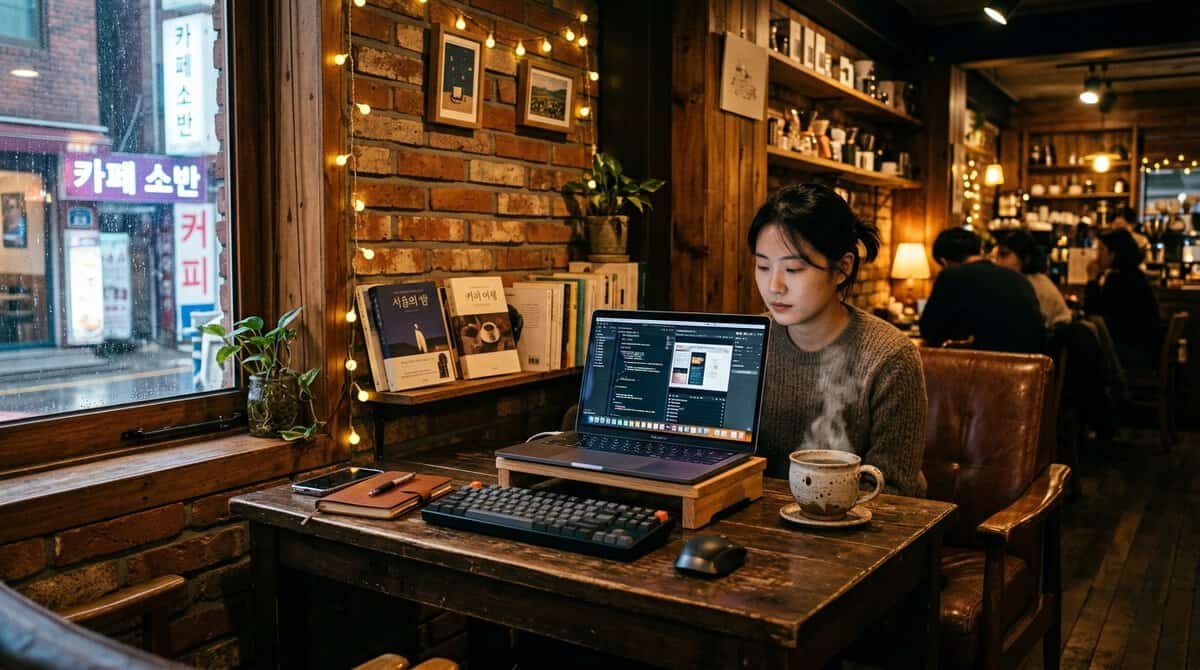
If you are a solo traveler or a professional working from your laptop, the biggest hurdle you will face in Apgujeong is the ‘no-laptop’ policy that many boutiques implement during weekends. I have personally been turned away from two shops because I didn’t realize they had switched to a ‘no-study’ policy on a busy Saturday.
To avoid this, I recommend carrying headphones even if you aren’t listening to anything. It signals a boundary. Furthermore, always scout the perimeter for wall outlets. Many of these renovated buildings have gorgeous interiors but terrible electrical infrastructure. If you are serious about working, look for multi-level cafes that have a clear ‘work zone’ or communal tables. I tend to prefer second-floor seating, as it naturally filters out the casual tourists who are just popping in for a quick photo and leaving immediately.
Handling Group Gatherings and Brunch
Group visits require a completely different tactical approach. You cannot simply walk into a popular spot like the Dalmatian Cafe with a party of four and expect a table to materialize. These venues are designed for turnover. If you have a group, you must embrace the ‘Catch Table’ app culture. Almost every high-end spot in this neighborhood uses reservation or waitlist software.
One common mistake I see groups make is assuming the outdoor seating is always an option. While the outdoor patios in Apgujeong are stunning, they are entirely weather-dependent. If it rains, the indoor capacity of these cafes effectively shrinks by 30-40%, leading to massive queues. When planning for a group, always have a ‘plan B’ cafe nearby—somewhere like a larger chain or a less trendy, high-capacity venue—so your entire day isn’t ruined by a full house.
Decision Guidance: Who Should Visit?
This is ideal for you if:
-
-
- You are a social media enthusiast looking to capture distinct, high-quality aesthetic content.
- You enjoy trying unique, conceptual desserts that blur the line between art and food.
- You are meeting a friend and want a centrally located, stylish venue that is easily accessible by the Suin-Bundang line.
-
You might want to skip this if:
-
-
- You require a silent environment for deep-focus work; the ambient noise here is constant.
- You are on a strict budget and want a simple cup of coffee for under 4,000 KRW.
- You have mobility issues; many of the older, character-filled buildings in the back alleys feature steep, narrow staircases without elevators.
-
The Economics of Apgujeong Coffee
Budgeting for an afternoon in this district requires realism. Unlike other areas of Seoul, the cost here reflects the ‘rent premium’ of Gangnam. A standard Americano will typically run you 5,000 to 6,000 KRW, while signature lattes or specialty cream drinks can easily reach 8,500 KRW.
I treat my visits as an experience fee. If I am going to Nudake to try their signature ‘Peak’ cake, I know I am paying 20,000+ KRW for the privilege of experiencing a conceptual art piece that happens to be edible. If you try to compare the value here to a standard neighborhood chain, you will be disappointed. The value isn’t in the caffeine content—it is in the environment, the furniture, and the social status of the venue.
| Item Type | Estimated Price | Best For |
|---|---|---|
| Standard Americano | 5,000 – 6,000 KRW | Quick caffeine fix |
| Specialty Signature Latte | 7,500 – 9,500 KRW | Leisurely enjoyment |
| Conceptual Dessert | 12,000 – 25,000 KRW | Social media & novelty |
| Full Brunch Plate | 17,000 – 22,000 KRW | Substantial meal |
Common Mistakes to Avoid
-
-
- Ignoring the ‘No-Laptop’ Rule: Many shops explicitly forbid laptops, especially on weekends or public holidays. Checking their social media or asking before you sit down is essential to avoid the embarrassment of being asked to close your device.
- Underestimating the Queue: Never assume you can walk into a top-rated venue like the London Bagel Museum on a Saturday. These places often start generating queues at 8:00 AM. If you see a line, decide immediately if the bagel is worth the 45-minute wait or if you should pivot to a secondary option.
-
Frequently Asked Questions
1. Is there good Wi-Fi in these cafes?
Yes, most cafes near Apgujeong Rodeo Station provide excellent Wi-Fi. However, it is almost never open; you will need to check the receipt or look for a small card at your table. Note that during peak traffic, some cafes may limit the speed per device to ensure fairness for other customers, so don’t plan on hosting high-bandwidth video conferences.
2. Can I stay for a long time if I keep ordering?
It depends on the business model. In boutique, high-turnover dessert shops, sitting for two hours is considered rude regardless of how much you buy. In more spacious, concept-style cafes, you can generally stay as long as you continue to consume. Use common sense: if the shop is half-empty, you are fine. If people are circling for tables, pack up your things.
3. Which cafe do you recommend for someone who wants to avoid the crowds?
I recommend heading toward the Dosan Park area on a weekday afternoon. While this is still a popular zone, it feels significantly less frantic than the main Rodeo street. Look for cafes located on higher floors or in the basement levels of non-flagship buildings; these tend to attract local professionals rather than tourists just looking for a quick photo.
Conclusion
Apgujeong Rodeo Station offers an unrivaled cafe experience if you approach it with a strategy. For those seeking a more substantial meal alongside their coffee, the area is also home to excellent brunch spots like Door to Door Apgujeong. By matching your needs—whether that is intense work, group socializing, or content creation—to the specific personality of the cafe, you will find that the district delivers exactly what you are looking for. My final recommendation? Stop trying to visit all the ‘viral’ spots in one day. Pick one anchor cafe that fits your vibe, enjoy it fully, and allow yourself the flexibility to discover a smaller, quiet spot nearby that isn’t on the top-ten list. That is where you will find the real magic of Seoul’s coffee culture.