experience the Temple of Literature night Tour in Hanoi
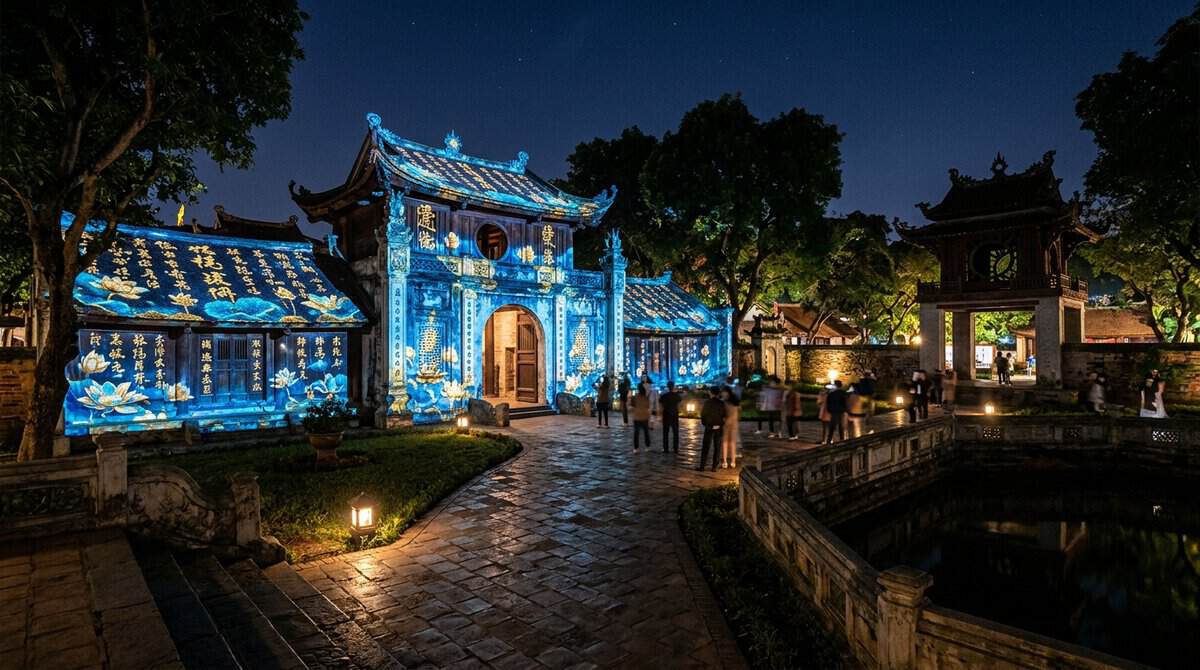
The Temple of Literature night tour in Hanoi bridges the intellectual legacy of the Ly Dynasty with the digital age. Stepping into the historic entrance of Van Mieu under the moon, you might expect the quiet of a museum. Instead, the 1070-built complex pulses with light, turning the stone walls into a living canvas of Vietnamese history. The quiet you expect from a Confucian temple gives way to something far more animated.
Why This Shift Toward Digital Storytelling Matters
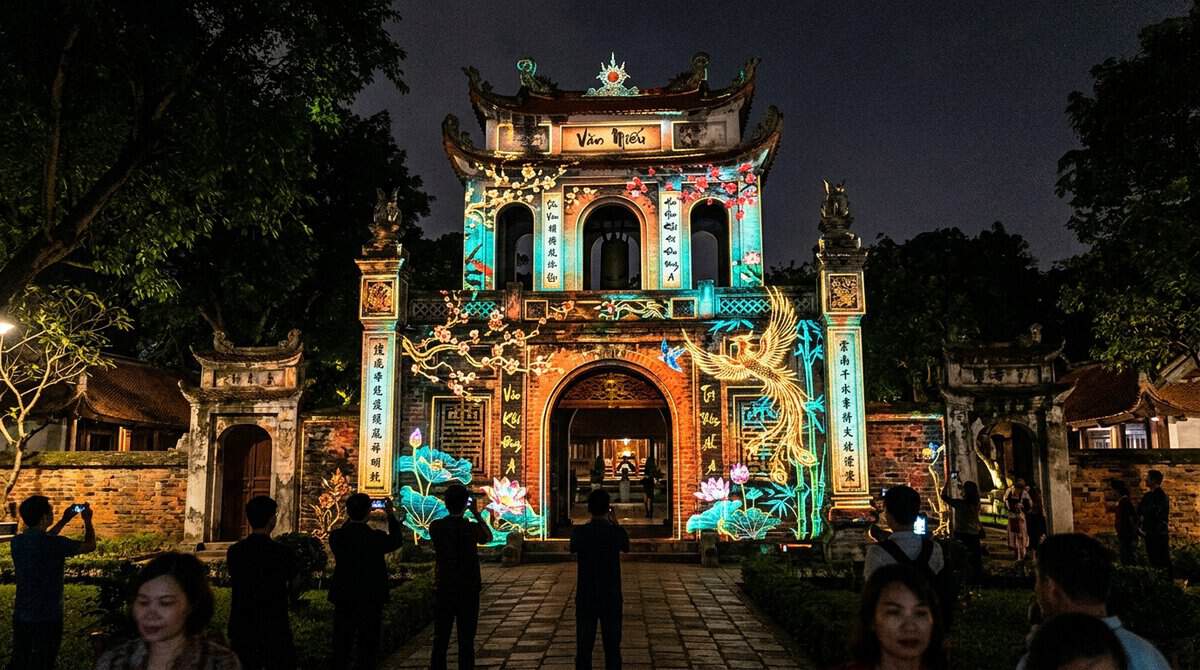
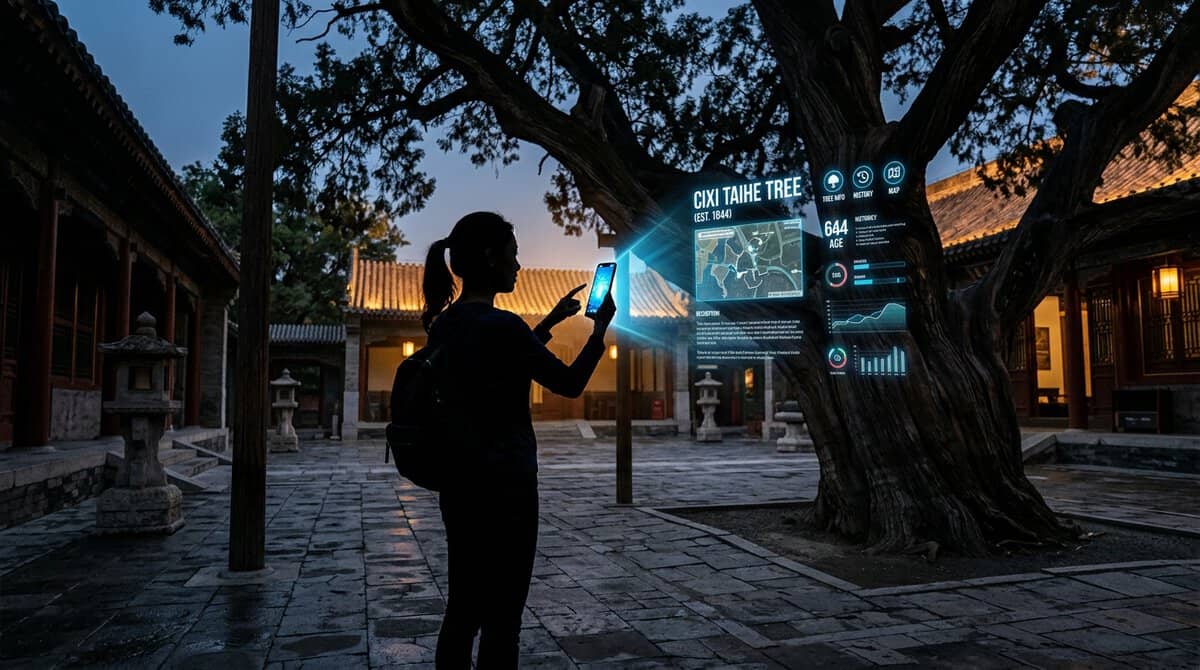
For years, travelers viewed this site as a static collection of courtyards and stone steles. The introduction of 3D projection mapping on the Tien Duong building changes that narrative entirely. It is not merely a light show; it functions as a visual narration of the rigorous examinations and scholarly traditions that defined this space. During my own visit, I watched families and backpackers pause in the Thai Hoc courtyard, their faces illuminated by high-definition animations of calligraphy and ancient scrolls. The technology forces you to stop and examine details you might otherwise overlook in the harsh glare of a tropical afternoon. The faces of the crowd catch the animations as if the calligraphy is being written on them.
Common Misconceptions About Tech in Heritage
One common mistake is the assumption that technology at a site like this devalues its sanctity. Many travelers worry that digital screens clash with the “original” look of the monument. The curators were careful to emphasize the architectural lines rather than obscure them. Another misconception is that these tours are just for children. The storytelling depth appeals to history buffs and tech enthusiasts alike, as the projections explain the complex symbolism of Confucian traditions. The trade-off for the visual spectacle is that you leave with a clearer understanding of the symbolism, not just a photo.
Is the Experience Right For You?
Before you book, weigh the experience against your own expectations. This is ideal for solo travelers looking for a deeper narrative, families with children who need visual stimulation to stay engaged, and history enthusiasts interested in modern preservation techniques. Visitors who expect a silent, candlelit temple walk will find something more layered instead.
However, you might want to skip this if you are a purist seeking a silent, meditative night walk. The combination of sound and visual effects can be intense, and the site is physically identical to its daytime configuration—meaning it can get quite crowded. The noise and light don’t layer so much as collide, and the crowds follow the same logic they do during daylight hours.
Financial and Logistical Breakdown
When comparing the value, consider the time and financial investment involved. Daytime tickets cover the broader grounds, while the night experience runs a curated 60-to-90-minute educational program. You trade the freedom to explore at your own pace for a structured program that delivers context you’d otherwise miss.
| Feature | Daytime Visit | Night Experience |
|---|---|---|
| Entry Cost | ~$1.50 | ~$8–$12 |
| Focus | Self-guided exploration | Guided storytelling |
| Atmosphere | Quiet, educational | Immersive, sensory |
| Accessibility | High (full grounds) | Limited (main areas) |
Lessons Learned from My Visit
Walking in on a weekend night without a prior booking is a mistake — the capacity fills fast. During peak seasons, such as the Lunar New Year, the temple sees massive crowds. Book tickets online at least 48 hours in advance if you have a specific evening in mind. The busiest nights are the ones that reward advance thought, not spontaneity.
Wear comfortable walking shoes. The grounds are largely flat, but the uneven stone pathways can be tricky after dark, especially when navigating between the different courtyards while watching the projections. What feels flat by day turns uneven once the light shifts.
Understanding the “Vietnamese Resonance” Approach
Beyond just the light shows, recent additions like the “Vietnamese Resonance” program bring in live folk artisans. Watch a master weaver demonstrate sedge work right next to the Khue Van Cac pavilion. It is a stark contrast: the ancient wood of the gate, the flickering digital light, and the rhythmic sound of a two-string fiddle. This intentional blend of arts proves that a site can be a “spiritual bedrock” while still operating as a functional part of the modern tourism economy. The contrast between ancient wood and digital light finds its own rhythm before the visitor does.
Frequently Asked Questions
Is the Temple of Literature night tour suitable for small children?
Yes, the dynamic light projections and audio storytelling are generally very engaging for children. Unlike traditional museum tours, which require long periods of reading, this experience uses constant visual movement. Arrive early to ensure the children are not too tired by the time the projections begin, as the late-evening hours can be challenging for toddlers. The early arrival is not about beating the crowd—it is about beating the bedtime clock.
How does the 3D mapping affect the monument itself?
The projection technology is non-invasive and does not involve physical contact with the historical surfaces. The equipment is set up on temporary trusses and calibrated to ensure that the light only touches the target areas, protecting the structural integrity of the wood and stone while providing a modern visual layer that can be turned off at any moment.
Is the tour accessible for those with mobility issues?
Most of the main courtyards utilized for the tour are flat and accessible. However, because it is an ancient site, there are some uneven stone pathways. Wear comfortable walking shoes, as you will be standing or moving slowly across the grounds for the duration of the performance. The flat stretches are where the attention drifts; the uneven bits pull it back.
Can I visit during the day instead?
Certainly, but you will miss the specific narrative experience designed for the night. The daytime visit offers a better view of the architectural details under natural light, while the night tour is a curated performance. I personally suggest doing both if your schedule permits.
Final Thoughts: A New Way to See History
If you find yourself in Hanoi, the move toward integrating technology into heritage sites is something you should see firsthand. While I initially missed the quiet, dark corners of the complex, the Temple of Literature night tour successfully highlights how we can use innovation to keep ancient educational values relevant. It is a bold, albeit slightly loud, modernization. Whether or not you prefer your history with a side of digital projection, the experience is undeniably a masterclass in how to keep a historic site from fading into memory. When you go, keep an open mind—and perhaps bring a camera to capture the way the light catches the old stone, something you simply cannot replicate during the harsh sunlight of a typical Hanoi afternoon.