Best Chinatown Bangkok Street Food: Complete Guide
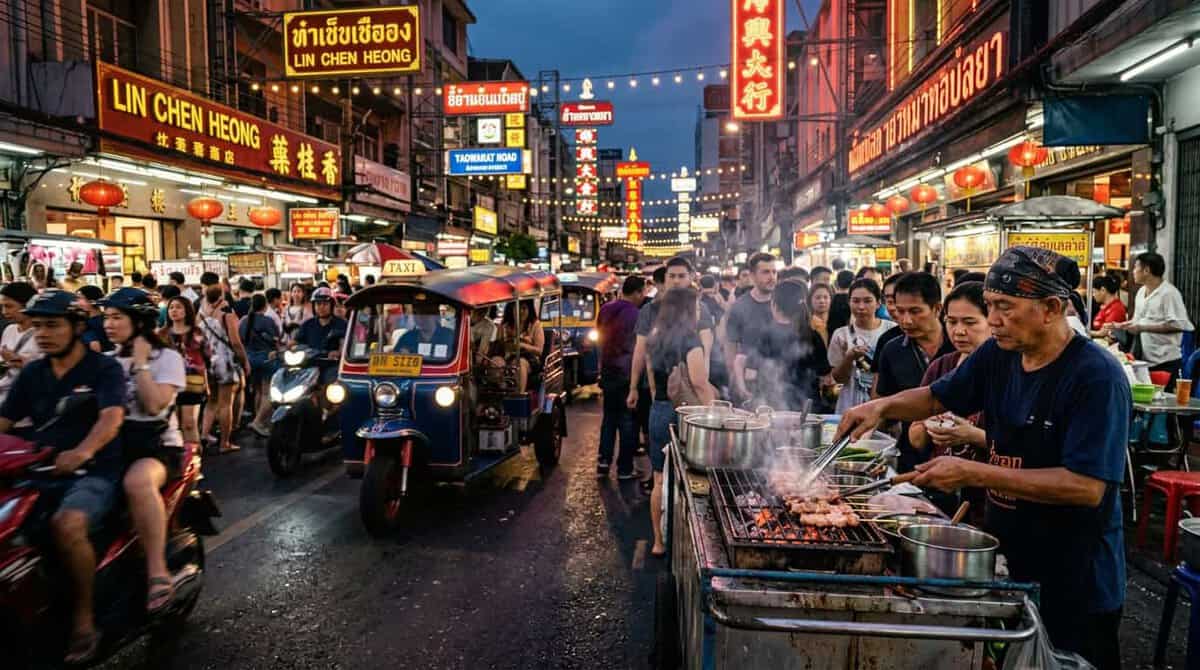
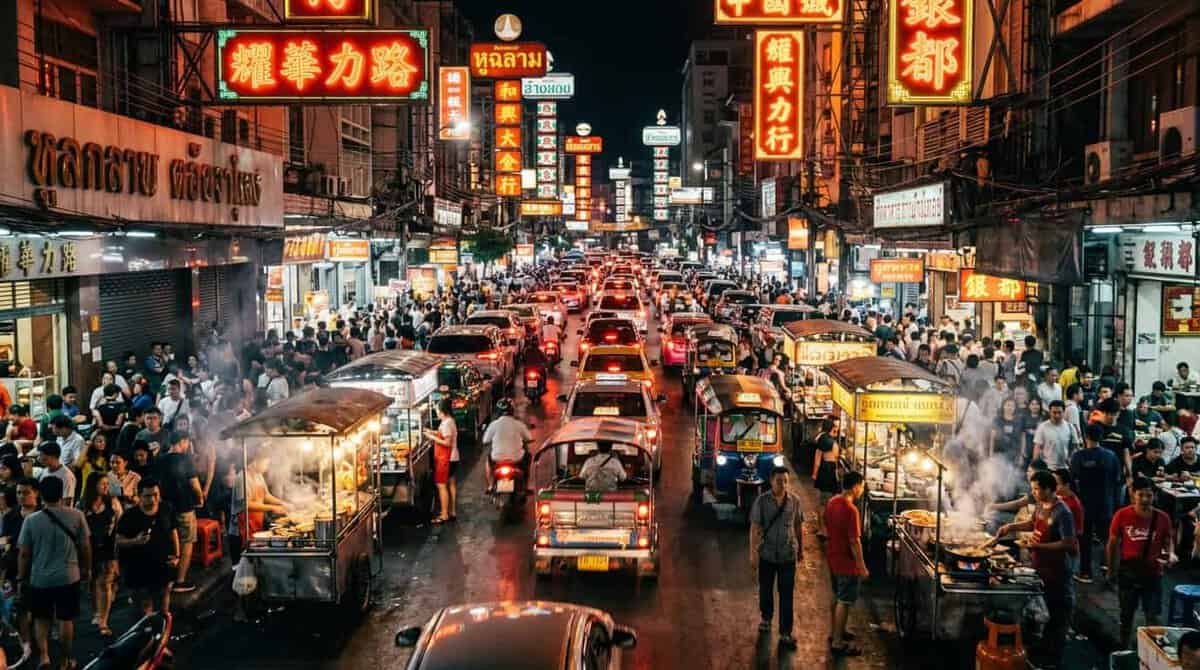
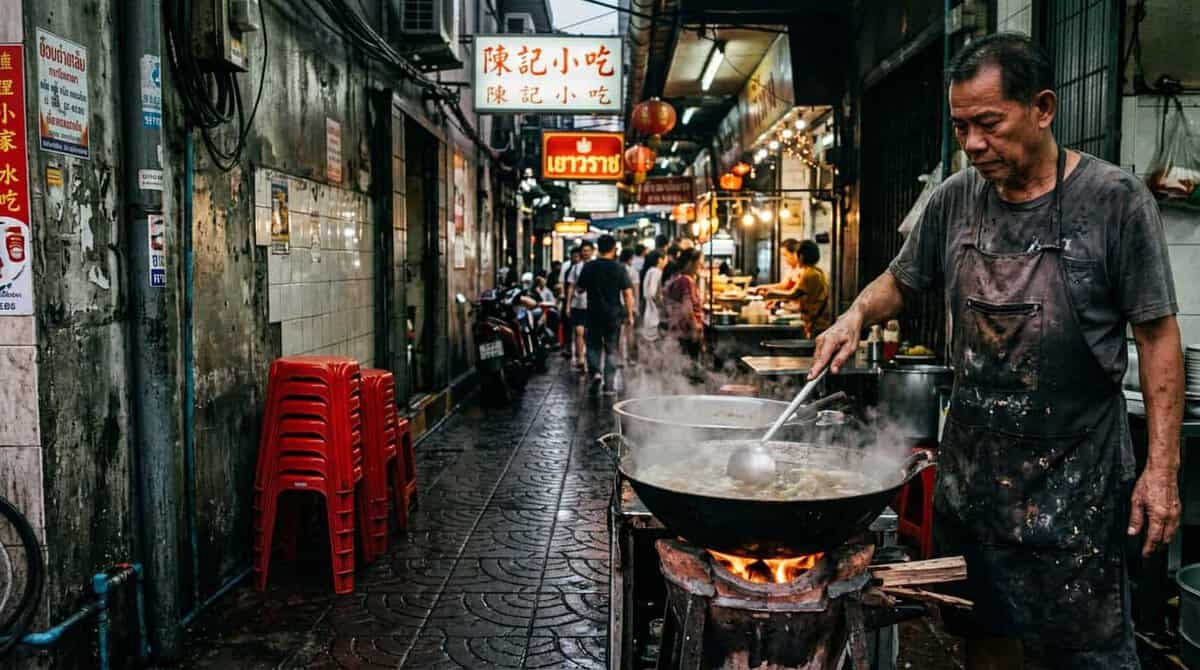
Best street food in Bangkok Chinatown requires a strategic approach if you actually want to eat well and avoid overpriced tourist traps. The neon-lit stretch of Yaowarat Road is chaotic, loud, and incredibly hot. Vendors furiously chop pork on wobbly metal tables, tuk-tuks aggressively push through the crowds, and the humidity traps the smell of charcoal smoke and garlic in the air. Bangkok is regularly named one of the world’s best cities for street food, and this stretch is its most intense stage. By the second stall, the humidity stops registering and the garlic smoke becomes the only clock you need.
Show up without a plan, and you will likely end up waiting 45 minutes in the wrong queue, overpaying for mediocre crab fried rice, or sweating through your shirt before you have even eaten your second dish. This guide is built to prevent that. It walks you through exactly where to go, what specific dishes to order, how much you should pay, and the logistical realities of eating in one of the most intense food districts on earth. The crowds thin where the postcard angles end, but the heat stays.
Quick Summary
- Arrive by 4:30 PM: Beating the dinner rush is critical. By 7:00 PM, the main intersections become almost impassable due to foot traffic.
- Take the MRT: Take the Blue Line to Wat Mangkon station. It drops you off just one block from the main food arteries.
- Bring Small Cash: Almost no street stall accepts foreign credit cards. Carry 20, 50, and 100 THB notes. A budget of 500 THB is enough to stuff yourself.
- Skip Mondays: A city-wide mandate severely limits street vendors on Mondays for street cleaning. The area will feel like a ghost town.
- Graze, Don’t Gorge: The biggest mistake you can make is sitting down at a large seafood restaurant and filling up on one massive meal.
The Direct Answer: How to Master the Market
If you want the ultimate Chinatown Bangkok street food experience tonight, here is exactly what you should do. Take the MRT to Wat Mangkon station and arrive around 4:30 PM. Exit the station and walk toward Charoen Krung Road, then filter down the smaller alleys connecting to Yaowarat Road.
Do not sit down at the massive, aggressively lit seafood restaurants at the main intersections right away. Instead, start your evening at the specialized, single-dish stalls hidden down the side streets. Begin with a plate of yellow pork curry at Jek Pui on Mangkon Road, grab a few skewers of grilled squid with lime chili sauce near the old cinema, and line up for crispy rolled noodles at Nai Ek. By breaking your meal into five or six small stops, you will taste a far better cross-section of Thai-Chinese cuisine than if you commit to a single restaurant. Bring exactly 800 THB in small bills, wear closed-toe shoes to protect against dirty street puddles, and accept that you will be eating while standing or perching on tiny plastic stools for most of the night.
The Reality of the Yaowarat Experience
I need to set proper expectations about what eating in this district actually feels like. My first time attempting to eat my way down Yaowarat Road, I made the mistake of arriving at 8:00 PM on a Saturday. I barely moved ten feet in five minutes. The sheer volume of human bodies pressing against you, combined with the 90-degree heat and the massive woks firing on the sidewalks, creates a microclimate that is relentlessly hot.
This is not a relaxed, sit-down dining environment. You will be dodging stray dogs, motorcycles cutting through pedestrian alleys, and waiters carrying massive vats of boiling soup. Hygiene standards vary wildly. You will see dishes being washed in plastic buckets on the pavement just inches from open storm drains. If you require spotless restaurant conditions, you will hate it here.
But if you can handle the grit, the reward is access to decades-old family recipes that have evolved over generations of Thai-Chinese migration. The flavors here skew sweeter and heavier on soy, white pepper, and pork fat compared to the fiery, herb-heavy dishes of southern or northeastern Thailand.
Where to Eat: Top Stalls Worth the Wait
The sheer density of options is paralyzing. Rather than wandering aimlessly, plot a route that hits these specific institutions.
Jek Pui Curry (The Musical Chairs of Curry)
Located on a side street north of Yaowarat Road (25 Mangkon Rd), Jek Pui is famous for offering absolutely zero tables. When you arrive, you will see a line of people waiting for a spot on a few dozen red plastic stools lined up against a peeling wall.
The setup is intimidatingly fast. You walk up to the row of massive aluminum pots and point. Their signature yellow curry with pork is highly aromatic, relying heavily on dried spices rather than the sharp fresh chilies found in green curry. The sauce is thick, coating the rice perfectly, and usually comes topped with slices of sweet Chinese sausage (gun chiang).
The Reality: Balancing a plate of rice and liquid curry on your lap while tourists bump into your shoulders is challenging. I spilled half my sauce on my sneakers the first time I ate here.
Price: Around 60 THB per plate.
Hours: 2:00 PM to 7:00 PM (Get here early, they sell out fast).
Nai Ek Roll Noodle (The Pepper Broth Master)
Situated right on the main drag (442 Yaowarat Rd), this stall-turned-shophouse commands a permanent line. Nai Ek originally immigrated from China and started selling food from a pushcart. Today, the operation is a well-oiled machine.
You are here for the Kuay Teow Khae—rolled rice noodles that curl into little tubes, served in a clear broth that is aggressively seasoned with white pepper. The broth clears your sinuses instantly. You can get it topped with crispy pork belly (moo krob), pork offal, or minced pork.
The Reality: The line moves quickly because the staff rushes you. Eat your noodles, pay, and get out. It is not a place to linger and chat.
Price: 80-100 THB depending on meat choices.
Hours: 8:00 AM to Midnight.
Krua Porn La Mai (Sizzling Volcano Plates)
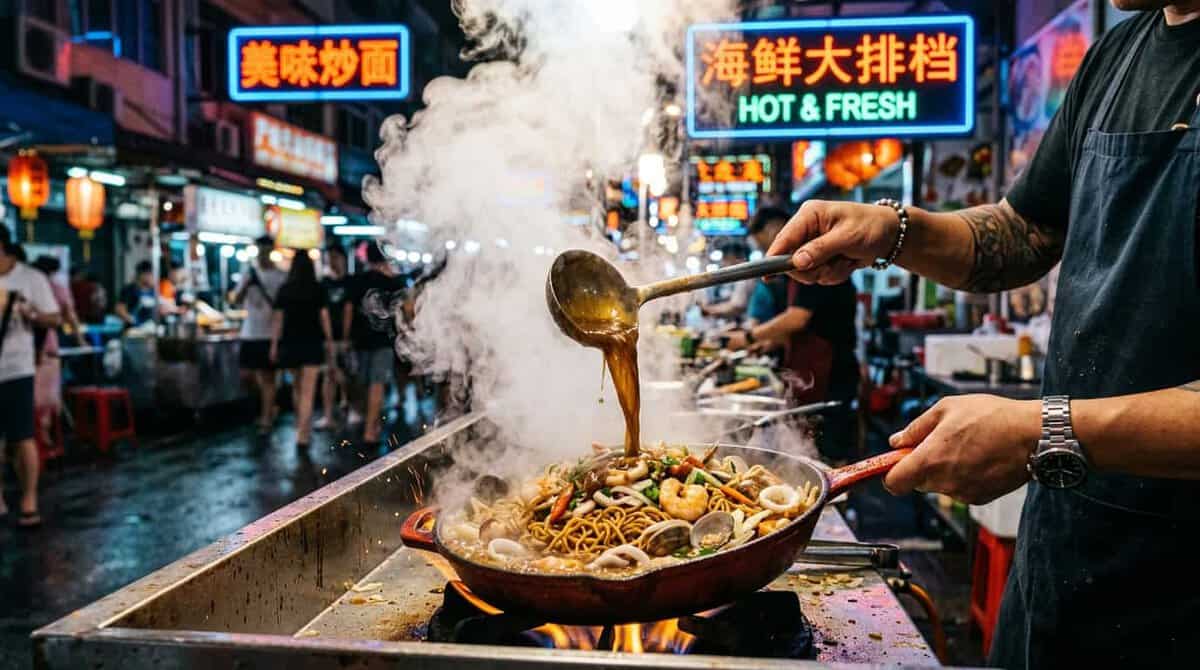
Found on Charoen Krung Road, Krua Porn La Mai specializes in theatrics. You sit on plastic chairs at metal tables dangerously close to moving traffic. Their signature dish is Rad Na Phu Khao Fai (Volcano Noodles).
The cook fries thick rice noodles until they are charred and slightly crispy, places them on a scorching hot cast-iron plate, and then pours a thick, savory seafood gravy over the top right as it hits your table. The sauce immediately violently boils and hisses, creating a massive cloud of steam.
The Reality: The wait times here can be brutal. Because each plate requires dedicated wok time, I have waited upward of 40 minutes just to get a seat, followed by another 20 minutes for the food.
Price: 100-150 THB.
Hours: 10:30 AM to 11:00 PM.
Guy Kao Grilled Squid (The Spice Challenge)
You cannot miss this stall because of the massive, meticulously stacked pyramids of raw squid on bamboo skewers waiting to be grilled over charcoal.
Ordering here is a multi-step process. First, you select your skewers from the raw pile—you can choose tentacles, squid meat, or even the chewy squid mouths. Hand them to the griller. Once cooked, the squid is aggressively chopped with scissors and thrown into a plastic bowl or bag. The defining feature here is the sauce: a nuclear-green seafood dip made of lime juice, fish sauce, raw garlic, and an punishing amount of bird’s eye chilies.
The Reality: The sauce is genuinely painful if you do not have a high spice tolerance. Ask for the sauce on the side (“nam jim yak”) so you can control the damage.
Price: 40-120 THB depending on the cut of squid.
Hours: 5:30 PM to 1:30 AM.
Pa Tong Go Savoey (Michelin Doughnuts)
Located near the 7-Eleven on the eastern end of Yaowarat Road, this cart serves Yaoti (or Youtiao)—fried Chinese dough sticks. While common across Asia, this specific stall earned a Michelin recommendation for keeping the dough perfectly crispy on the outside while impossibly airy inside.
You buy a bag of the small, thumb-sized dough pieces and a small plastic cup of bright green pandan custard for dipping. The warm, slightly salty dough mixed with the sweet, fragrant coconut-pandan cream is the exact sugar rush you need after walking three miles in the humidity.
The Reality: The queue is entirely made up of tourists holding up their phones. Expect to wait 30 minutes for what is essentially a two-minute snack.
Price: 50 THB for a set.
Hours: 5:30 PM to 11:30 PM.
Bamee Jabkang (The Grungy Noodle Institution)
Hidden down Soi Charoen Krung 23, this is the oldest egg noodle shop in the area. Finding it requires walking down an alley that looks entirely residential. You will eventually hit an open-air kitchen with massive blackened pots boiling over wood fires.
The signature bowl is massive. For 50 baht, you get a small mountain of hand-pulled egg noodles, slices of marinated roast pork, and a few greens.
The Reality: The hygiene standards here will definitely make a Western health inspector faint. The prep tables are ancient, the floor is constantly wet, and the seating consists of a few long, communal wooden benches. But the turnover is so high that the food is completely safe.
Price: 50-60 THB.
Hours: 9:30 AM to 5:30 PM.
Drinks and Desserts to Cool Down
Walking the streets will dehydrate you quickly. Fortunately, liquid relief is everywhere.
Pennywort Juice: You will see vendors selling bags or bottles of dark, grass-green liquid. Pennywort juice has a deeply earthy, slightly bitter flavor that tastes almost like heavily diluted matcha mixed with lawn clippings. It sounds awful, but it is incredibly refreshing and known in traditional medicine for its cooling properties.
Fresh Pomegranate Juice: Dozens of carts press small, incredibly sweet pomegranates on the spot. A small bottle costs about 40 to 60 THB.
Warning: Watch the vendor actually press the fruit. Some unscrupulous carts sell pre-bottled juice that has been cut heavily with sugar syrup and red food coloring to stretch their profits. The extra minute at the cart pays off in flavor that pre-bottled juice can’t match.
Sweettime: If you want a sit-down dessert, look for the pink neon signs of Sweettime. They specialize in Chinese-style sweet soups. Order the Bua Loy—black sesame dumplings served in spicy, hot ginger tea. The ginger burn clears your throat of the city smog instantly.
Cost Breakdown: How Much Cash to Bring?
Chinatown Bangkok street food is cheap, but it is not as aggressively cheap as it was a decade ago. The Michelin nods and heavy tourist footfall have caused mild price inflation. Here is what you should expect to spend on a DIY food tour:
| Item Category | Average Price (THB) | USD Equivalent (Approx) |
|---|---|---|
| Single noodle or rice dish | 60 – 100 THB | $1.70 – $2.80 |
| Meat skewers (pork/chicken) | 15 – 30 THB | $0.40 – $0.85 |
| Seafood skewers (squid) | 40 – 100 THB | $1.15 – $2.80 |
| Fresh juices / Herbal drinks | 30 – 60 THB | $0.85 – $1.70 |
| Sit-down seafood (crab/fish) | 300 – 800 THB | $8.50 – $22.00 |
| Desserts | 40 – 60 THB | $1.15 – $1.70 |
If you stick strictly to street carts and avoid the giant sit-down seafood restaurants, 400 to 500 THB ($11 to $14 USD) is enough to buy five separate dishes, two drinks, and a dessert. It is entirely a cash economy. Do not ask if they take Apple Pay; they will just wave you away.
Guided Food Tour vs. DIY Exploration
Many travelers debate whether to explore independently or pay for a guided tour. I have done both, and the trade-offs are distinct.
I joined a guided evening tour (similar to the popular A Chef’s Tour) to see what value a local guide actually adds. The biggest advantage was bypassing the language barrier. Our guide took us to a Cantonese temple courtyard where stalls operate like an outdoor hawker center. We ate fish cakes made from clown featherback fish mixed with kaffir lime—a stall I would have walked right past because the signage was exclusively in Thai.
The DIY Route
Pros: Total freedom, costs a fraction of the price, eat at your own pace.
Cons: You will probably miss the deep-cut stalls in the dark alleys, ordering requires aggressive pointing, and you won’t know the history of the dishes. The pointing becomes part of the experience, not a barrier.
The Guided Tour
Pros: Guaranteed safe hygiene, deep historical context, no getting lost, skip the ordering stress.
Cons: Fixed pace (you can’t linger if you like a spot), costs $40-$60 USD per person, forced social interaction with a tour group. Worth it for the context, less so for the flexibility.
Who Should Visit (And Who Should Not)
Chinatown Bangkok street food requires a specific type of traveler to truly appreciate it.
This experience is ideal for:
Adventurous eaters who want to taste aggressive, complex flavor profiles.
Travelers who don’t mind sweating profusely while eating.
Photographers looking for raw, unpolished urban street scenes.
Night owls, as the energy peaks between 8:00 PM and 11:00 PM. It asks for an appetite for heat, noise, and late hours.
You might want to skip this if:
You have strict dietary restrictions (Celiac, severe peanut allergies). Cross-contamination is an absolute certainty, and explaining allergies in English to a busy vendor will not work.
You have mobility limitations. The sidewalks are uneven, incredibly crowded, and frequently blocked by parked motorbikes or boiling vats of oil.
You are a strict germaphobe who requires modern sanitation standards to enjoy a meal.
Common Mistakes to Avoid
1. Showing Up on a Monday
Do not attempt a food tour here on a Monday. The Bangkok Metropolitan Administration enforces strict street-cleaning mandates on Mondays. While the brick-and-mortar restaurants will remain open, 80% of the actual street carts and sidewalk setups you see on Instagram will be gone. The energy is completely dead, and you will be deeply disappointed. Tuesday is when the real street food returns.
2. Sitting Down at the First Seafood Joint
When you hit the main intersection of Yaowarat, you will see T&K Seafood (the staff in green shirts) and Lek & Rut Seafood (the staff in red shirts) engaged in a turf war. They are massive, bright, and easy to sit down at. Booking a table at T&K on a first trip thinking it’s the ultimate experience is a common mistake. While the grilled prawns are fine, taking up massive stomach space on generic seafood means no room for the specialized noodle and curry stalls that actually make the district special. Save the giant seafood dinner for another night. The neon glow makes the seafood spots look like the main event, but the real draw is the quieter carts a few steps away.
3. Relying on Tuk-Tuks to Get You There
Taking a tuk-tuk directly to Yaowarat Road during rush hour is a miserable experience. You will sit in gridlocked traffic inhaling exhaust fumes while the meter (or agreed price) feels like a waste of money. The opening of the MRT Wat Mangkon station changed everything. Take the air-conditioned subway; it is infinitely faster, cheaper, and drops you right into the action. The tuk-tuk asks for your patience and your wallet; the subway asks for neither.
Frequently Asked Questions
What time does Bangkok Chinatown open for street food?
While some brick-and-mortar shops and noodle stalls open in the morning, the actual street food carts do not begin setting up until 4:00 PM. The best time to arrive to secure food without fighting massive crowds is between 4:30 PM and 5:30 PM. The district reaches peak chaos around 8:00 PM and stays busy until past midnight.
Is the street food safe to eat?
Yes, if you follow basic rules. Look for stalls with high turnover—if a vendor is constantly cooking fresh batches to keep up with a long line of locals, the food is safe. Avoid pre-cooked seafood that has been sitting under a heat lamp for hours. The ice used in drinks is produced in commercial factories and is safe to consume, but avoid drinking tap water.
Do vendors speak English?
Basic English numbers and food terms are understood by most vendors on the main Yaowarat stretch. However, do not expect conversational English or the ability to modify dishes heavily. Ordering is usually accomplished by pointing at the raw ingredients, holding up fingers for the quantity, and reading the price off a calculator screen.
Should I worry about pickpockets?
Yes. While Bangkok is generally very safe regarding violent crime, the dense, shoulder-to-shoulder crowds of Chinatown are prime territory for pickpockets. Keep your cash in a secure front pocket or cross-body bag. Do not walk with your phone protruding from your back pocket while navigating the tight alleys.
Final Thoughts and Next Steps
Tackling Chinatown Bangkok street food is a rite of passage for anyone visiting the city. Having a reliable Bangkok Chinatown street food guide helps you navigate the chaos to find the most incredible dishes. It is loud, unapologetically messy, and visually overwhelming, but it delivers some of the most complex, historic flavor profiles available in Southeast Asia.
To guarantee a successful night, get off the MRT Wat Mangkon by 5:00 PM, secure your small Baht notes, and start at the perimeter alleys before braving the main Yaowarat traffic. Skip the massive seafood restaurants, lean into the spice, and accept the plastic stool dining culture. If you pace yourself and embrace the chaos, you will leave with a full stomach and a genuine understanding of Bangkok’s culinary heartbeat.